-1400x932.jpg?2025-12-20T19:21:06.199Z)
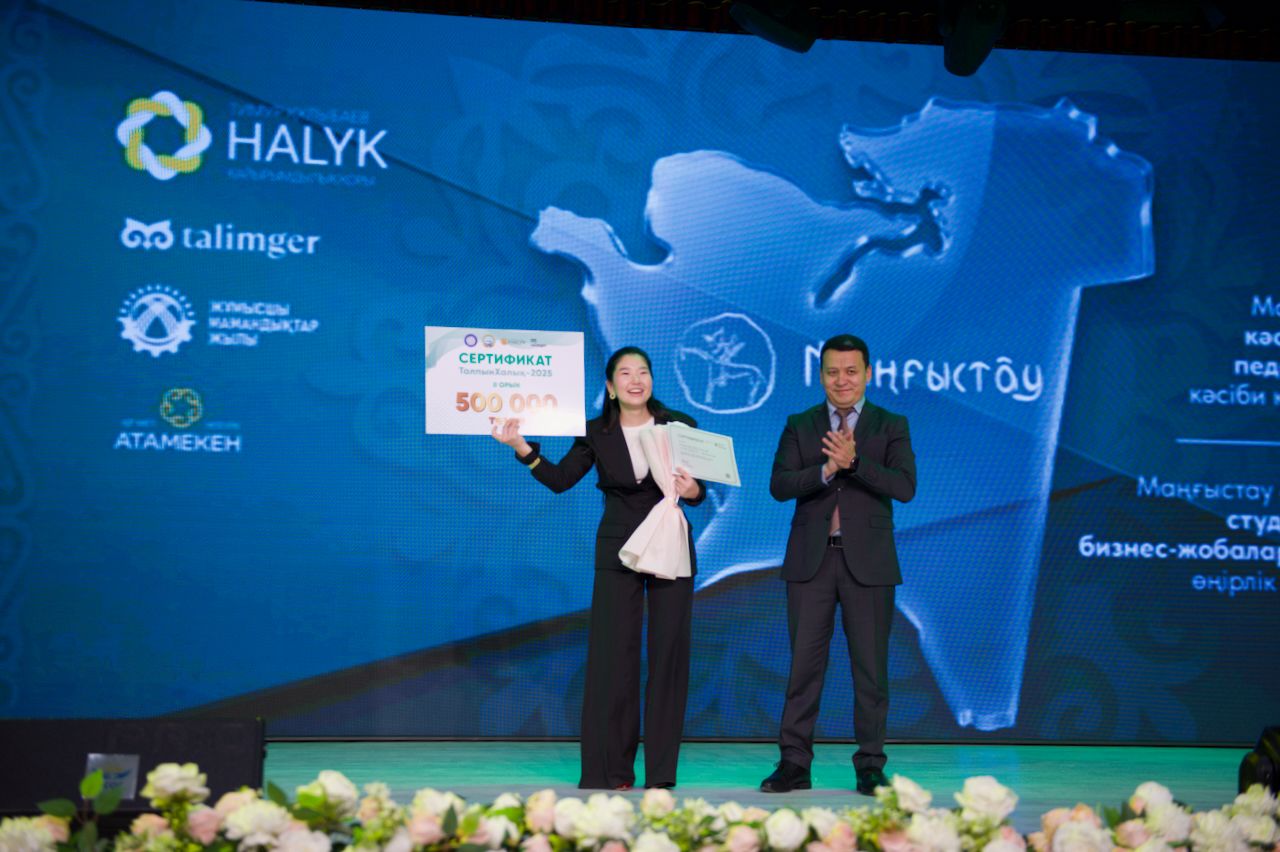
In the Mangystau region, the regional student business ideas competition Talpyn.Halyk 2025 has come to an end. The competition was organized within the Tәlimger program with the support of the Halyk Foundation founded by Timur Kulibayev. Over the course of three months, 77 student teams from colleges across the region completed the full journey from submitting an application to launching real production. Peanut butter, eco-friendly paving stones made from recycled plastic, and wooden puzzles for children with special needs — these projects are already delivering tangible results: generating income and attracting potential investors. The award ceremony held on December 19 summed up the outcomes of a competition that changed not only the region’s business landscape, but also the students themselves.
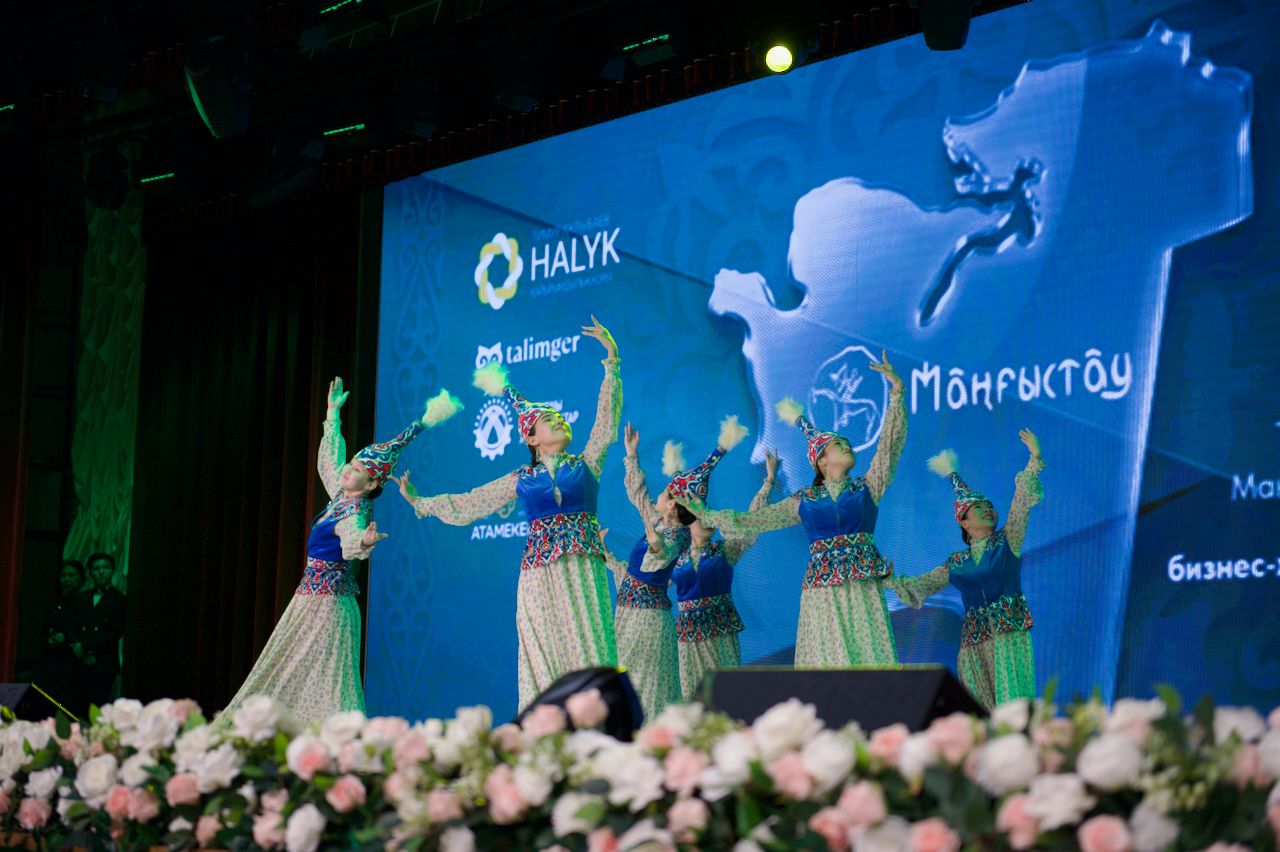
Talpyn.Halyk 2025 was launched as part of the pilot project Tәlimger, the first comprehensive program in Kazakhstan aimed at developing entrepreneurial education at the regional level. Participants submitted three-minute videos, filled out business canvases, and passed through three stages of selection. Out of 77 applications, 26 projects advanced to the final. The key feature of the competition was not merely generating ideas, but launching production, selling products, signing contracts with local companies, and developing branding.
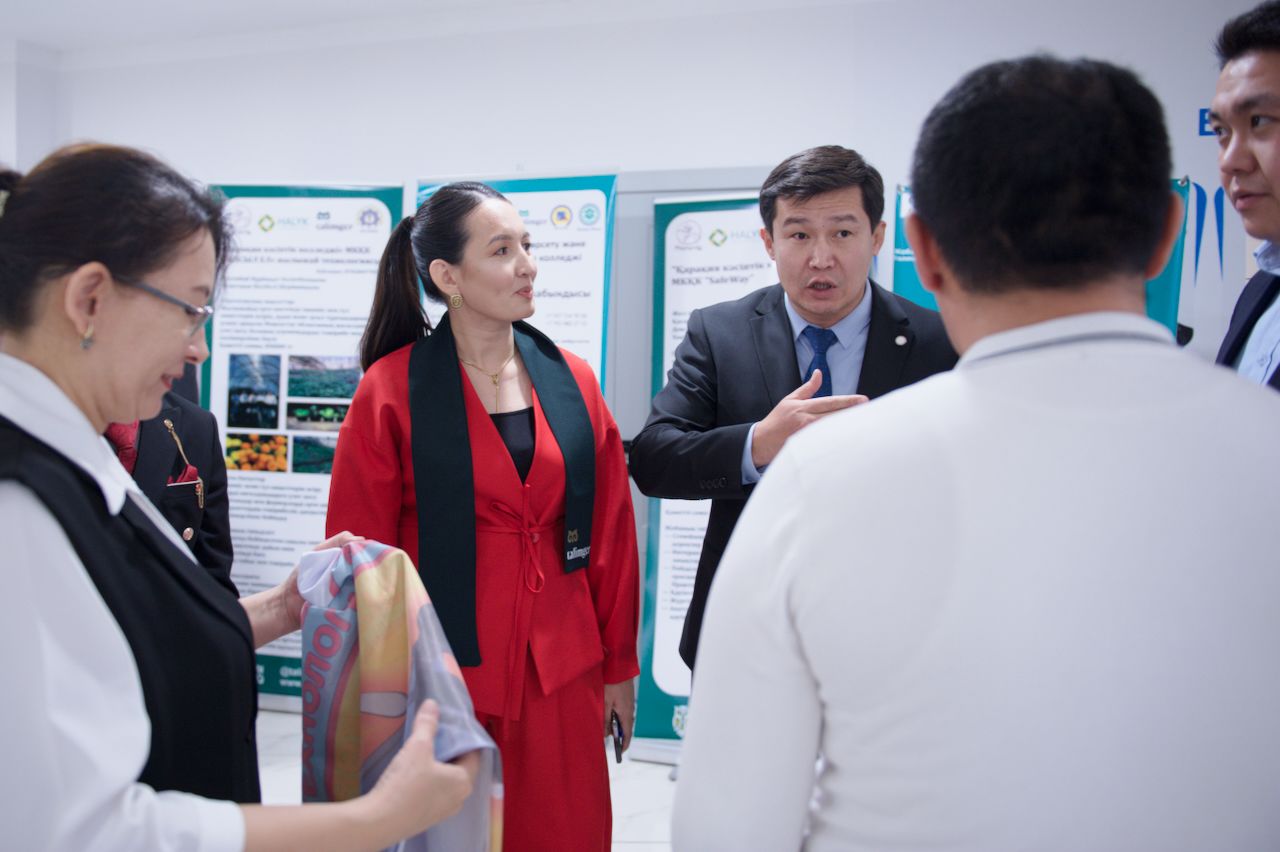
“I myself have been an entrepreneur for 11 years, and I have been working with young people for 15 years,” says Bibigul Shaikhieva, Chief Methodologist for Entrepreneurship of the Tәlimger project. “At the very beginning of the competition, I personally visited colleges, talked with students, taught and mentored them. I am always inspired by young people and want them to have a future here. Students from the Beyneu district, Karakiya, Aktau, and Zhanaozen took part in our competition. Today, the participants were supported not only by teachers and friends, but also by their parents. Over the course of three months, the students changed significantly and became more confident.”
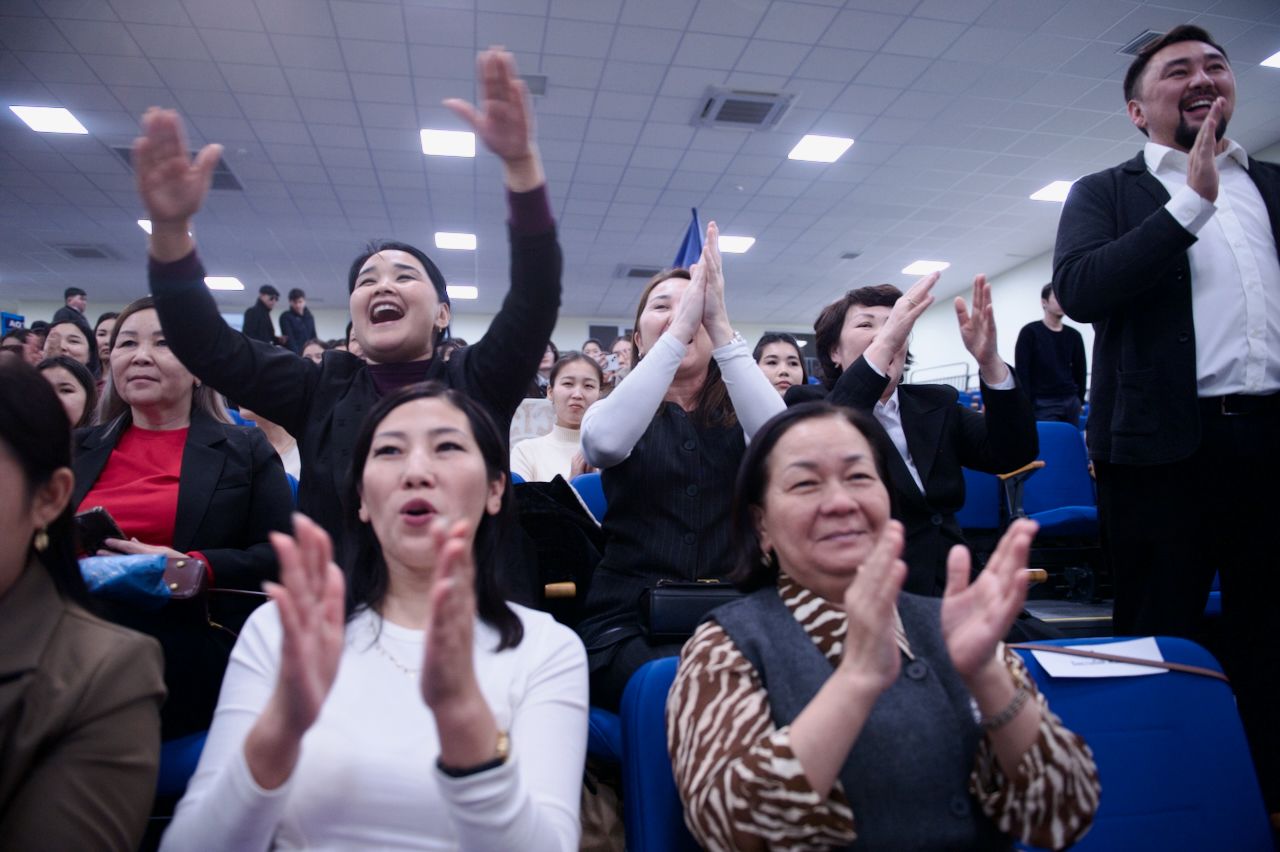
“College administrators say: ‘The student used to be quiet and exemplary, but during the project they changed and became a leader.’ The competition ignited the students, and they in turn motivated their parents, their colleges, and their mentors. Parents and teachers come up to us and thank us, saying: ‘The children energize us — it’s an amazing effect.’ I know every project and every participant by heart. We support every single project.”
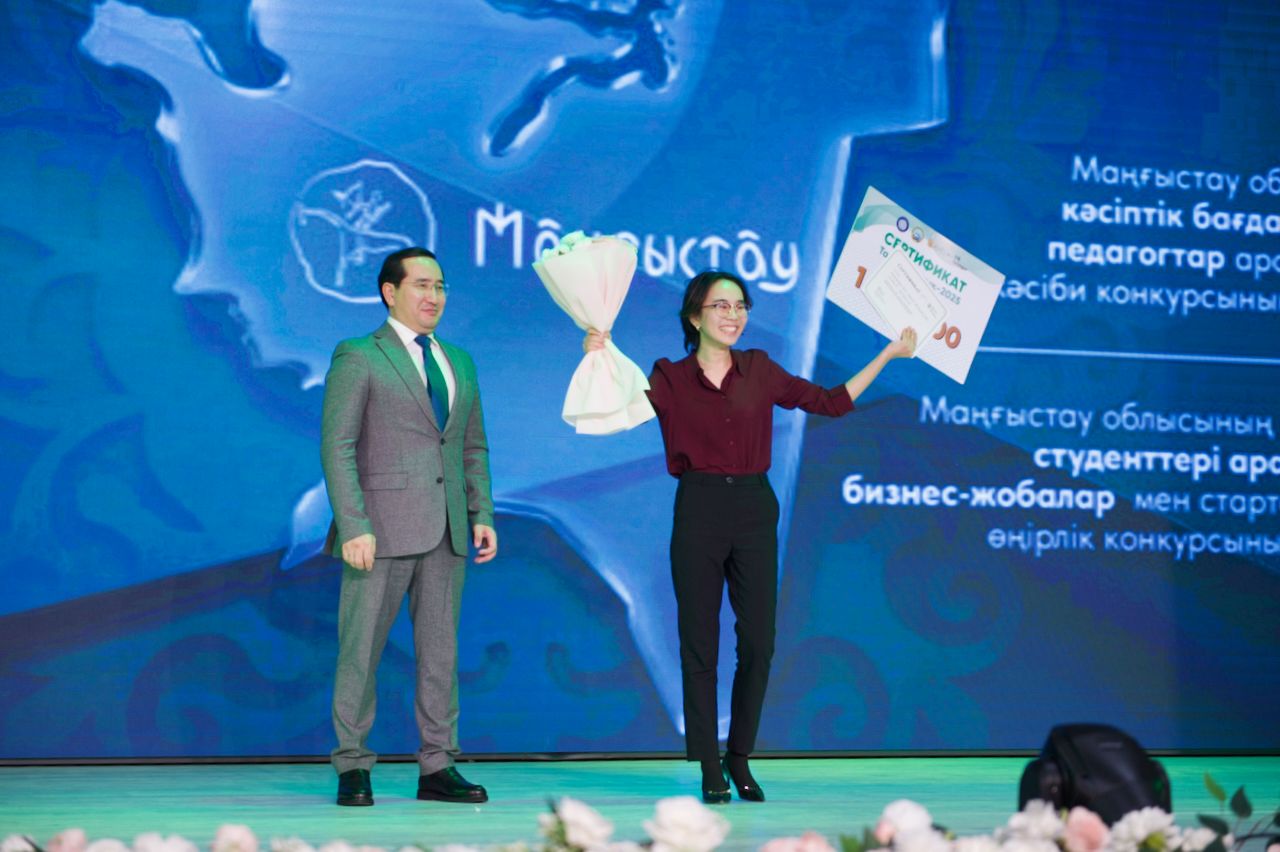
“After the semifinal, the students had only one month to implement their ideas. Today, we no longer see sketches on paper, but brands that are already ‘on store shelves.’ For this project, I deliberately brought in active entrepreneurs who genuinely support young people. We assembled a ten-member commission made up of representatives of local banks, local authorities, the Atameken National Chamber of Entrepreneurs, and regional business leaders. In the future, they will support student business projects. ”
Background: With the support of the Atameken National Chamber of Entrepreneurs, a business incubator was launched at the Higher Polytechnic College. Out of the 77 projects submitted to the competition, 11 came from this college. Six advanced to the semifinal, and three reached the final. This demonstrates that such work should be continued not only in colleges, but also in schools.

“I have been in business since I was 18,” says Eldos Aibekov, entrepreneur, philanthropist, and author of the textbook Fundamentals of Business and Entrepreneurship. “There were factories, workshops, waste processing, logistics, and warehouses in China. Today, I work in education and integrate my knowledge into colleges. Last year, I wrote a textbook that received approval from the Ministry of Education and is now being implemented in regions across the country. To write it, I spent six months meeting with 500 businesspeople, including three dollar millionaires and more than 30 multimillionaires.”
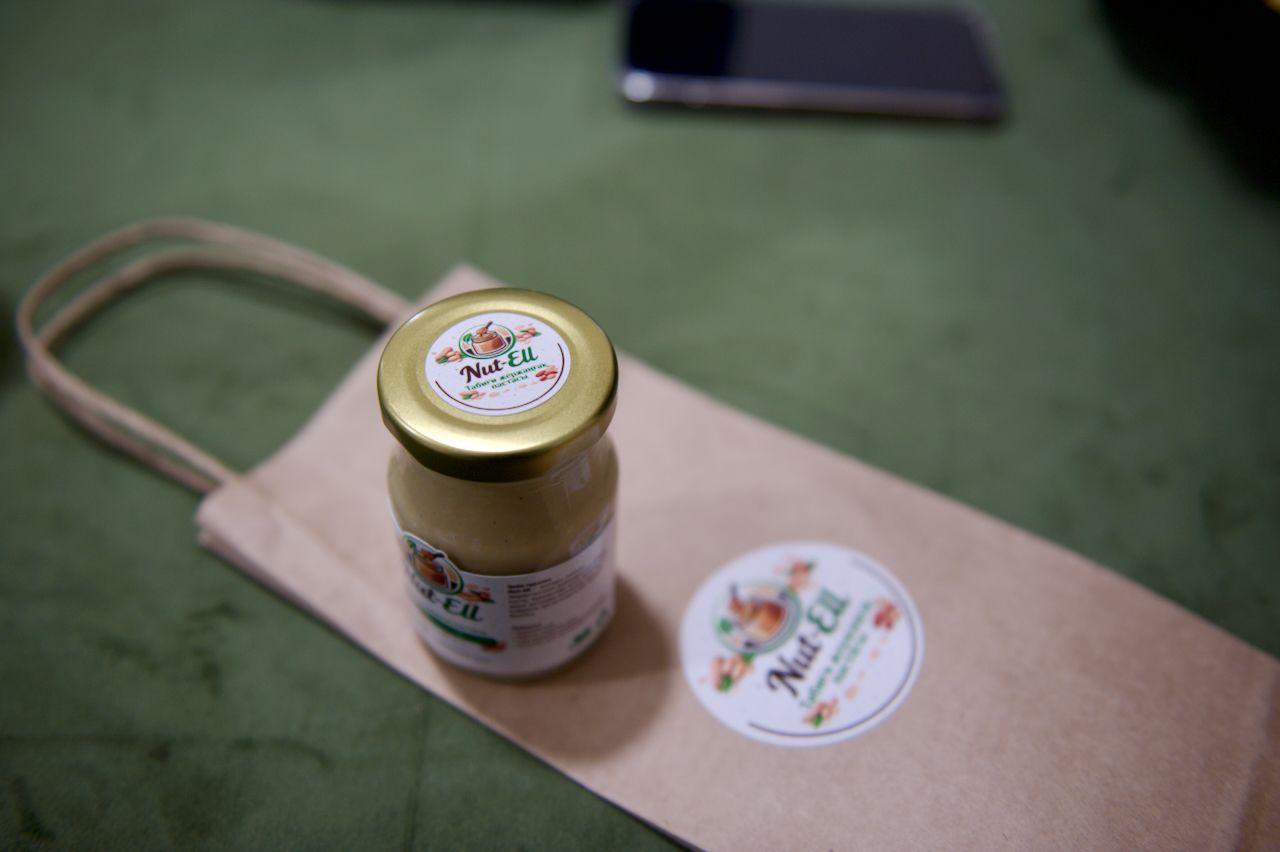
“Colleges attract young people whose potential is revealed during their studies, and I wanted to channel that potential into the country’s economy. Out of 77 proposals, we selected those who had already begun real production. In my view, one of the most successful cases is the Nut Ell project in collaboration with Köktem. I believe this project has strong potential in small and medium-sized business.”
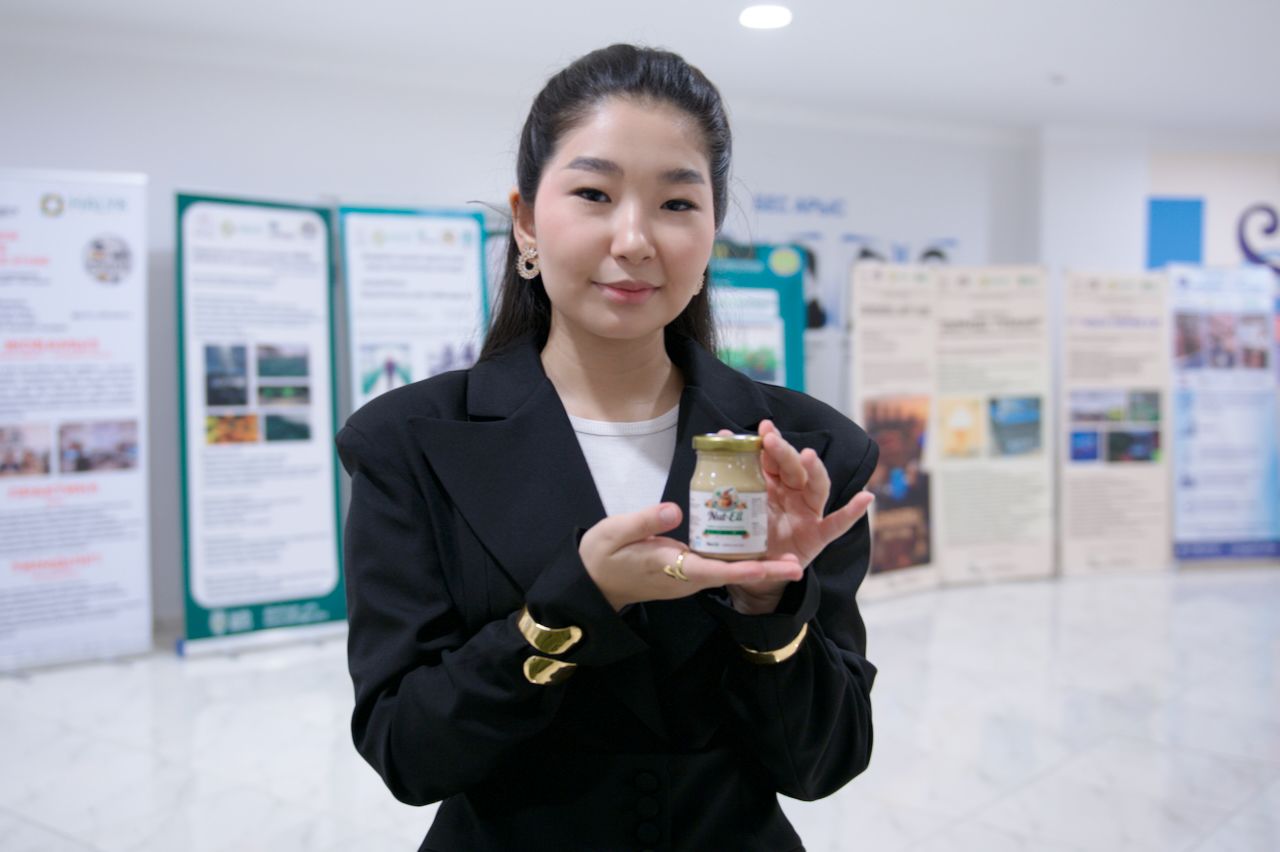
“It is difficult to find high-quality peanut butter in Kazakhstan,” says Tynyshyk Nurzhan, winner of second place. “My college supervisor suggested that I take part in the competition and asked whether I had an idea and a business plan. My project is called Nut Ell. The core idea is linked to the growing dependence on sweets among the population and changing eating habits in recent years. I wanted to contribute to preventing this problem. I personally love peanut butter, but it is hard to find a truly natural and high-quality product in supermarkets, so I decided to produce it myself. That is how my journey began.”
“Nut Ell is a natural peanut butter made from high-quality peanuts without harmful additives. Thanks to its natural composition, the product can be consumed by people of all ages, including those diagnosed with diabetes. At present, I consider my project to be developing successfully.”
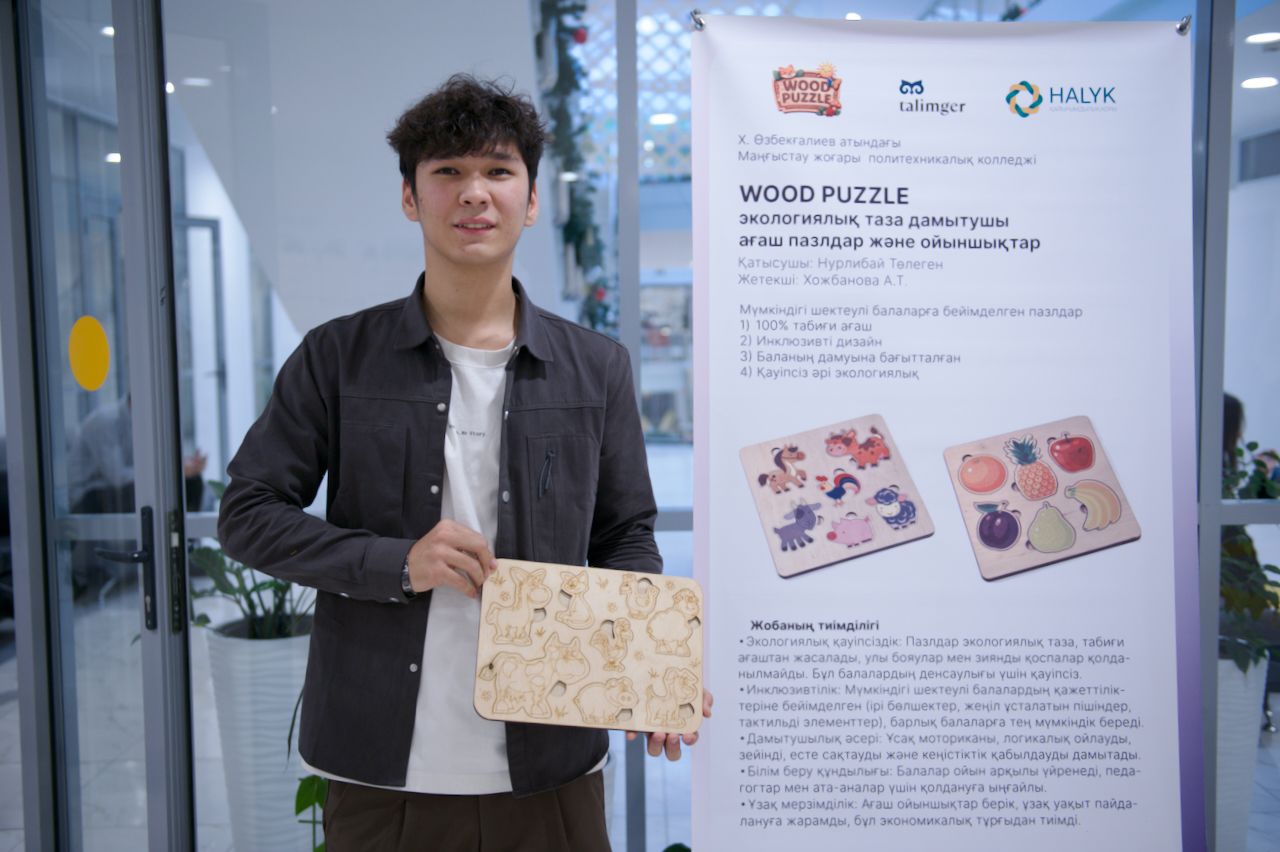
“I came up with the idea for Wood Puzzle when we were experimenting with a laser machine and making gifts for each other. That’s when I thought: why not make puzzles?” says Nurlybai Tolegen, a fourth-year student at the Higher Polytechnic College. “After that, I studied the market. There is competition in regular puzzles, and many of them already exist. But there are very few educational toys for inclusive children. Together with my curator, we decided to produce puzzles specifically for children with special needs.”
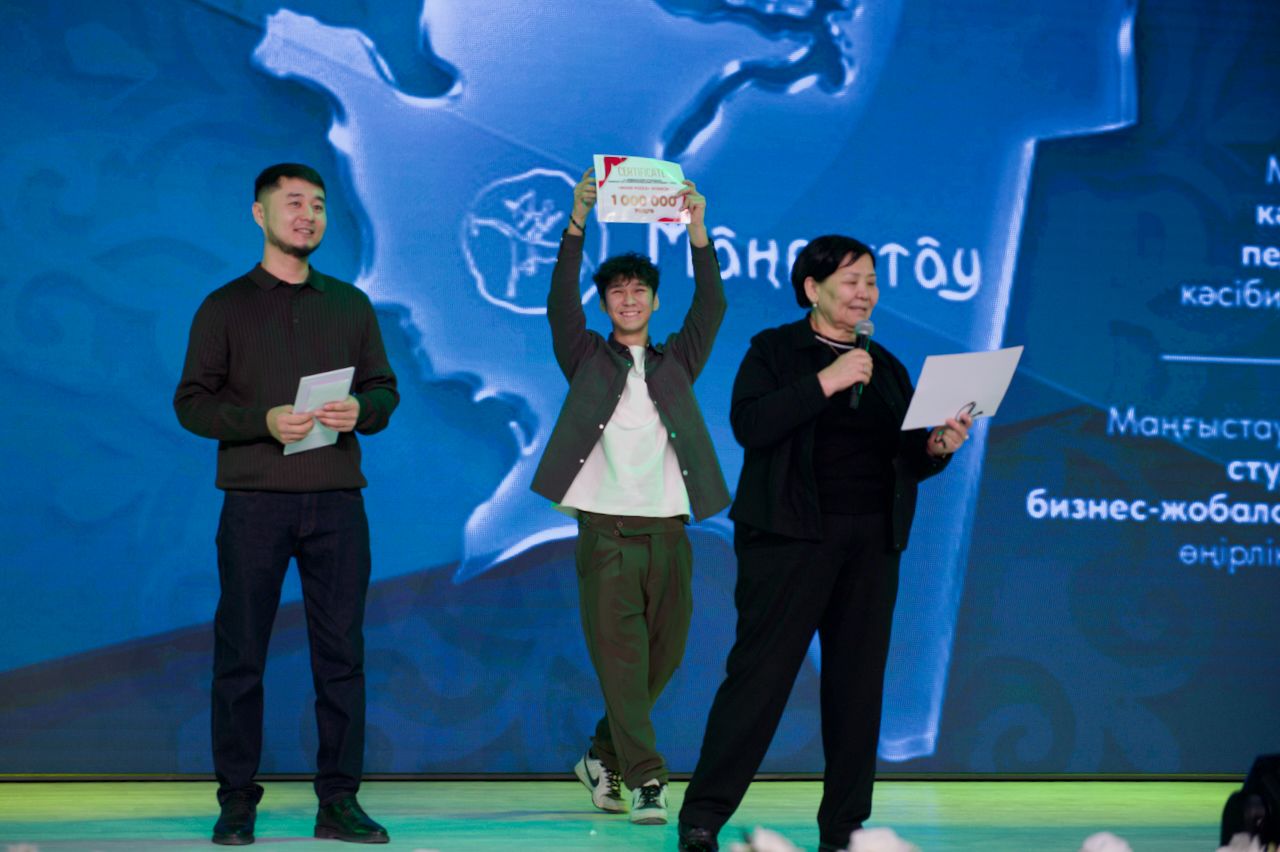
“Seventy percent of toys are made of plastic, while the remaining 30 percent are made of polycarbonate, glass, and ceramics. Wooden toys account for less than one percent. We are close to signing contracts with two kindergartens. We want to provide them with puzzle toys for trial use so they can promote them — that will serve as self-promotion. Currently, I sell through Instagram and WhatsApp. Over three months, we sold around ten toys. I have received offers for large-scale supply, and I believe we can now produce between 100 and 150 toys per month. The college provides us with access to production and rents out the equipment. The cost price of one toy is 4,500 tenge, and we sell it for 8,000 tenge. The margin is 3,500 tenge. For now, all profits are reinvested into development.”
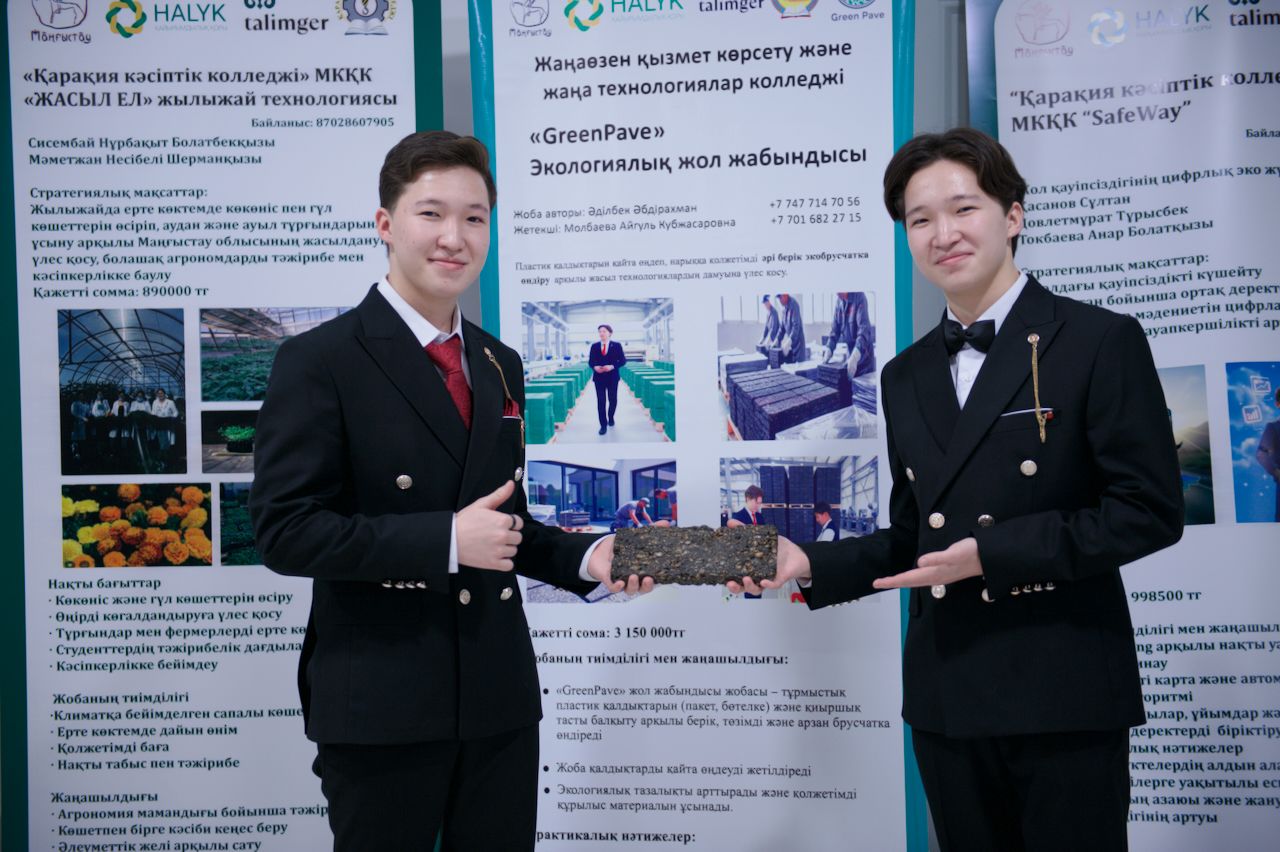
In the photo: Abdrakhman (right) with his brother and project partner Abdrakhim from Green Pave.
“My project is called Green Pave, and it focuses on environmental sustainability,” says Adilbek Abdrakhman, a first-year student at the College of Service and New Technologies in Zhanaozen. “The amount of plastic waste is constantly increasing, while recycling levels in Kazakhstan remain low. That is why I chose this project — to protect the environment. The idea is to recycle plastic waste: plastic is shredded, melted, mixed with crushed stone, and then used to produce eco-friendly paving blocks. In this way, we contribute to environmental protection. Given that Mangystau is a tourist region, this product can be useful not only for ecology, but also for tourism development. The paving stones can be used in private yards, on sidewalks, pedestrian paths, public spaces, and in road construction.”
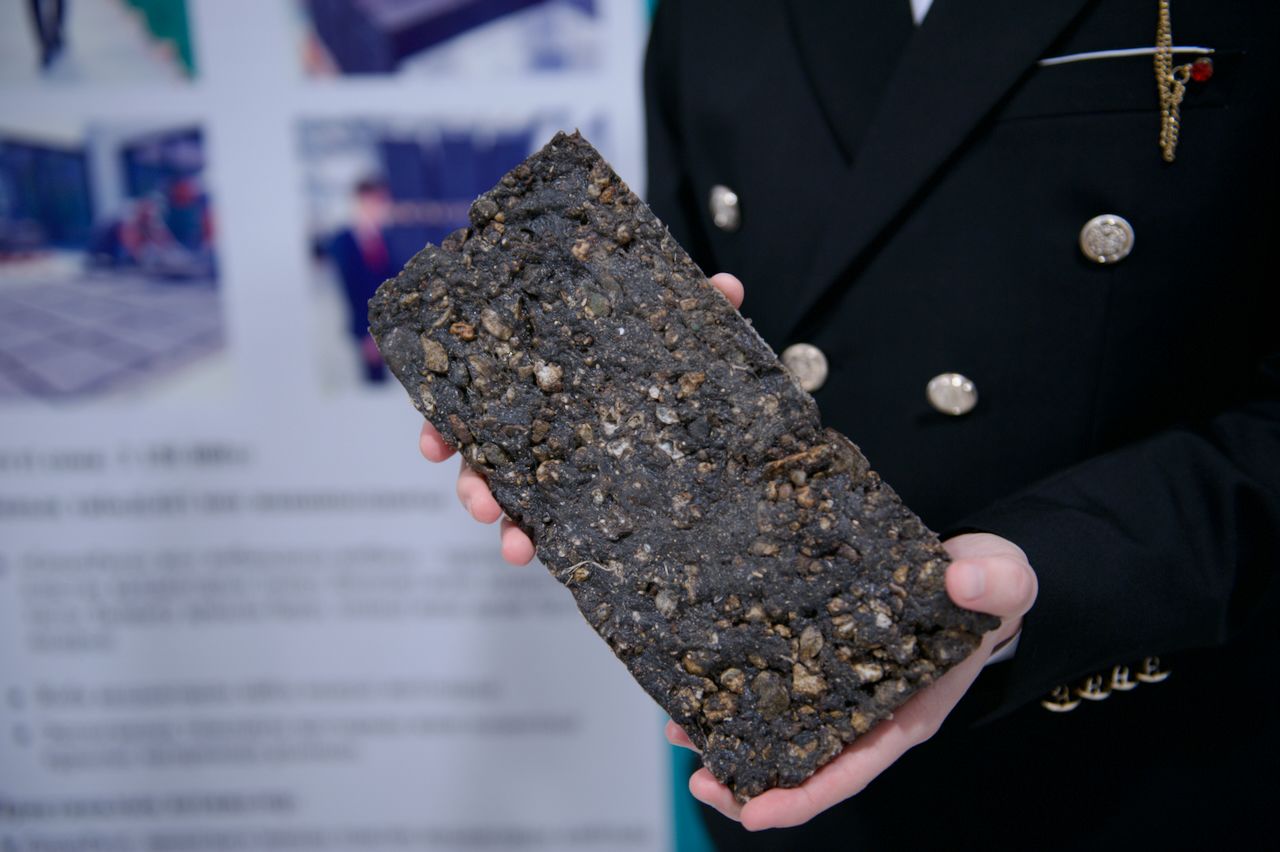
“We have already signed a letter of intent and a preliminary agreement. If production is launched in the future, private entrepreneurs have expressed readiness to purchase this product. We have produced test samples and tested them in practice. In addition to paving stones, we also tested producing roofing materials and curbs from recycled plastic. The project is developing, and I see great potential in it.”
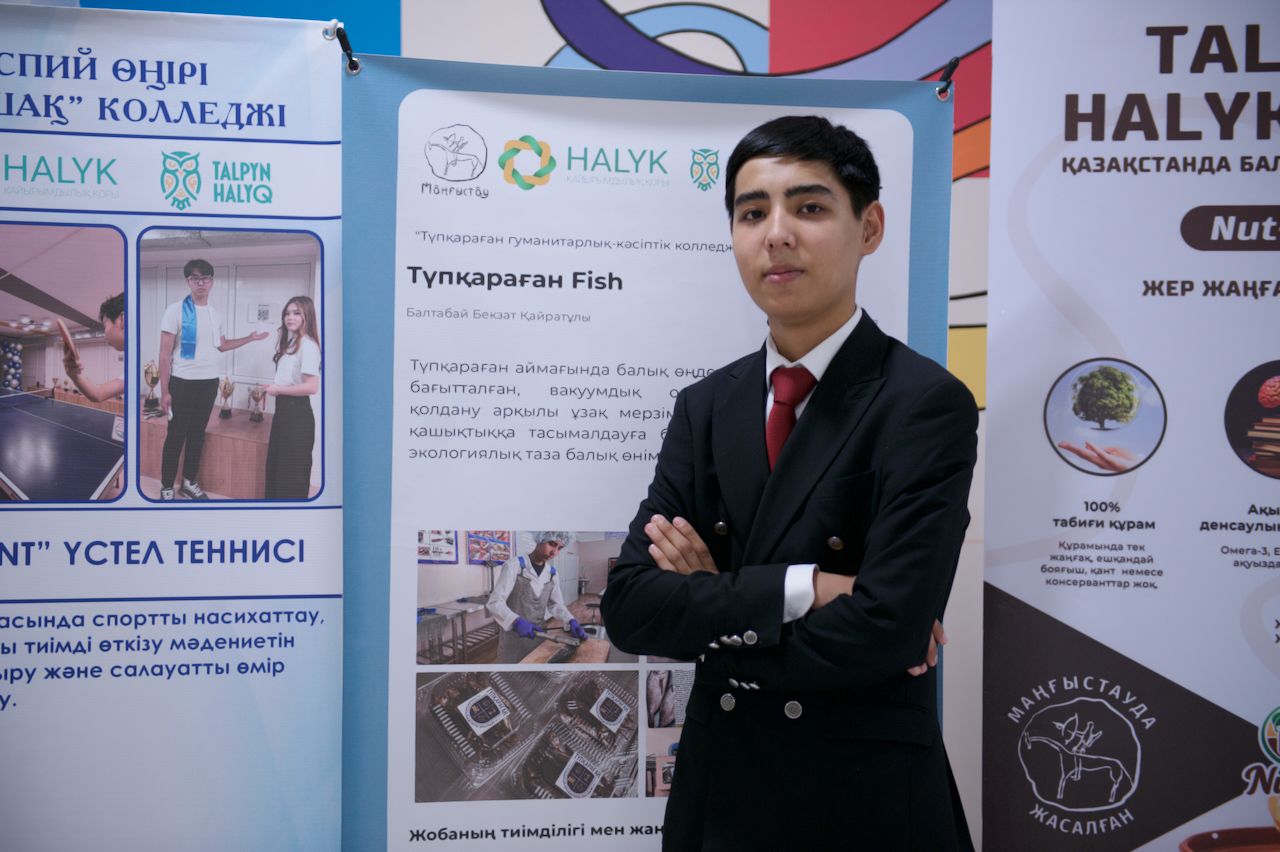
“In the Mangystau region, only our college offers a specialty related to fish production, which is why I chose this field,” says Bekzat Baltabai, a second-year student at the Tupkaragan Humanitarian and Vocational College. “The Tupkaragan Fish project is based on fish processing technology using vacuum packaging. This technology preserves product quality and significantly extends shelf life. The project has given me many opportunities, and through it I have made new friends. I had been developing this idea since last year and participated in various competitions, but it was the Tәlimger project that gave me a real opportunity for growth. I would like to sincerely thank the organizers.”
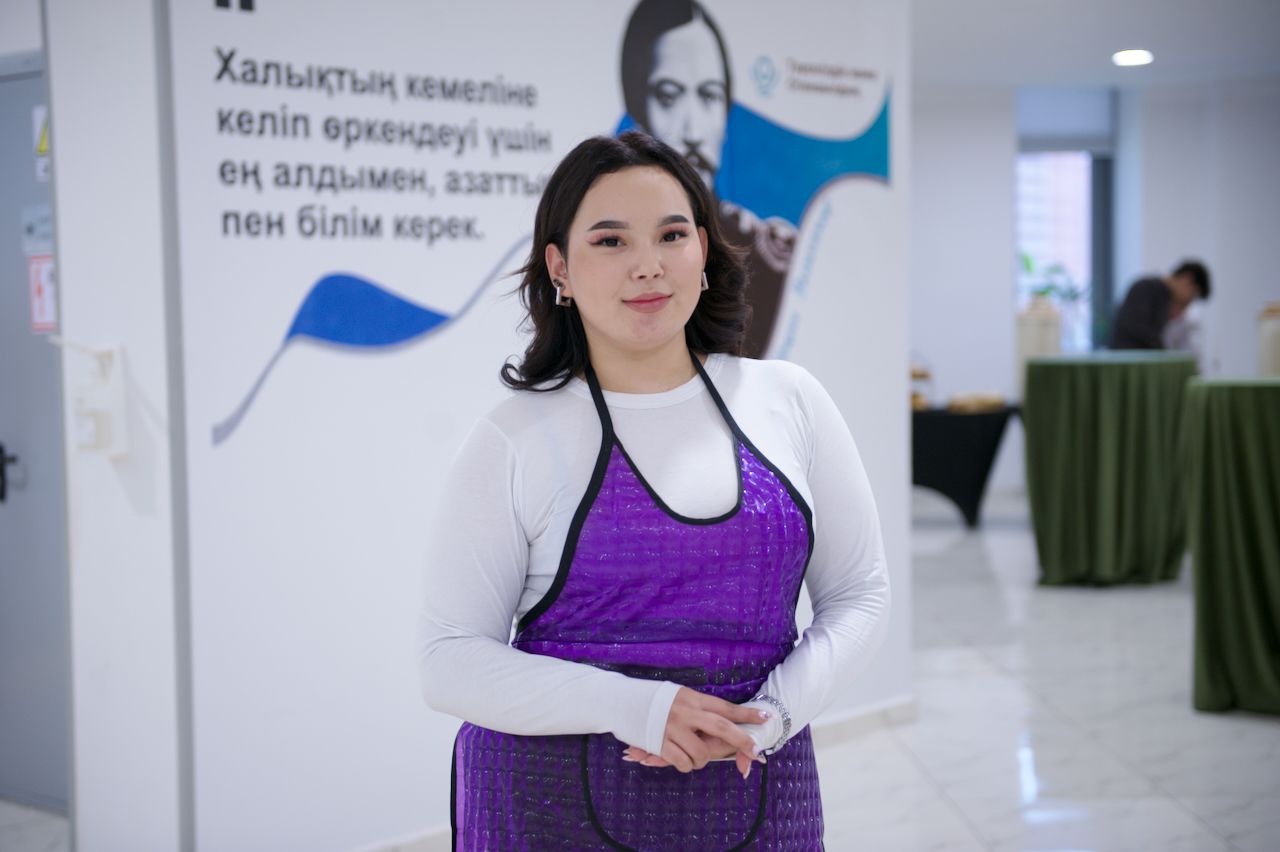
“My supervisor Gafura Zhekesheva told me about the competition,” says Zhansaya Iskendirova, a third-year student at the Technological College. “She believed in me. Our proposal is in the beauty services sector. Since I already work in this field, we decided to continue developing this idea. The uniqueness of our project lies in the fact that we do not operate in a salon — we travel to clients at a location convenient for them and work strictly by appointment. We have an Instagram page through which we accept orders, and today orders are already coming in actively. We currently have more than 150 clients. We plan to find sponsors and expand the project to three regions within six to twelve months.”
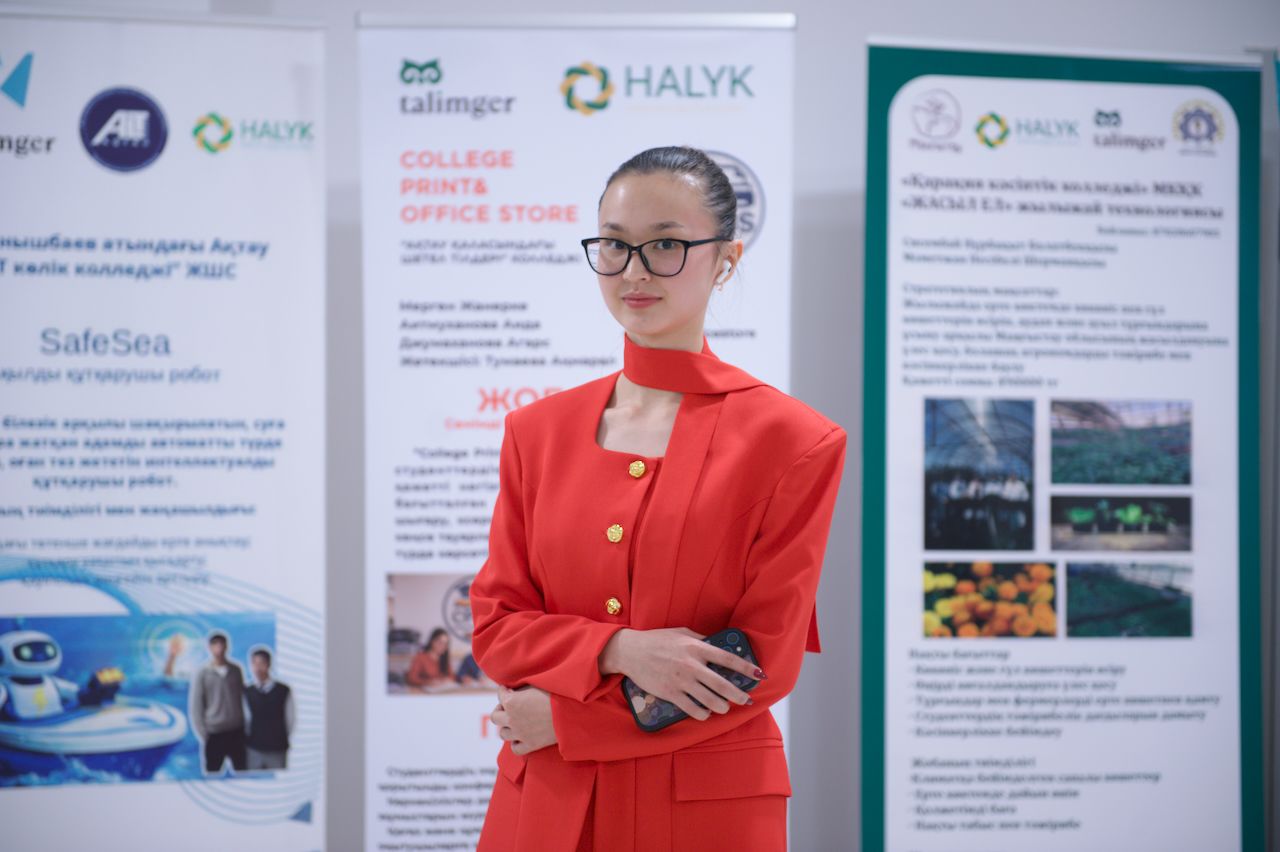
“Our project is a printing service and stationery sales directly within the college,” says Zhanerke Mergen, a second-year student at the College of Foreign Languages. “This is always needed by students and teachers. We constantly face situations where a lot of materials need to be printed for practical work, which is expensive. That’s why we decided to launch this project to help students. We now help second-year students prepare folders for internships, print assignments for third-year students, and produce handouts for teachers, who use a lot of paper.”
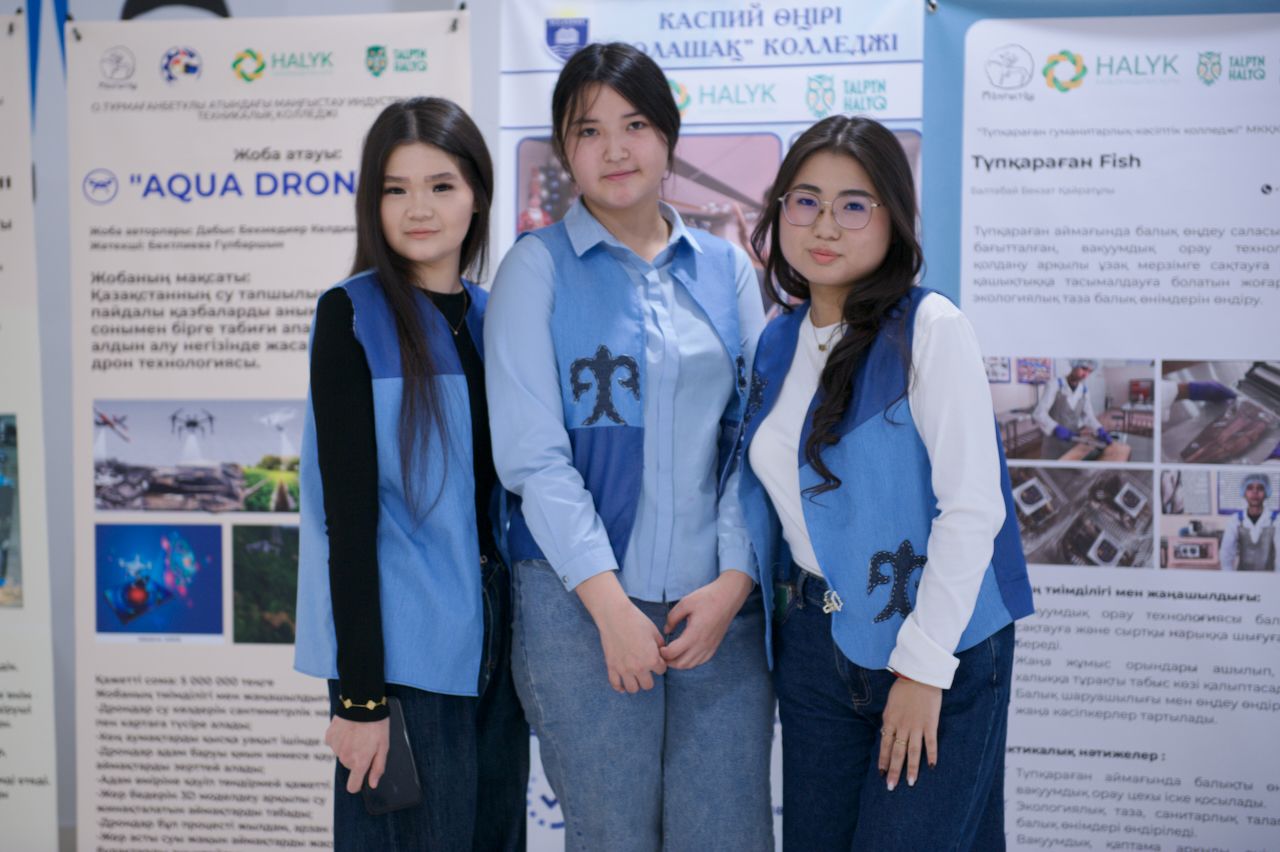
In the photo: Asel with her business partners Kausar Kashebaeva and Aigerim Berdy.
“Our instructor had previously involved us in various competitions, and we won some of them,” says Asel Aimurzayeva, a student at the Technological Service College. “That’s why we decided to try our strength here as well. One of today’s major problems is fast fashion — the constant change of trends and low-quality fabrics. The idea of our project is that clients bring their jeans or other clothing, and we redesign them into new styles according to the client’s wishes. We mainly work with denim because it is durable and long-lasting. In this way, we contribute to conscious consumption. In just one month, we tailored around fifteen items. Prices depend on the complexity of the work — some items were sold for 50,000 tenge.”
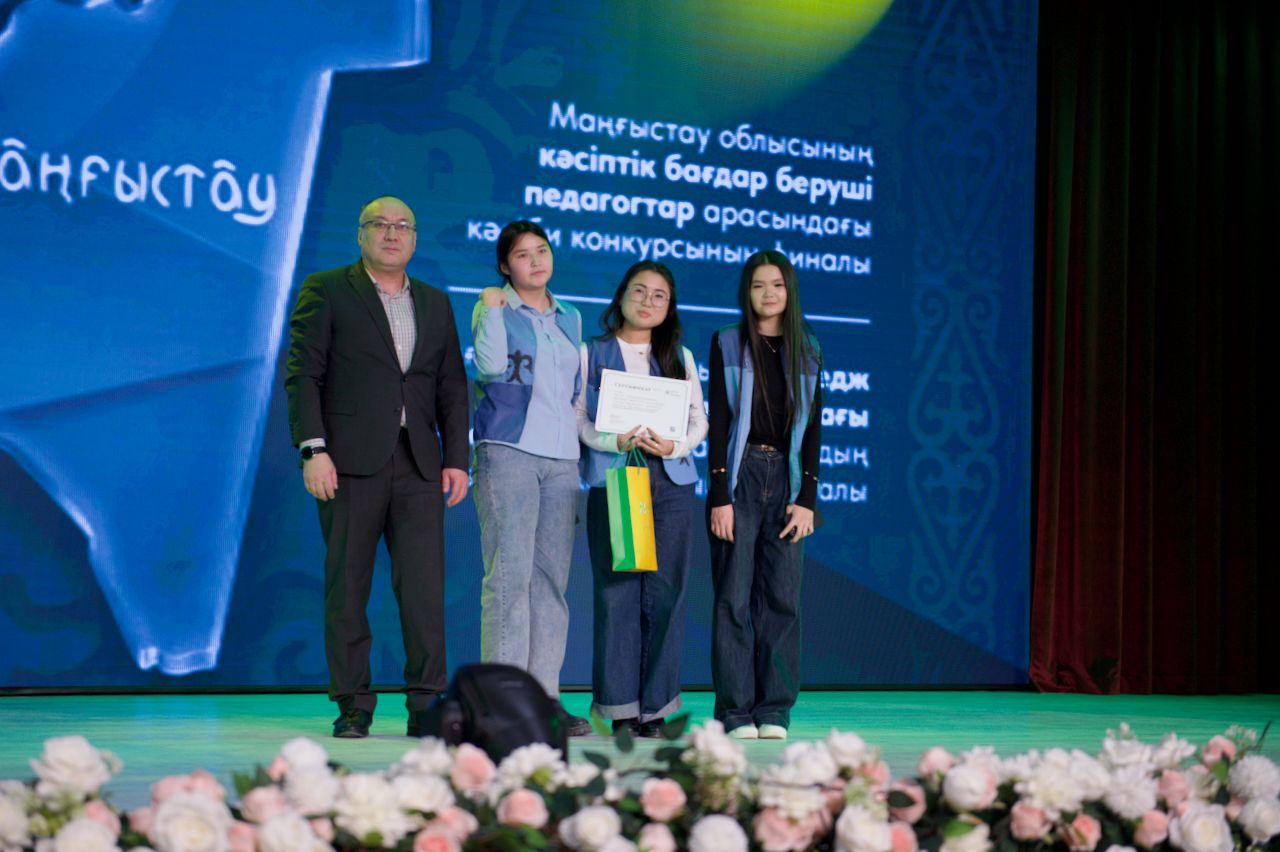
“I believe Talpyn.Halyk 2025 is a very powerful competition because it gave us many opportunities, helped us find friends, allowed us to communicate and exchange knowledge with professionals and practitioners, and most importantly, enabled us to implement our own ideas in practice.”
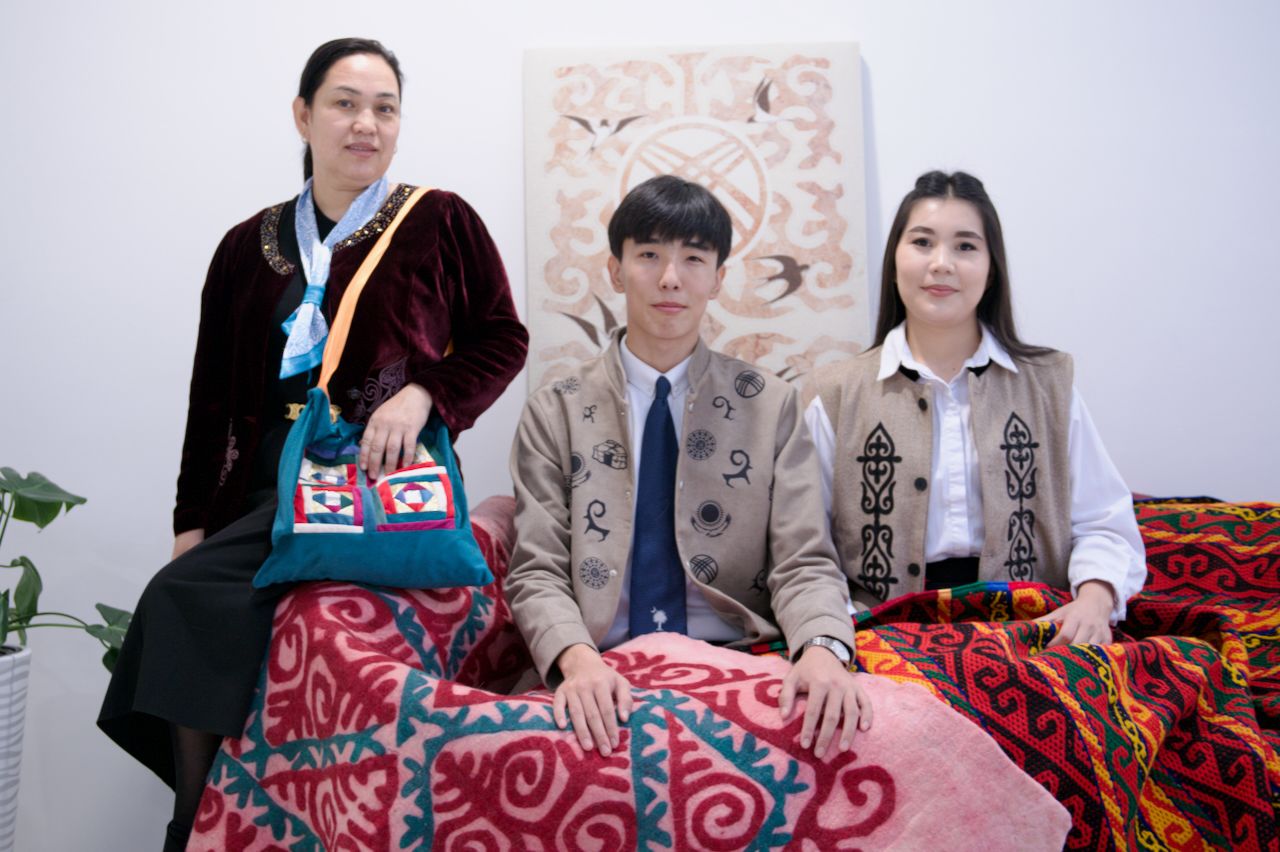
In the photo: Karlygash with her project partner Alikhan Syrymov and curator Aikumis Aitzhanova. The Kiiz Art project won first place.
“Our project is called Kiiz Art,” says Karlygash Konysbai, a fourth-year student at the Murat-zhyrau Sengirbekuly College. “Today, many homes use Iranian carpets made from artificial materials such as nylon and viscose. These products do not retain heat and can cause allergic reactions. In contrast, our products are made from 100 percent natural sheep wool, do not cause allergies, and are dyed exclusively with natural dyes. Our products belong to Kazakh national decorative and applied art, and the main goal of the project is to revive and popularize Kazakh national art.”
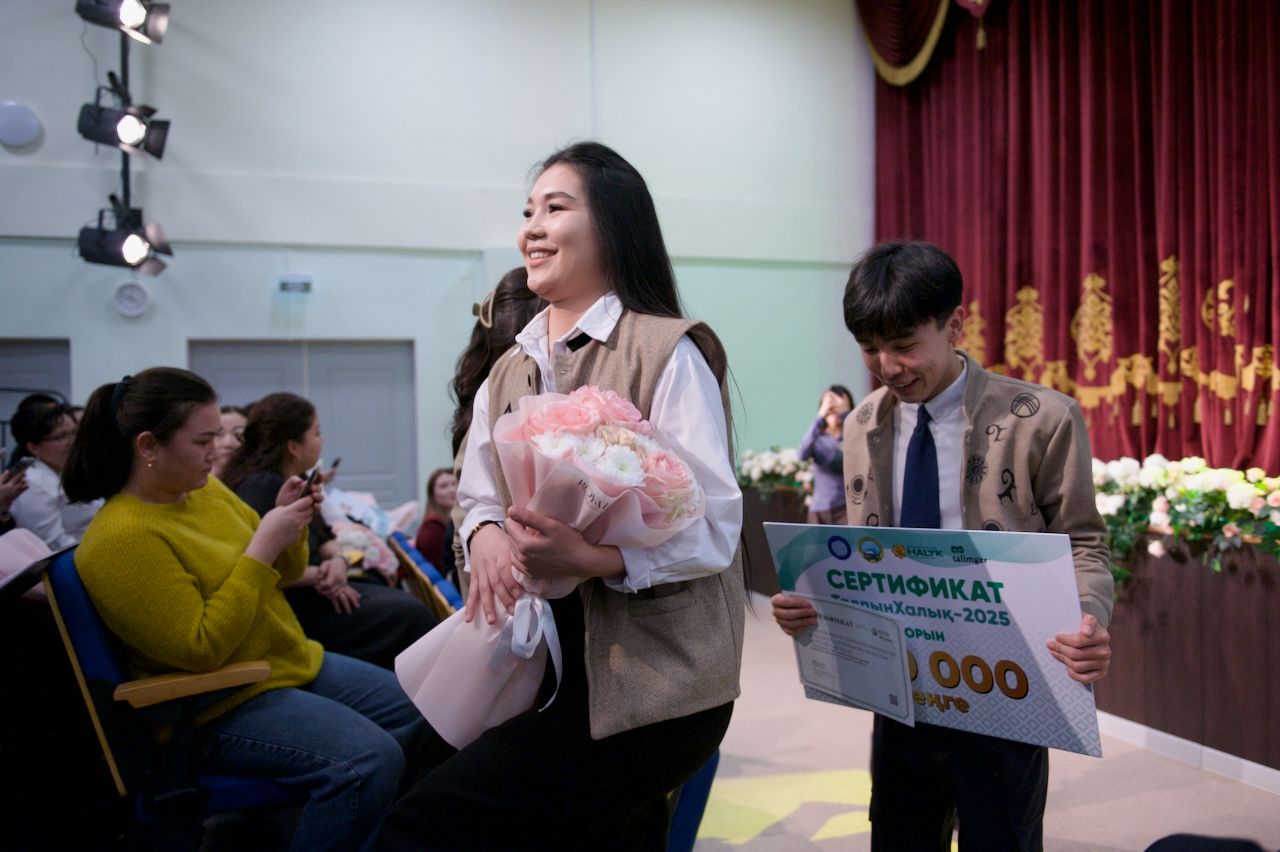
“Today, our products are sold in the Bak Bol store, which specializes in folk handicrafts. Kazakh decorative and applied art is actively developing, and people increasingly decorate their homes with elements in the national style — panels, carpets with ornaments, and other items. To further develop this direction, preserve the national style, and support the continuation of Kazakh art, we proposed our business plan. Within the project, we produce tekemets, ala-teru, shashbau, and decorative panels in the Kazakh national style.”
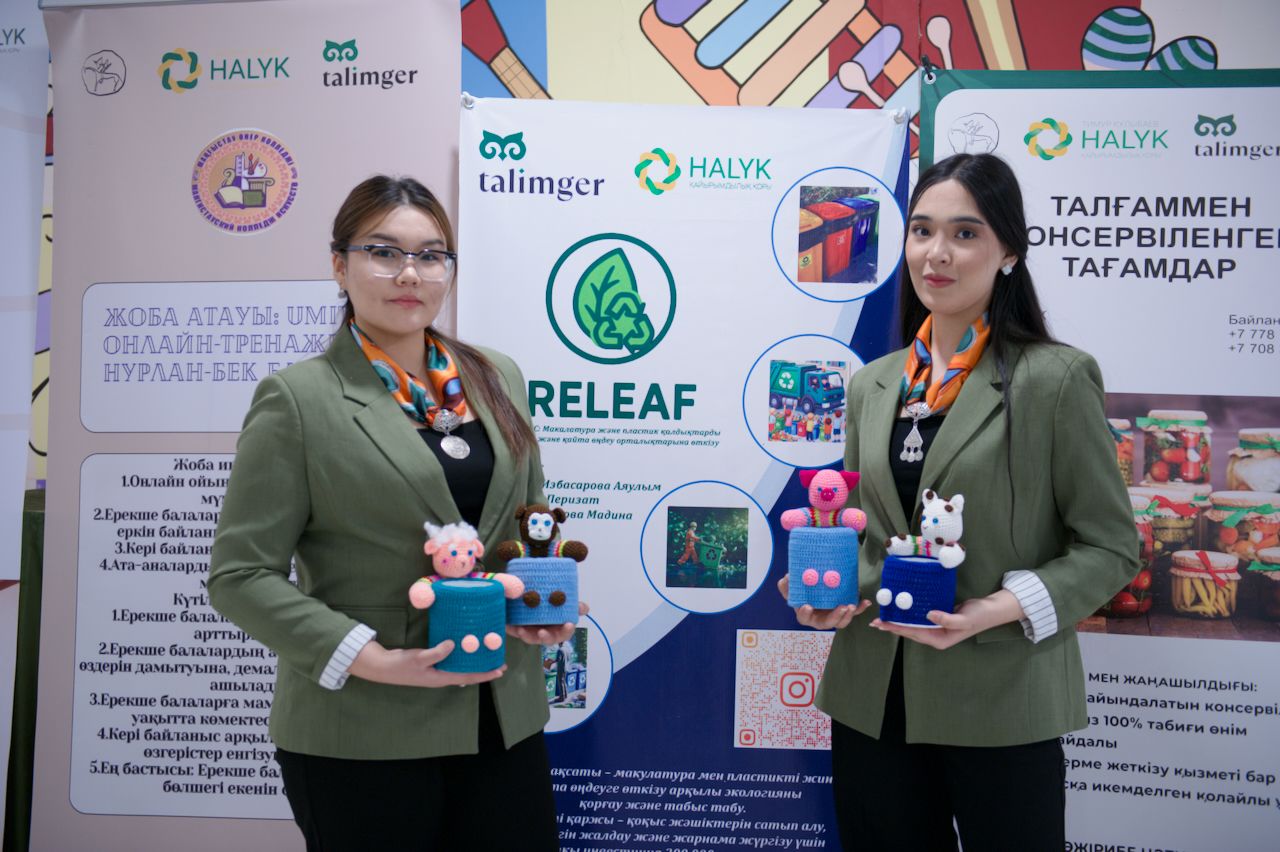
In the photo: Ayaulym with her partner Perizat Baktybaeva and project curator Madina Yesenova.
“Our project focuses on collecting and transferring waste paper and plastic to specialized recycling points,” says Ayaulym Izbasarova, a second-year student at the Caspian Higher Pedagogical and Sectoral Technological College in Zhanaozen. “We also tested recycling waste paper into clean sheets, from which we made notebooks and distributed them to the jury. In addition, we are considering recycling plastic into yarn. Our college supported our initiative, signed a contract with us, and provided the first batches of waste paper, becoming our first and permanent partner. Our first income amounted to 40,000 tenge, which was a very important start for us. In the future, we plan to scale the project and develop it in other regions.”
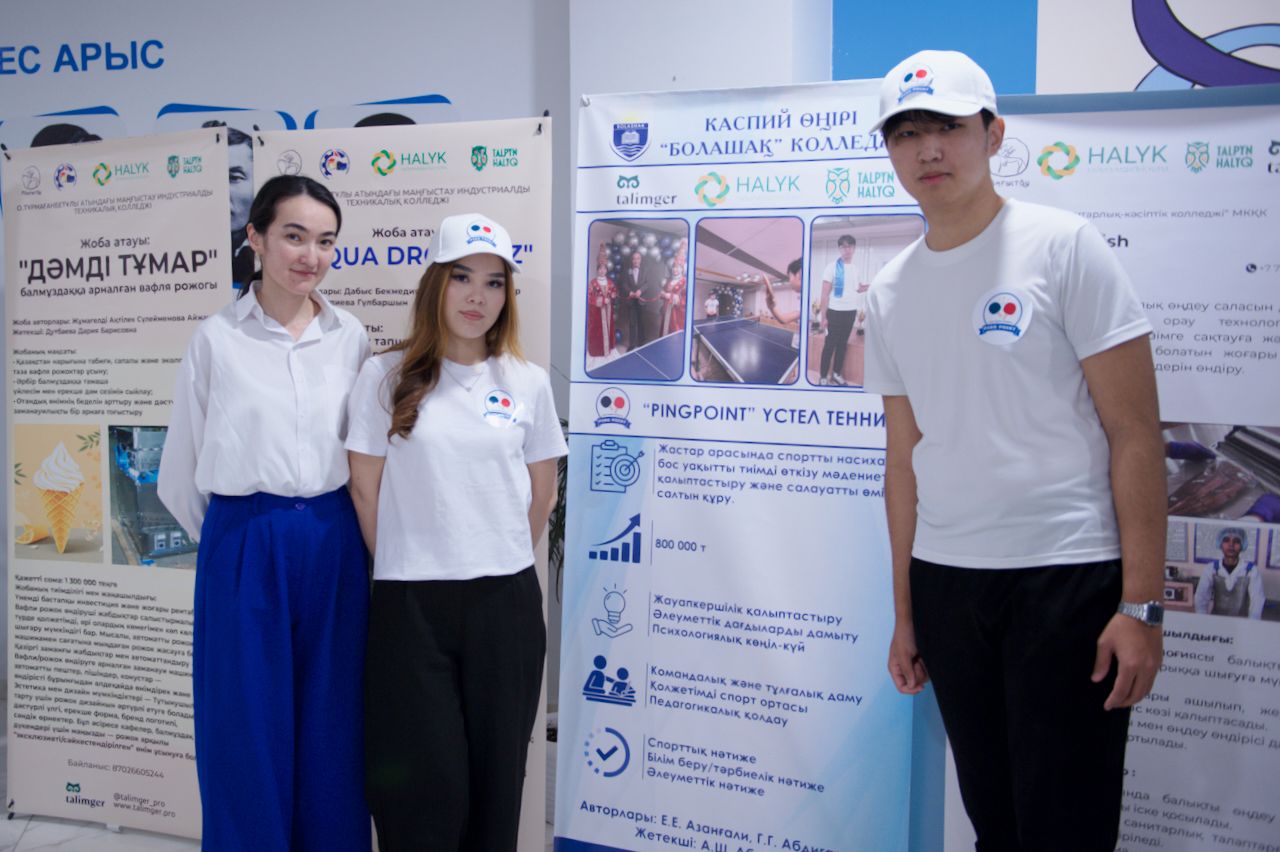
In the photo: Gulnur with her partner Yernar Asangali from the Pink Point Table Tennis project and project leader Azhar Abdullayeva.
“Since I am personally passionate about table tennis, I decided to further develop this direction,” says Gulnur Abdigapurova, a first-year student at the Caspiy Oniri Bolashak College. “Our Pink Point Table Tennis project aims to promote sports among young people, encourage a healthy lifestyle, and ensure effective use of free time. Today, we are implementing this project at our college with the support of the director. At first, we organized free classes for one or two students, and later introduced a fee of 500 tenge per hour.”
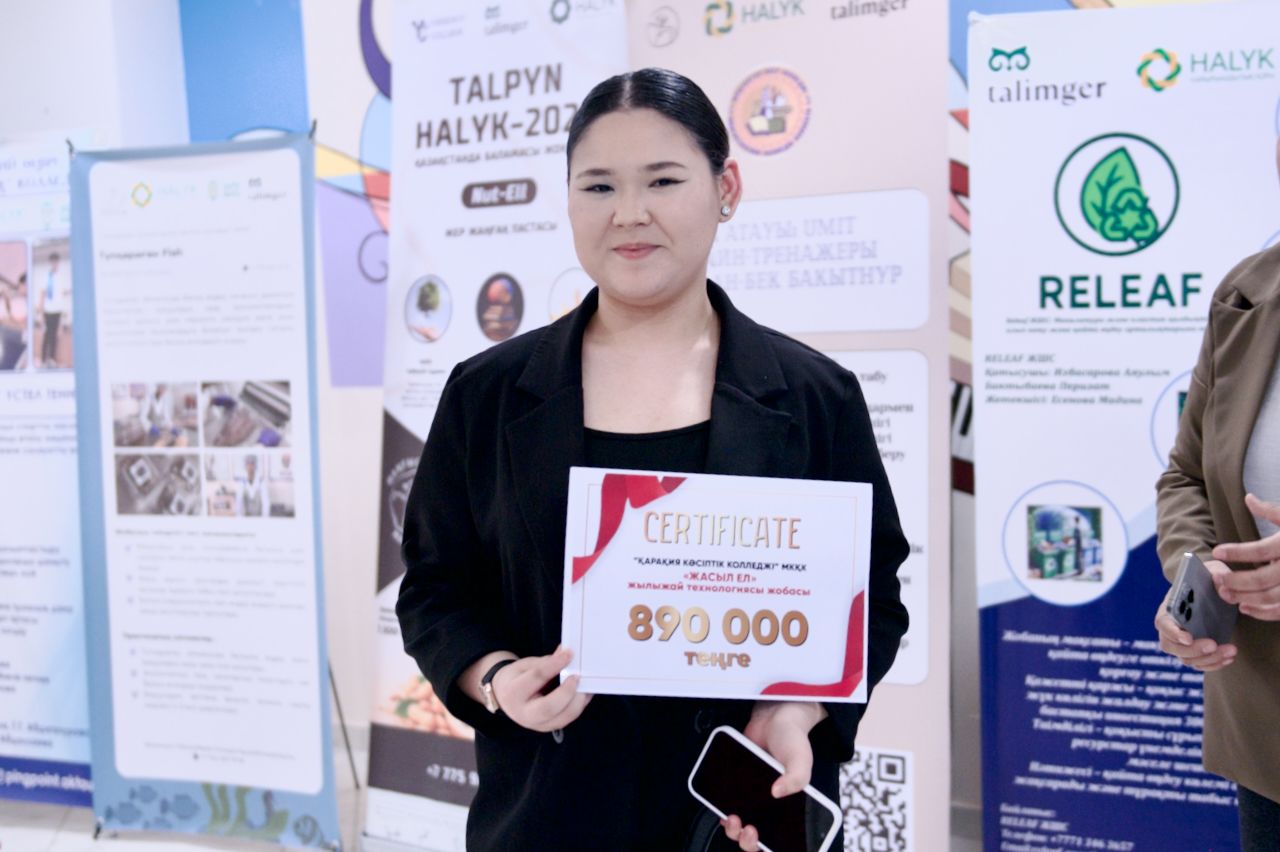
“I decided to participate immediately because I already had a ready idea,” says Nurbakyt Seisenbay, a second-year student at the Karakiya Vocational College. “The goal of my project is to sell seedlings at affordable prices. In the future, I want to scale this direction further. For example, plant selection and hybridization are very well developed in China, and I would like to apply this experience in Kazakhstan. I want our country to become greener and more landscaped, like Dubai, where even desert areas are turned into flourishing green spaces. Of course, it is impossible to change the whole of Kazakhstan at once, so I want to start with my native region. To implement the project, I needed 890,000 tenge. At present, I do not yet have specific partners or agreements, but I plan to attract investment in the future.”
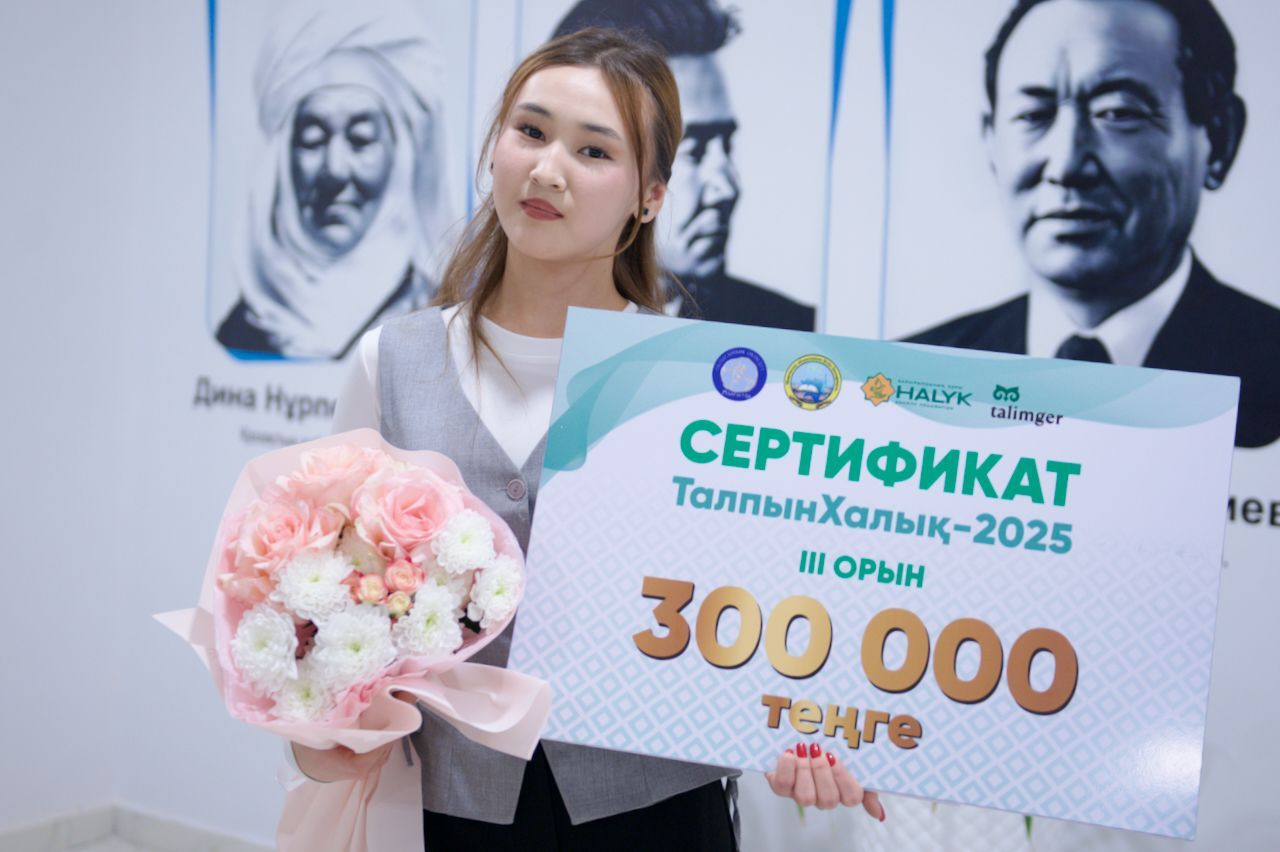
“Previously, my mother won a grant for an ice cream business, but it closed because there was no in-house production of waffle cones,” says Aktilek Zhumageldi, a third-year student at the Zhanaozen Technical and Vocational College. “That’s when I thought: why not start producing waffle cones myself and selling them? To implement the project, I first need to purchase special equipment and then launch production. The project requires around one million tenge for development. At the moment, I do not yet have ready clients or signed contracts, because the first step is to purchase the equipment and start the process.”
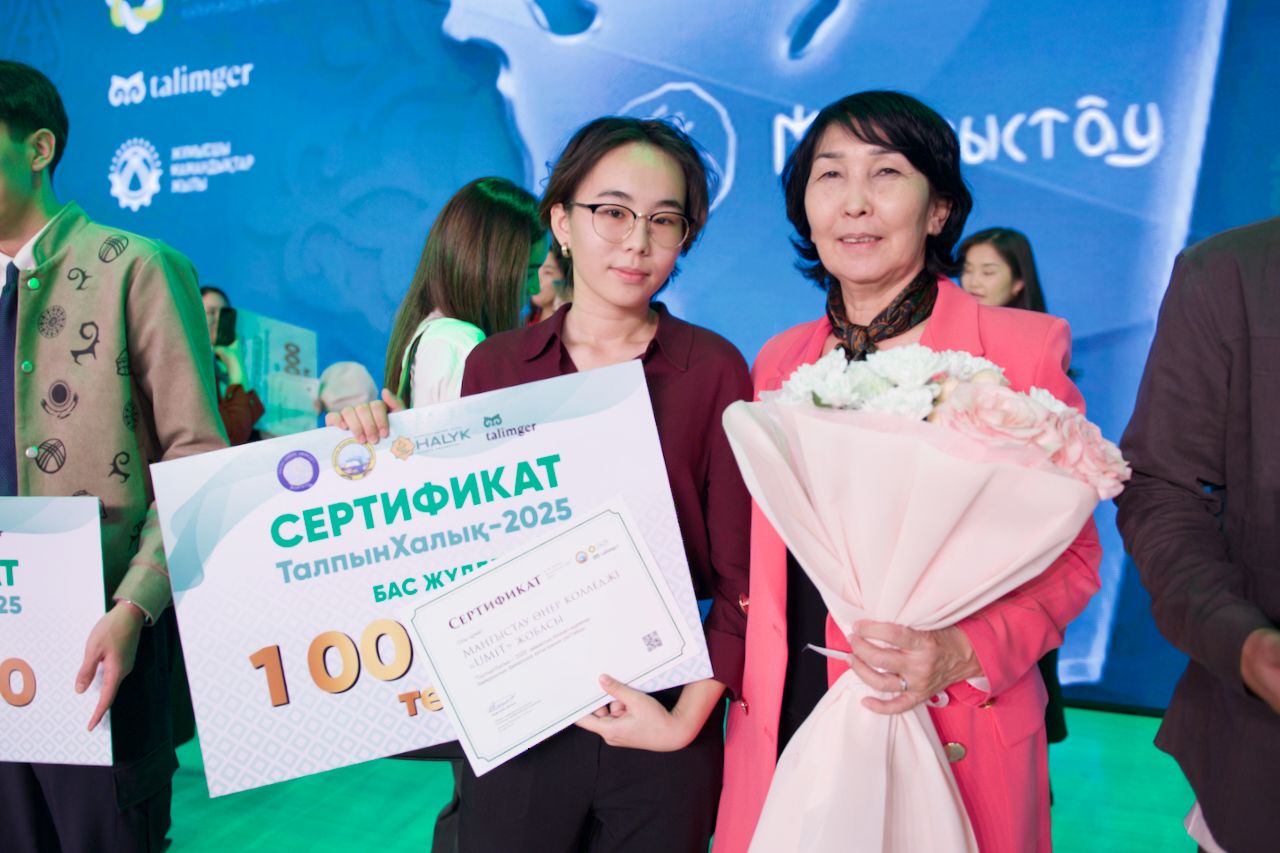
“My project is called Umit, and today I am very happy to have won the Grand Prix,” says Bakyt Nurulanbek, a fourth-year student at the Mangystau College of Arts. “The idea of my project is based on my personal story and is connected to my younger sister. She has a developmental delay diagnosis, and that is why I wanted to launch this project. More specifically, I want to help parents remotely, in an online format, so that they can save financial resources while devoting more time and care to their children. That is how the idea of the Umit project was born.”
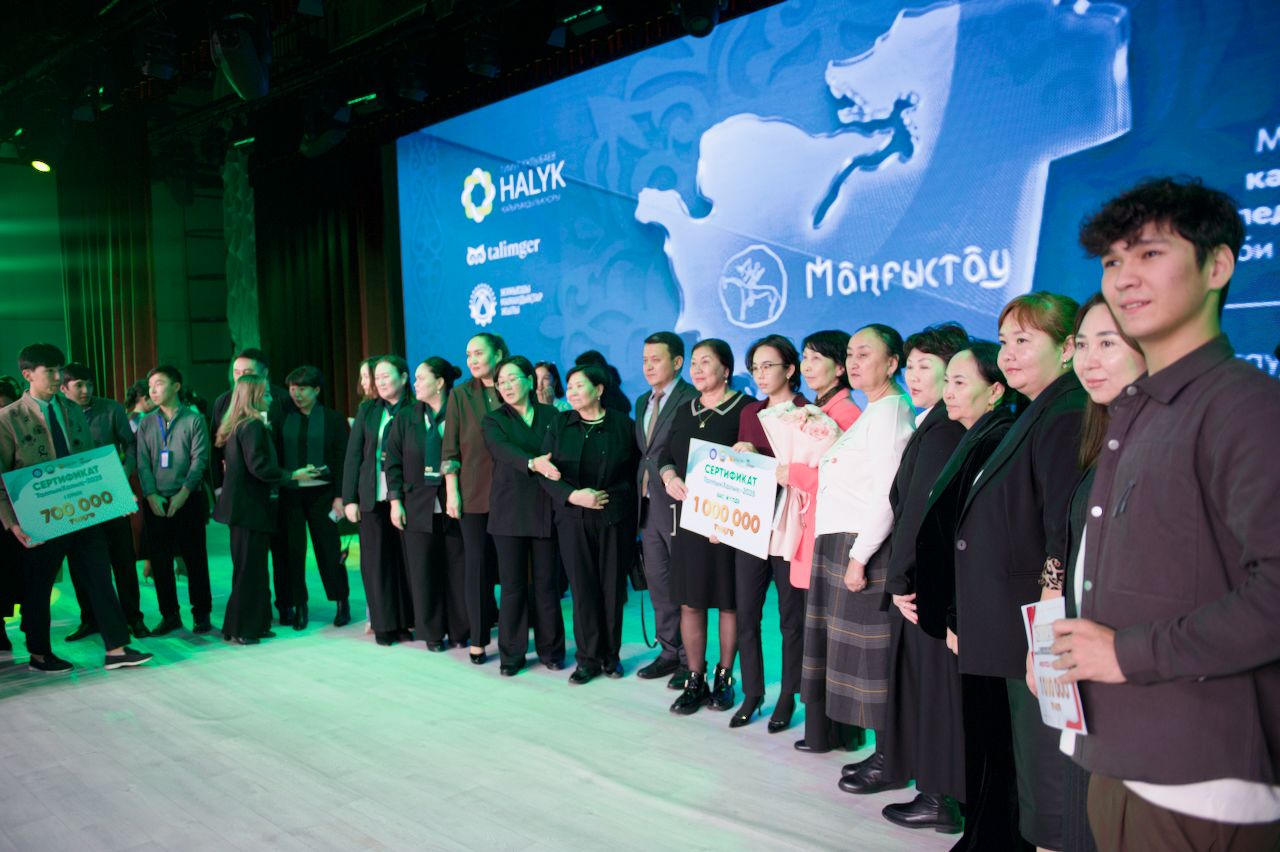
Talpyn.Halyk 2025 is not a one-time initiative, but the beginning of systematic work. The Halyk Foundation founded by Timur Kulibayev and the Tәlimger program plan to scale the Mangystau region’s experience to other regions of Kazakhstan. For students, the competition will become a flagship pathway into business, and their successful ventures will contribute to the development of the regional and national economy.

How Auyl Sport opens the path to global victory for rural youth…Photo report by Karlygash Nurzhan for Shanger.kz

How the terminal launch and “Otpan” project transform Beineu…Photo report by Karlygash Nurzhan for Shanger.kz

Ekaterina Smolyakova’s journey from childhood to KBTU, her love for Kazakh language, teaching, and inspiring a new generation of students.

Digital Bridge 2025 gathered 500 startups and AI innovators, showing Kazakhstan’s readiness for a major digital transformation.

IT Fest in Kazakhstan showcased school and university talent through projects, hackathons and innovations, highlighting the nation’s digital future.

AITU and NNEF initiatives accelerate AI development in Kazakhstan, equipping educators and experts with new skills and opportunities.
Comments
No comments yet. Be the first to comment!