Digital Bridge 2025: Kazakhstan’s Digital Leap Forward
Shanger.kz and Карлыгаш Нуржан

The international Digital Bridge 2025 forum in Astana brought together more than 500 startups, over 500 investors and business angels, technology entrepreneurs, and representatives of leading corporations. It is the largest IT event in Central Asia, demonstrating that Kazakhstan is ready for a new stage of digital transformation. From environmental emissions monitoring and water safety systems to AI-based disease diagnostics, fintech solutions, and innovations in education, the forum showcased projects that may transform key sectors of the economy in the coming years. Digital Bridge 2025 became not just a showcase of ideas, but a real collaboration platform where partnerships between universities and businesses are formed and teams for practical implementation are created. According to the organizers, the main strength of the forum is that many projects have already passed the pilot stage and are ready for scaling. Our correspondent visited the forum and spoke with its guests and startup founders.
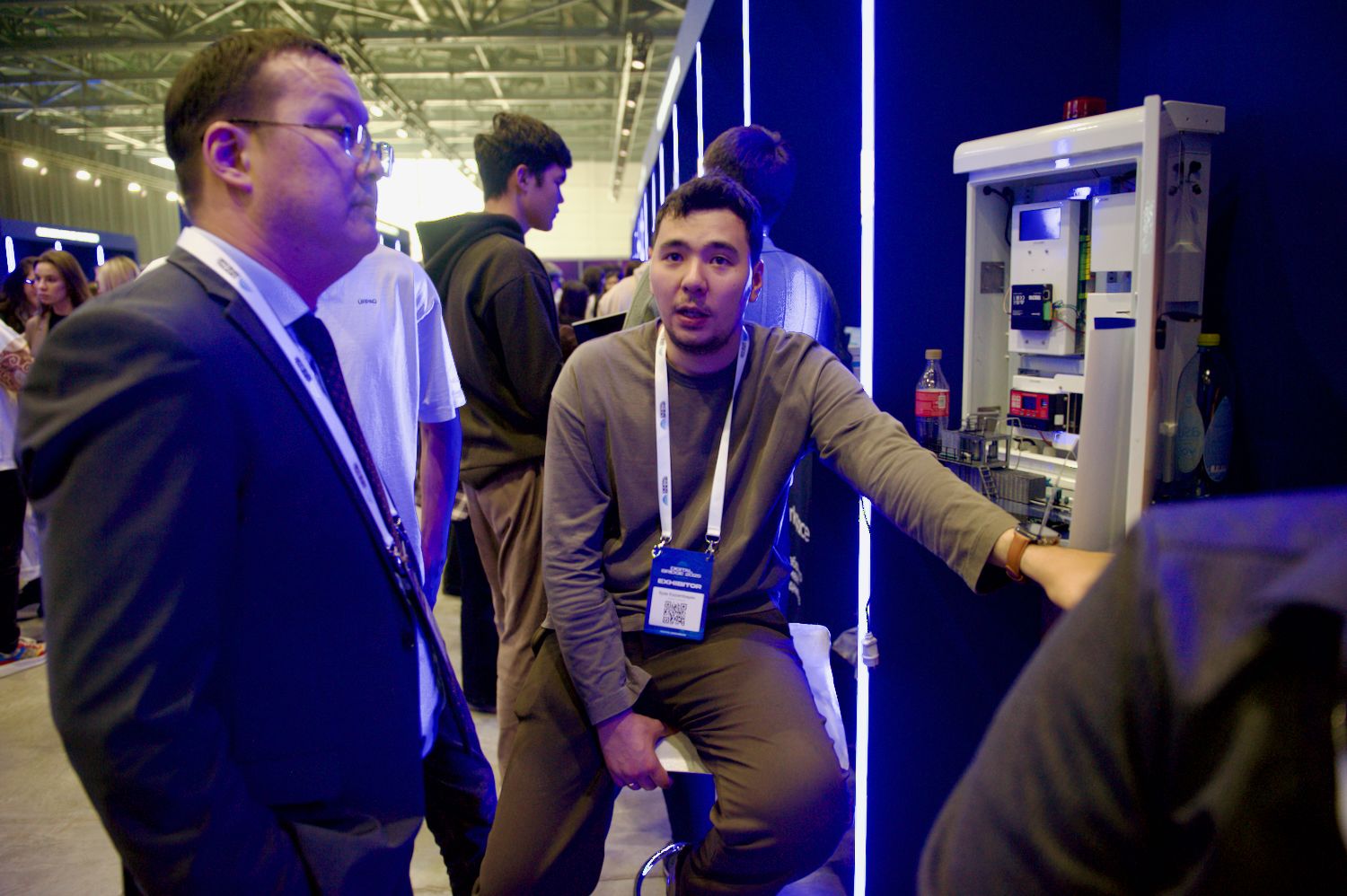
“We are developing an informational and analytical platform that makes industrial environmental emissions measurable, verifiable, and predictable — from the initial measurement to secure transmission and subsequent data visualization,” says Ilyas Kazanbayev, Head of the Industry 4.0 Research Center at AITU. The architecture is built on the chain ‘sensors — secure channel — blockchain — analytics’. We register two types of emissions: into the atmosphere and into the soil/water bodies. We encrypt telemetry and record it in an immutable ledger to eliminate any possibility of data manipulation. Unlike foreign services such as IQAir, which monitor general city background pollution, we work with stationary industrial sources and answer the key public question: “Who exactly is polluting?” The platform is currently in pilot mode. Identification and short-term prediction models have already been published in scientific papers, algorithms are being transferred into industrial code, and the reporting module is expanding. Our field partner is Promonolit — their measurement complexes cover the country, while we add the layer of secure transmission and end-to-end analytics. As a result, the government receives a “transparent shell,” a unified dashboard with source attribution and legally significant data traceability; businesses receive a compliance and planning tool; society receives an evidence base for environmental policy. By the end of 2025, we will complete integration and large-scale testing. In addition to dashboards, scenario-based forecasts for enterprises and regions will appear, as well as automatic alerts for excess emissions and APIs for government agencies. The goal is simple and pragmatic: to turn fragmented measurements into a system of accountability where numbers speak faster than excuses.
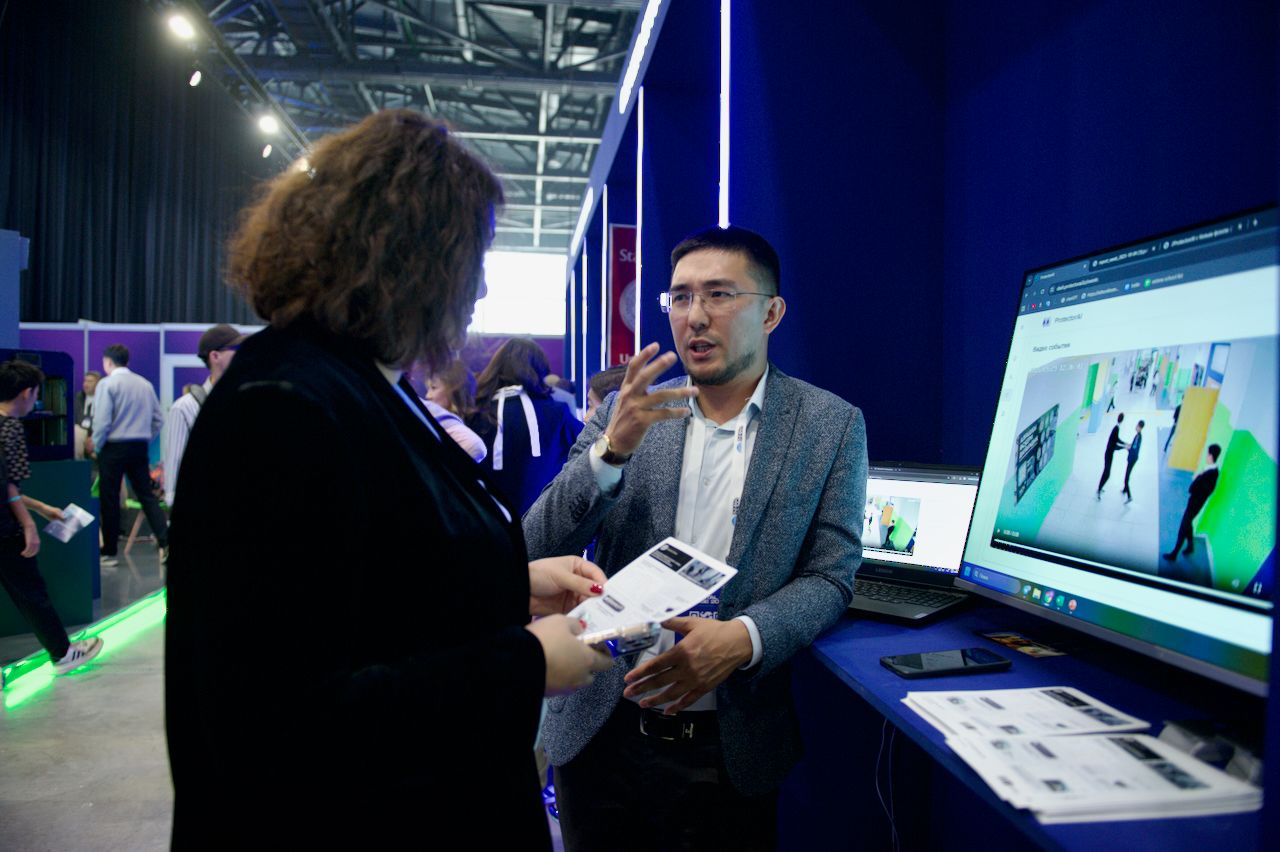
“Our tool helps schools and social institutions protect children,” says Zhassulan Salybayev, head of Protector AI. The Protector AI system is fully developed in Kazakhstan and uses artificial intelligence to detect aggressive behavior and bullying. It connects to existing security cameras and processes video streams in real time; when dangerous actions are detected, it automatically sends notifications with short video clips to responsible staff — vice principals, school directors, or security personnel. Notifications are delivered through the platform, the mobile application, and a secure Telegram channel. Over the past six months, we have moved into scaling: the system is already operating in 60 institutions, including all 35 urban schools of Petropavlovsk, five kindergartens, and ten social institutions. In just the first month of operation, around 250 incidents were recorded — from harmless horseplay to potentially dangerous situations. In several cases, timely alerts helped prevent threats to students’ health. We provide schools with a tool, but further actions are determined by their internal regulations and, when necessary, by involving law enforcement agencies. I am convinced that such systems should become a standard in all educational institutions across the country, because we are talking about the safety of our children.
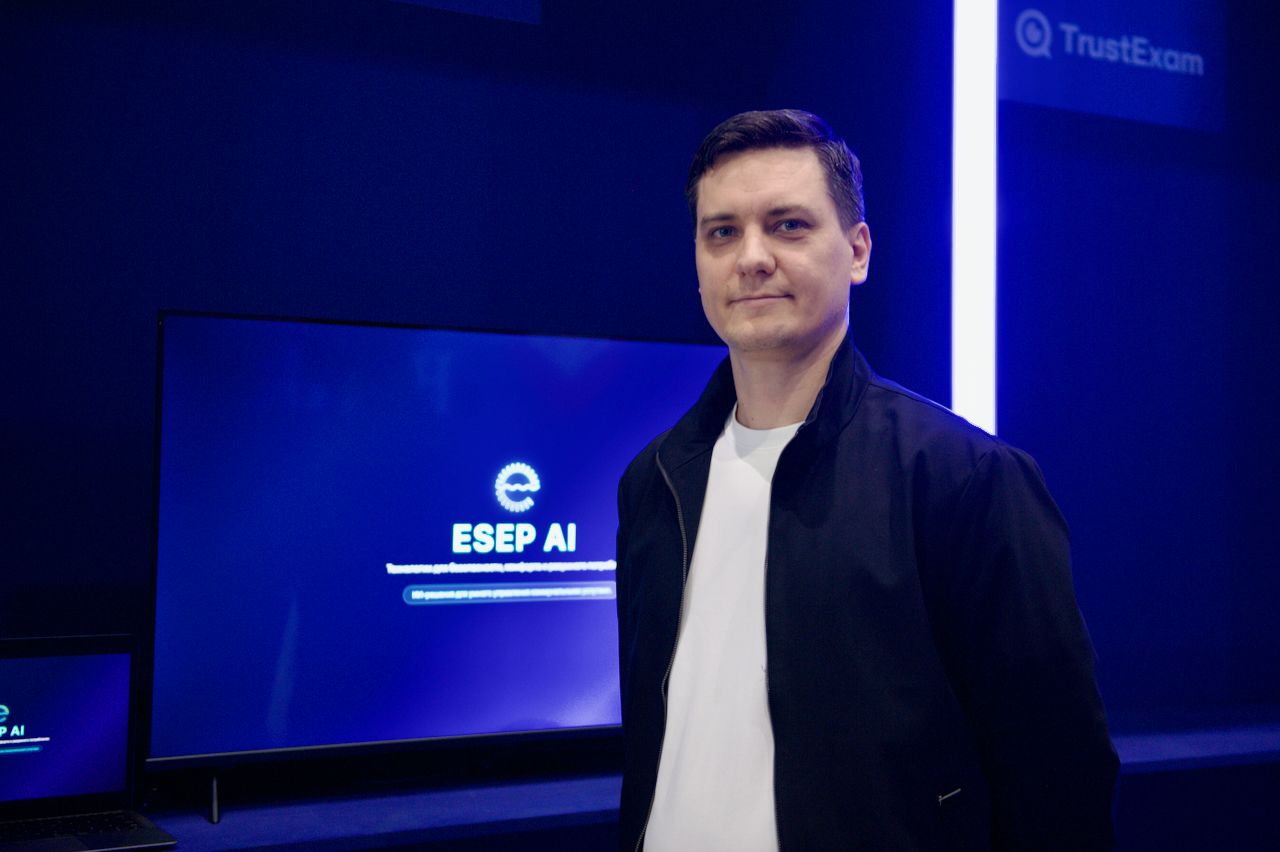
“We want to make the consumption of utility resources transparent and rational,” says Alexander Koretsky, co-founder of the ESEP AI mobile application. “Our project analyzes data from water meters and identifies anomalies that may indicate leaks or improper equipment operation. When such issues are detected, we provide recommendations for both consumers and utility companies. This helps resolve malfunctions more quickly, adjust billing, and reduce costs. We collaborate with utility services in Astana and Kokshetau. Users have access to detailed statistics, and when deviations are detected, they can react promptly. According to current results, the implementation of our solution has reduced consumption by 12% and saved residents around 20 million tenge. The project was initially launched as a private initiative but has already proven that it can become part of government programs aimed at improving resource efficiency. The solution is now integrated and used by the state enterprise “Astana Su Arnasy,” and we continue scaling: in just the last month, 300 equipment units were installed, and the application was downloaded more than 5,000 times.”

“We are developing a system that enables water to be managed as precisely as energy or finances,” says Mukhtar Orazbay, a researcher at the AITU Industry 4.0 Research Center. Our AquaGeo project is being created for effective monitoring and forecasting of water resources, which is especially important for the agricultural sector of the Zhambyl region, where the issue of transboundary water is particularly acute. The system is based on three complementary methods: round-the-clock sensors installed on water bodies that transmit data 24/7; analysis of open satellite and meteorological data to build forecasts; and the use of drones in emergency situations, such as sudden changes in water levels or the risk of flooding. Although the product is still under refinement, its core functions have already been tested and confirm the effectiveness of the approach. Our first partner is the local branch of the RSE “Kazvodkhoz,” which manages the region’s irrigation systems. AquaGeo will not only register data, but turn it into a real management tool — helping predict water shortages, plan irrigation, and support food security.
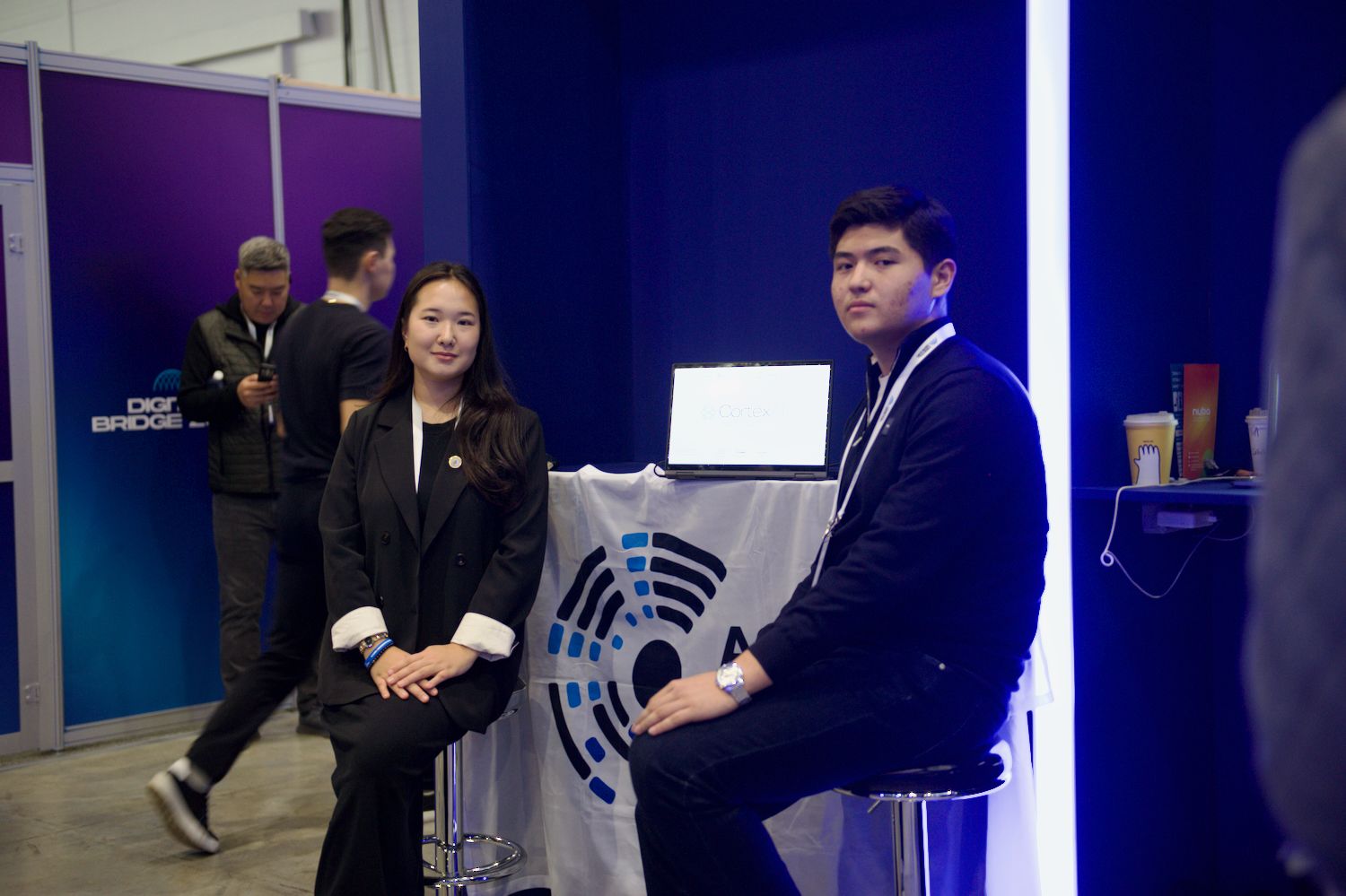
“We are creating a technology that can save thousands of lives,” says Birhanym Kazhymukhamet, a second-year student at AITU. Our project, CortexAI, is an innovative multimodal AI-oncoagent for early cancer diagnosis, recognized by leading universities and research institutes around the world. The author and founder of the project is Asylzhan Abdullayev. CortexAI has been trained on thousands of CT scans and can detect disease at its earliest stages, when treatment is most effective. We demonstrated its potential at international competitions: we won second place at the Enactus World Cup in Thailand and became prizewinners of the Hult Prize and NVIDIA Reception. Today, we continue to improve the algorithms and aim to make this tool accessible to clinics, especially in regions where the lack of specialists prevents timely diagnosis.
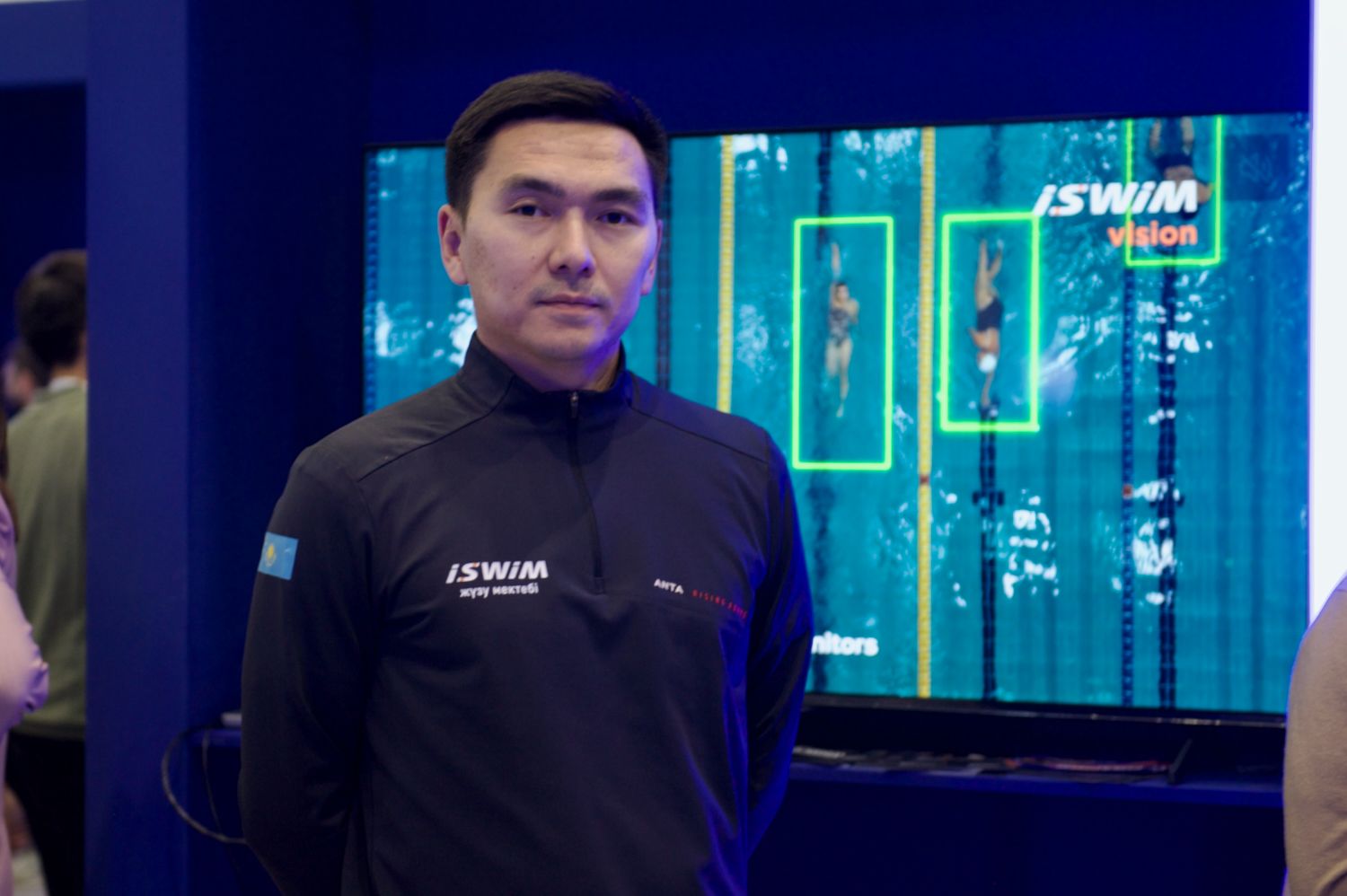
“Safety has always been our top priority,” says Nursultan Bekov, director of the ISWIM swimming school. Our school has been operating for more than three years; today we have eight swimming pools across Kazakhstan, seven of them in Astana. We have seen far too many tragic news stories about water-related accidents and realized that we must offer a solution that saves lives. This is how the ISWIM Vision system was born: cameras equipped with artificial intelligence algorithms detect abnormal movements or the absence of movement from a swimmer and send an alert to the rescuer’s smartwatch within fractions of a second. It took more than a year to move from idea to implementation; we not only wrote code but also simulated dangerous situations with the participation of coaches and athletes to “train” the algorithm to respond to real risks. Over the past five months of testing, the system has repeatedly signaled cases where a person behaved insecurely in the water and required the rescuer’s attention. There have been no fatal incidents in our pools, and we want such technologies to become the norm in all swimming pools in Kazakhstan. Today, our startup is attracting interest both within the country and abroad. We already have meetings scheduled with potential partners and are ready to scale the project to ensure that safety becomes the industry standard.
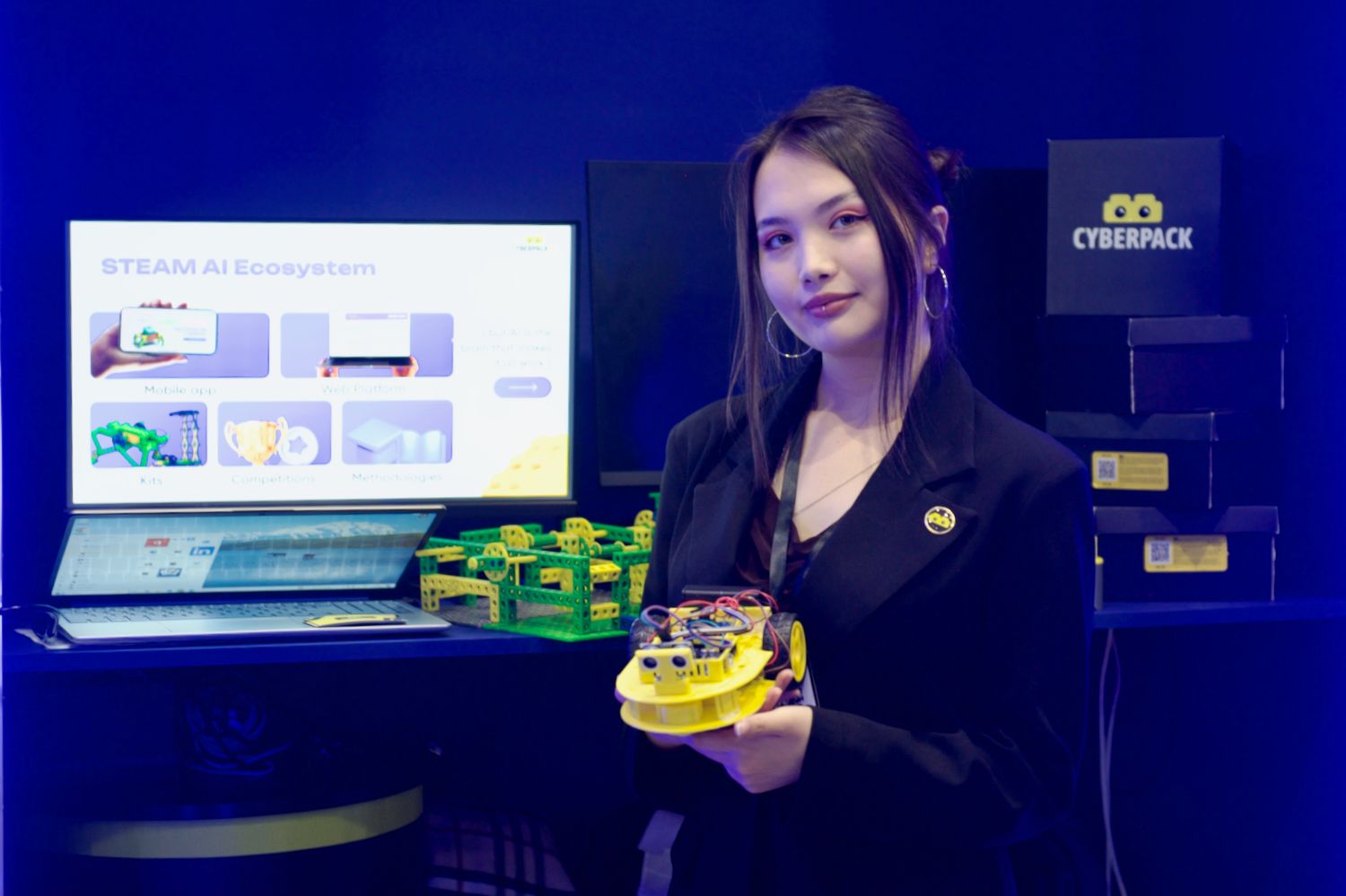
“We teach children to think like engineers from a very early age,” says Nuray Yergaziyeva, designer at CYBERPACK.AI. Our ecosystem covers everything — mobile and web applications, educational kits, and mentoring students in scientific competitions in robotics and programming. We have been on the market for only one year, yet we already cooperate with 70 schools and have engaged more than 400 children in our programs. Our kits are designed in two levels: Junior for students from grades 1 to 4, and Senior for those in grades 5 to 11. A single kit allows assembling up to 120 projects of varying complexity — from simple constructions to fully functional robots. Thanks to this, even six-year-old children can build their first robot and understand how technology works. We do not yet have famous alumni, but we are confident they will appear in the coming years, because the most important thing now is to spark children’s interest in engineering and give them the foundation on which they will build their future achievements.
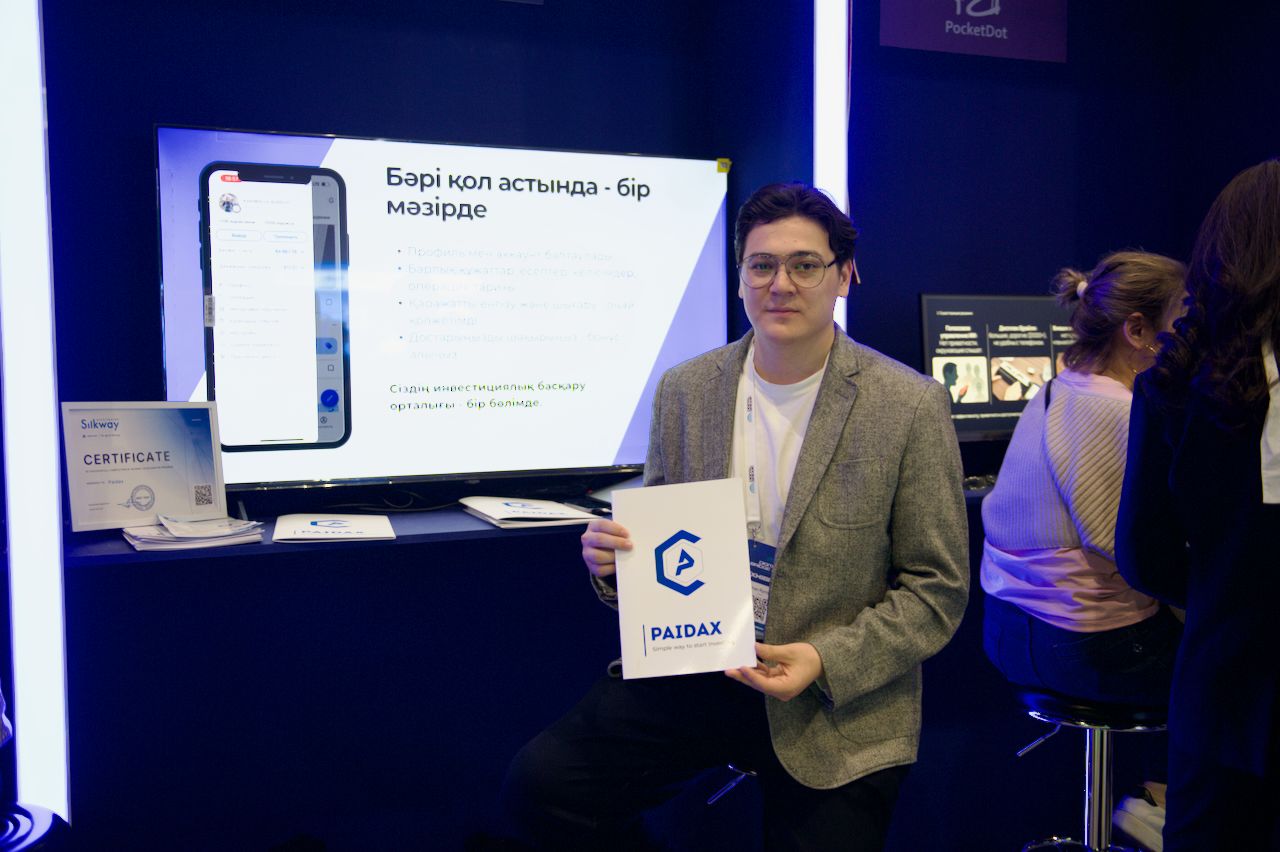
“We want to make investing as simple and familiar as making transfers in a mobile bank,” says Adilzhan, Business Development Director at Paidax. Our app was launched last September in an invite-only format, and the full release took place in February this year. Even without active marketing, we have already attracted more than 25,000 clients, and for over 90% of them, this is their first investment experience. The application provides access to stocks on NASDAQ and the New York Stock Exchange, to digital assets such as Bitcoin and Ethereum, and to tokenization opportunities for local businesses ranging from small coffee shops to manufacturing companies. We are licensed by the AIFC for brokerage and digital asset operations and are currently participating in the National Bank’s regulatory sandbox. A unique feature is the ability to gift securities to other users simply by using their phone number, making investing convenient and accessible. The app’s artificial intelligence helps form an investment portfolio based on the investor’s amount and preferences—from conservative to aggressive. Last year, during the pre-seed round, we raised $600,000 from business angels and the Sana School of financial literacy. In the current seed round, we have already secured 90% of the planned $1 million, including investments from a major bank in Uzbekistan and the Singaporean company Phillip Securities.
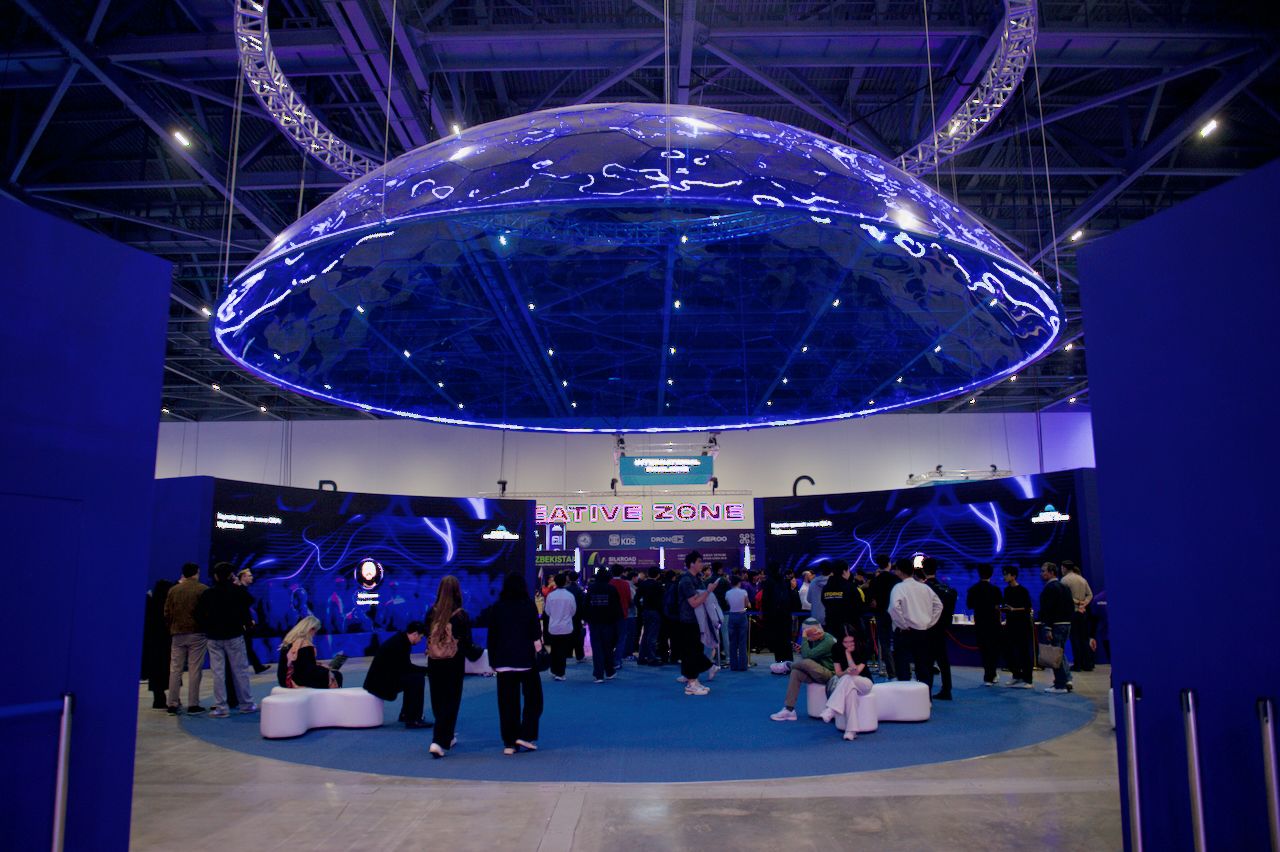
In addition to startup founders and guests, the forum was attended by representatives of leading universities specializing in artificial intelligence training — MUIT and AITU, both part of the NNEF educational ecosystem. They emphasized that the development of the technological sector is impossible without high-quality education, and that the integration of artificial intelligence into higher education is already transforming the way specialists are trained and setting a new standard for the entire industry. Universities are becoming platforms for idea acceleration, where students learn to turn their developments into ready-to-market solutions.
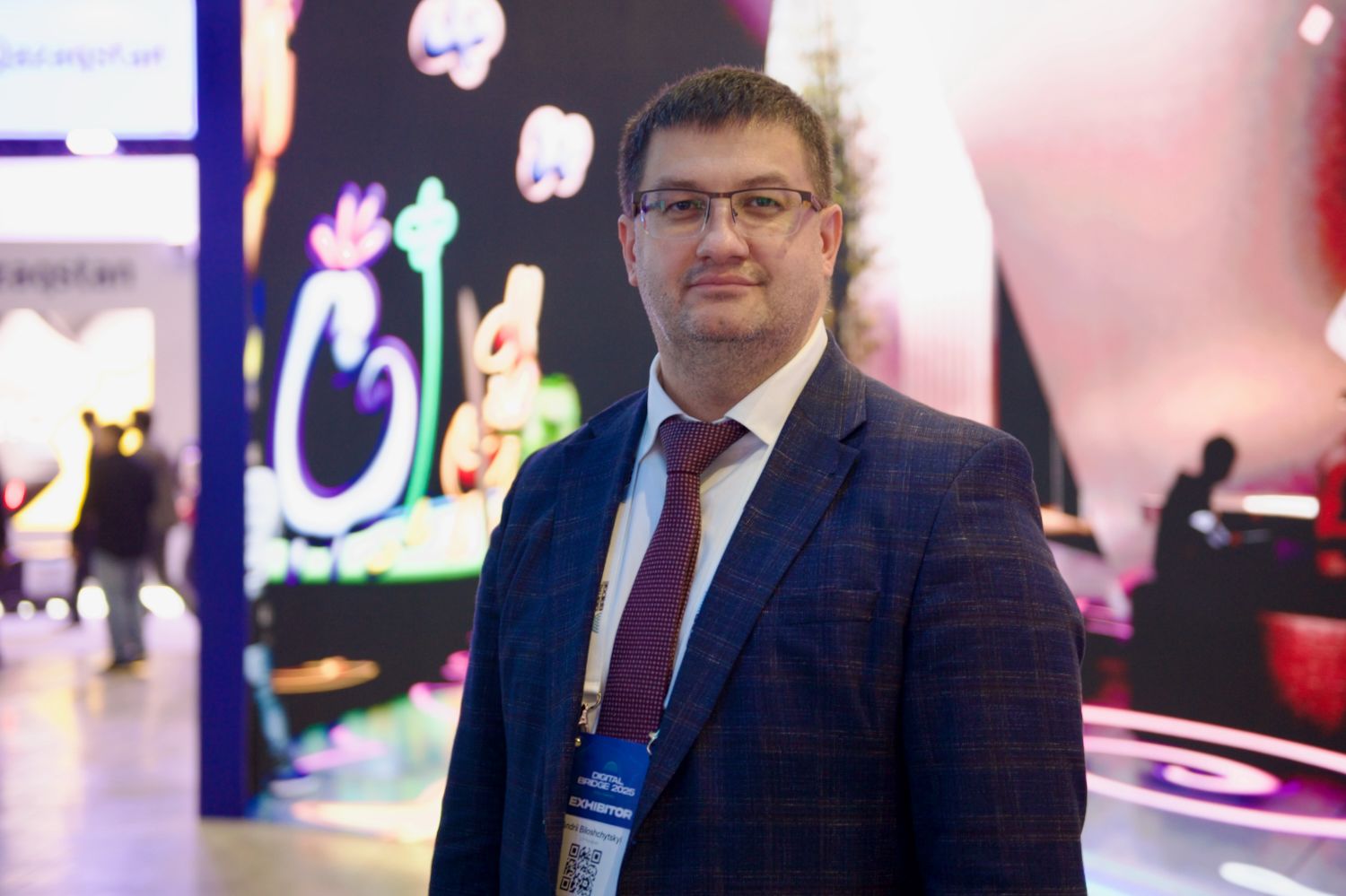
“Since the founding of AITU, I have been responsible for developing its scientific and innovation ecosystem, and we fundamentally focus on applied research that solves real tasks of our clients instead of gathering dust on shelves,” says Andrey Beloshchitskiy, Doctor of Technical Sciences and Vice-Rector for Science and Innovation at AITU. “For example, the environmental monitoring project mentioned earlier collects and verifies industrial emissions data, ensuring accuracy and protection against tampering at the international level, which allows the development of objective regulatory measures. We are creating our own 5G network solutions to avoid dependence on expensive and closed foreign technologies, as well as cyber-ranges for practicing cyberattack scenarios and training specialists. Our artificial intelligence algorithms already help detect breast and lung cancer at early stages; we collaborate with the Ministry of Internal Affairs and the National Security Committee to recover data from damaged devices; we work on crop yield and plant disease forecasting through IoT and sensors, optimize public transport routes in Astana, and develop technologies with KazMunayGas to increase production at depleted wells. Over six years, the university has grown from an initial cohort of 650 students to 9,000, proving that Kazakhstan is capable of training specialists who not only follow global trends but help shape them.”
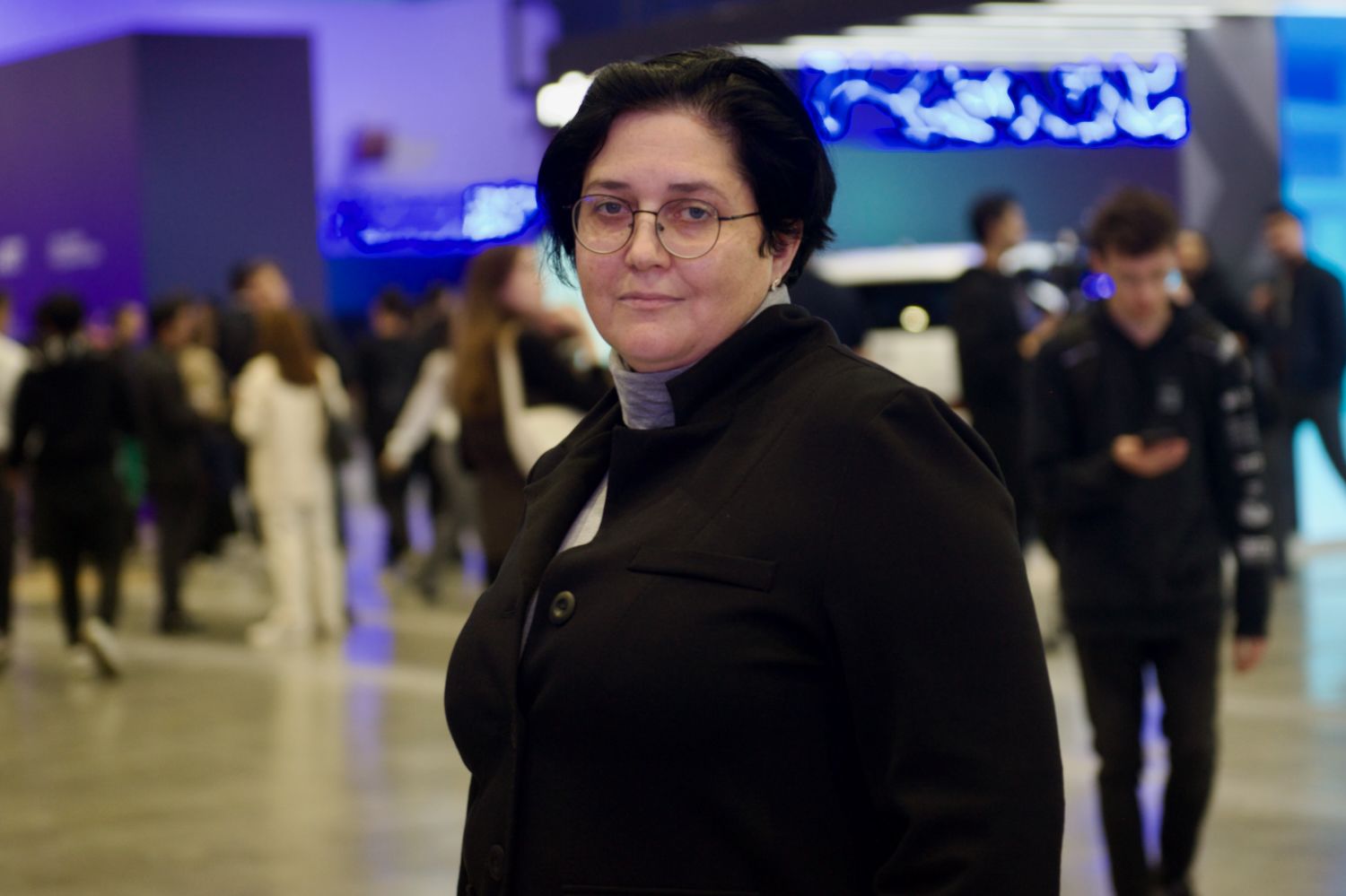
“We must be at the forefront of technological transformation,” says acting Chair of the Board and Rector of the International University of Information Technologies (MUIT), Doctor of Technical Sciences Ekaterina Kolesnikova. “We came to the forum as a delegation together with our colleagues. We actively participate in panel sessions, study practical cases, and firmly believe that artificial intelligence is now everywhere — and universities have no right to remain on the sidelines. Our mission is to teach educators to use digital tools competently and to train students not only to work with ready-made solutions but to implement them in real practice. In our innovation center ALAP, which has been operating for more than three years, two startup acceleration sessions are held annually, each involving at least 100–150 participants. Not everyone reaches the final, but it is precisely such programs that create teams ready for real commercialization of ideas. Today, we are the anchor university of the Aisana program. Seven AI agents have already been developed and tested — from proctoring systems to image recognition and legal assistance solutions — and they will be implemented in other universities across the country. This demonstrates that Kazakhstani universities can not only teach but also create technological products that are truly in demand.”

The Digital Bridge forum became a mirror of the rapid changes Kazakhstan is undergoing. Here, science and business met, along with startups, government institutions, experienced experts, and students whose ideas are already solving the challenges of tomorrow. This platform proved that the country has the potential not only to adapt global trends but also to develop its own technological solutions capable of shaping the future of the entire region.
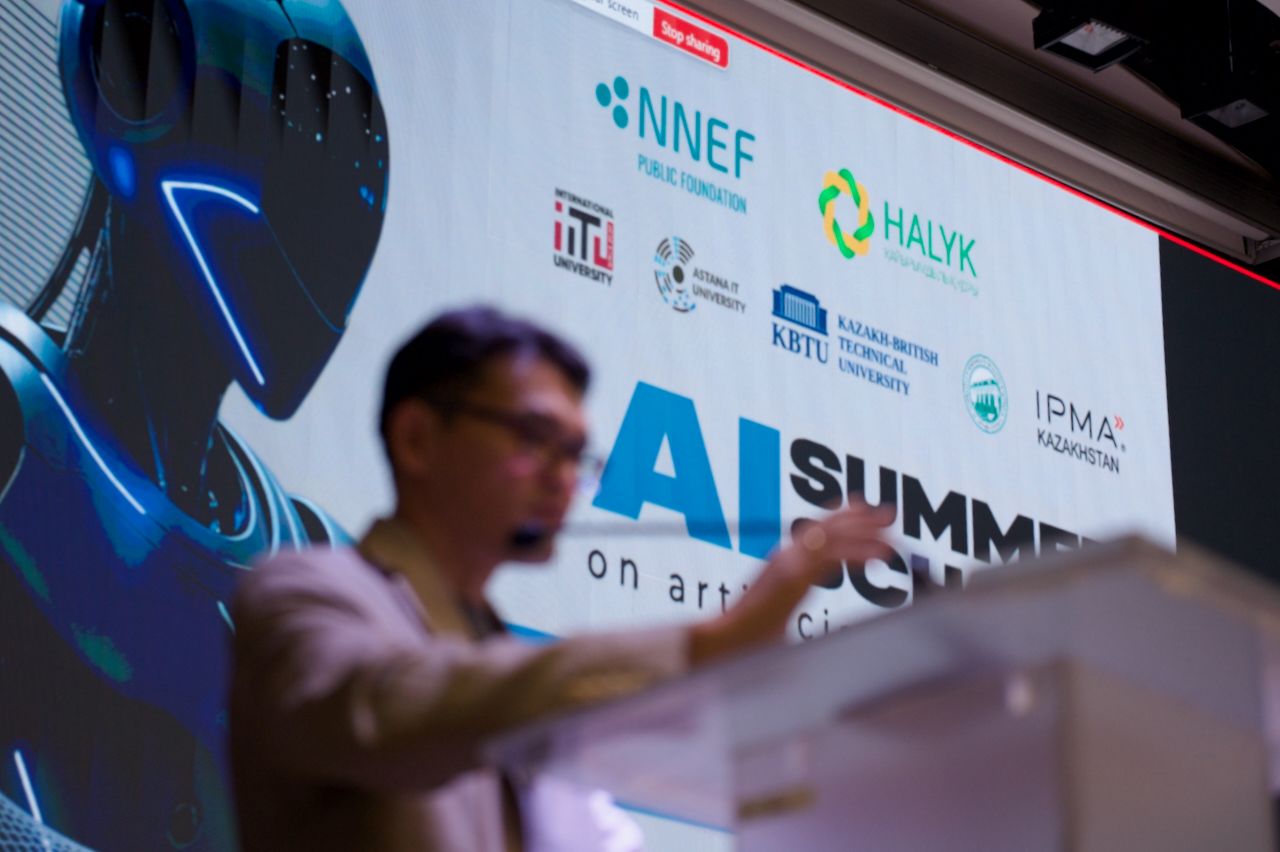
AITU and NNEF initiatives accelerate AI development in Kazakhstan, equipping educators and experts with new skills and opportunities.

KBTU’s AI system helps judges find similar cases, align legal practice, and speed up analysis of millions of court documents.
Comments
No comments yet. Be the first to comment!