IT Fest 2025 in Almaty: Ideas That Start Generating Revenue
Qarlyğaş Nūr Jan
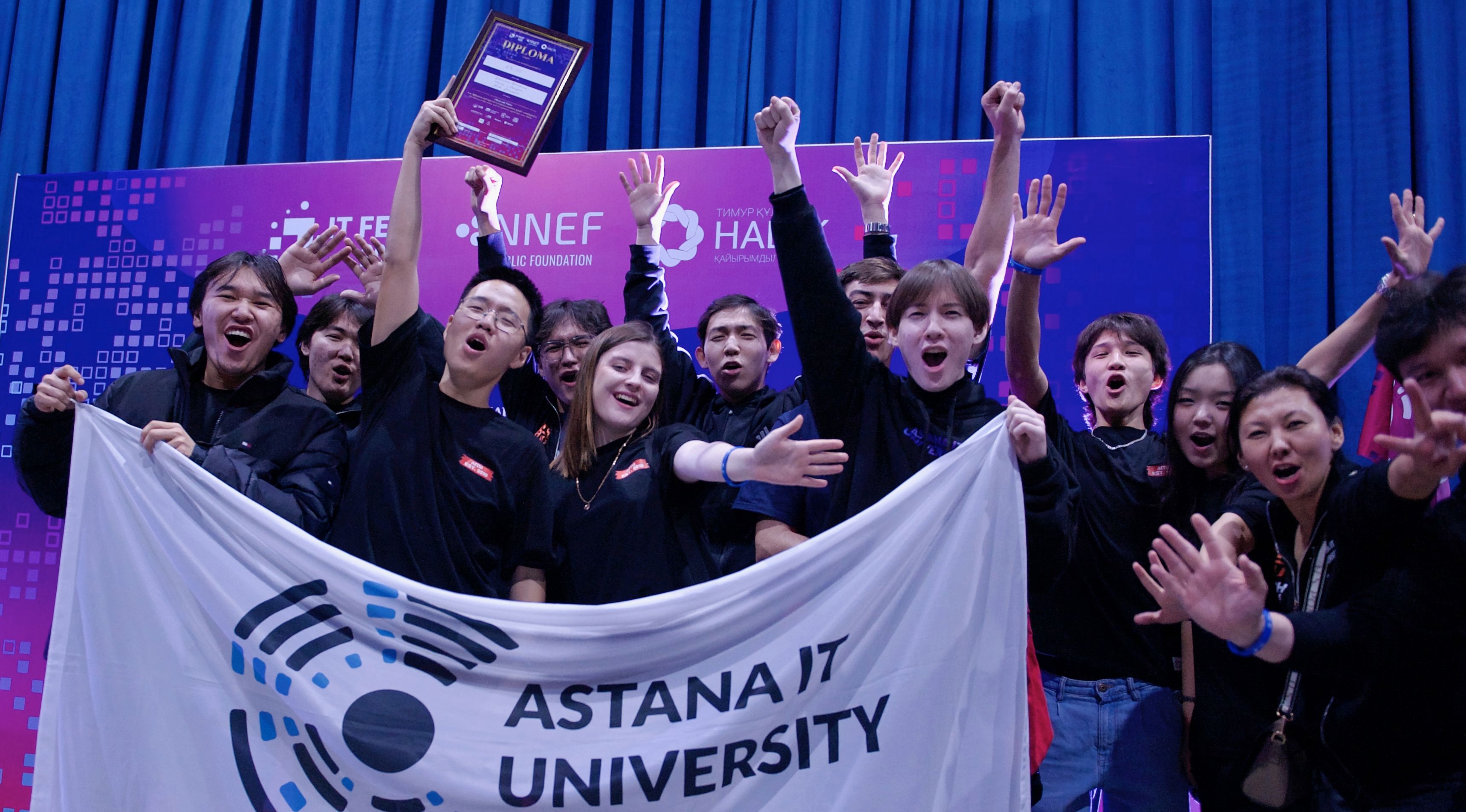
Last week, the school-student IT Fest 2025 took place in Almaty, an event that completely overturns our understanding of what children are capable of. Here, it is not adults teaching the youth — instead, the schoolchildren and students themselves defend their projects, generate ideas, compete in computer games, hack and protect systems as part of assigned tasks, and even sell their startups directly from the stage. The main difference between IT Fest and other festivals is that participants here can not only showcase themselves but also conclude real deals. One student even sold his project right after presenting it, when a jury member exclaimed: “I’m buying your project!”
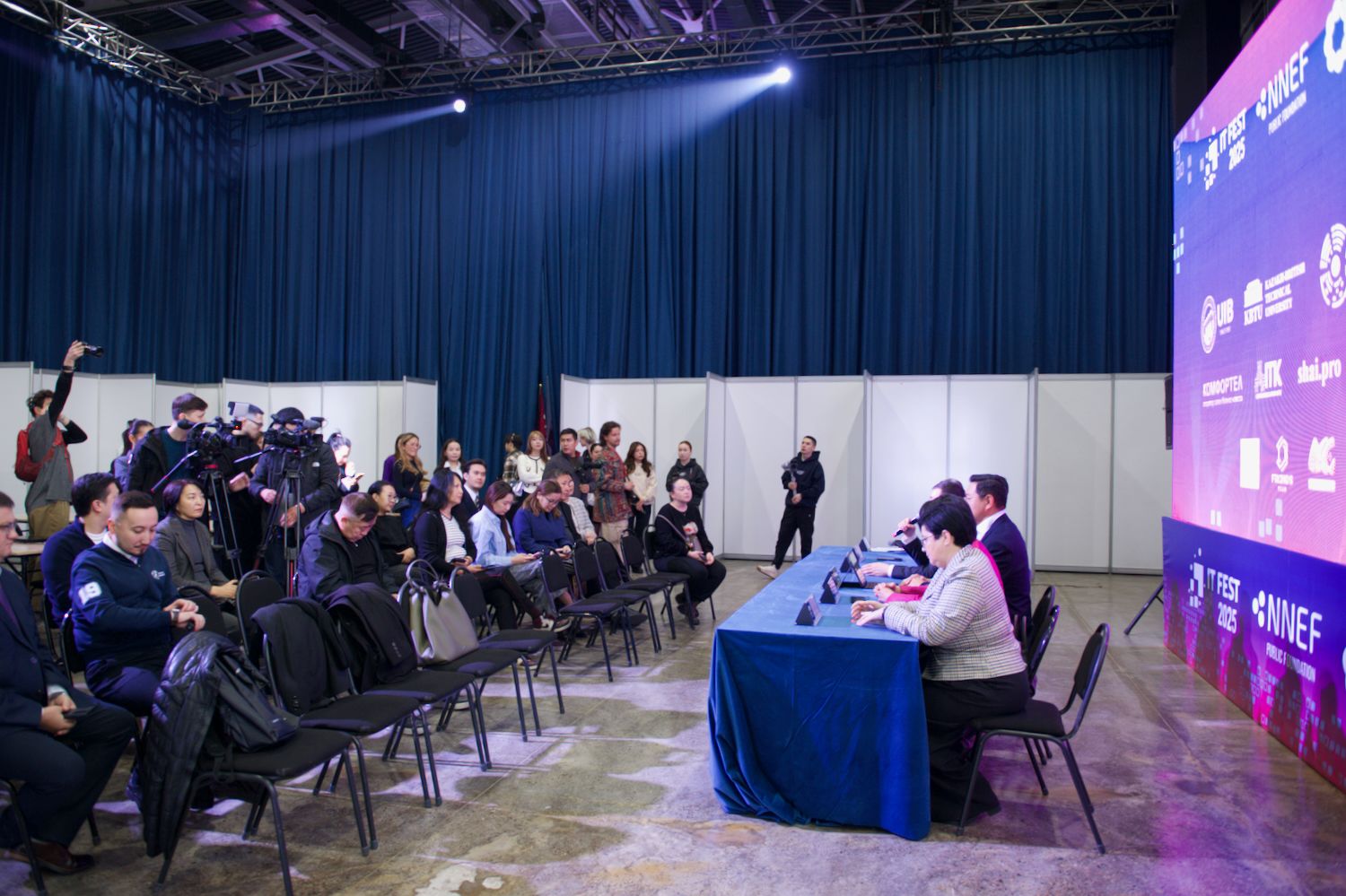
IT Fest grew out of a student hackathon that IITU began holding back in 2009. At the time, it was a small internal format with around four hundred students, and the festival itself was called HackDay, uniting only a few sections. Over time, programming was joined by robotics, esports, cybersecurity, film and video, design, animation, and competitive programming, turning the festival into a major platform for young developers from across the country.
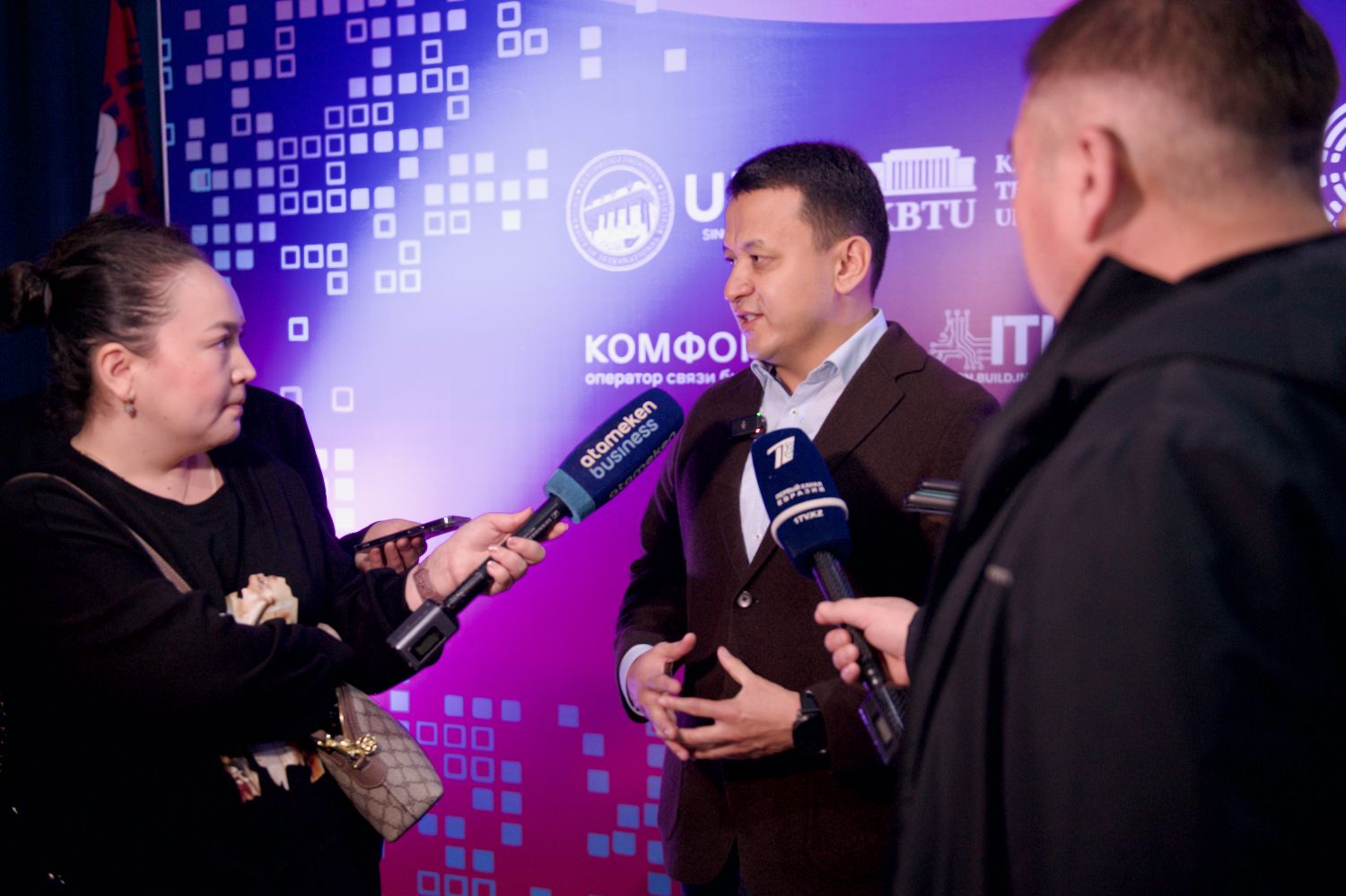
– The best students and their work will receive financial awards, – says Nariman Abilshaikov, Managing Director of the Halyk Charity Foundation. The prize fund is nine million tenge. Last year, around two thousand IT students and specialists took part in the festival; this year, already about three thousand the best of the best from all over the country.
– Today, the state gives IT education the same priority as other technical fields, and within a few years new companies with Kazakh origins may emerge, whose products will be significant both financially and socially. Kazakhstan already has its own “unicorn” Higgsfield AI, with a valuation above one billion dollars. We hope that events like IT Fest will help new, equally successful projects appear.
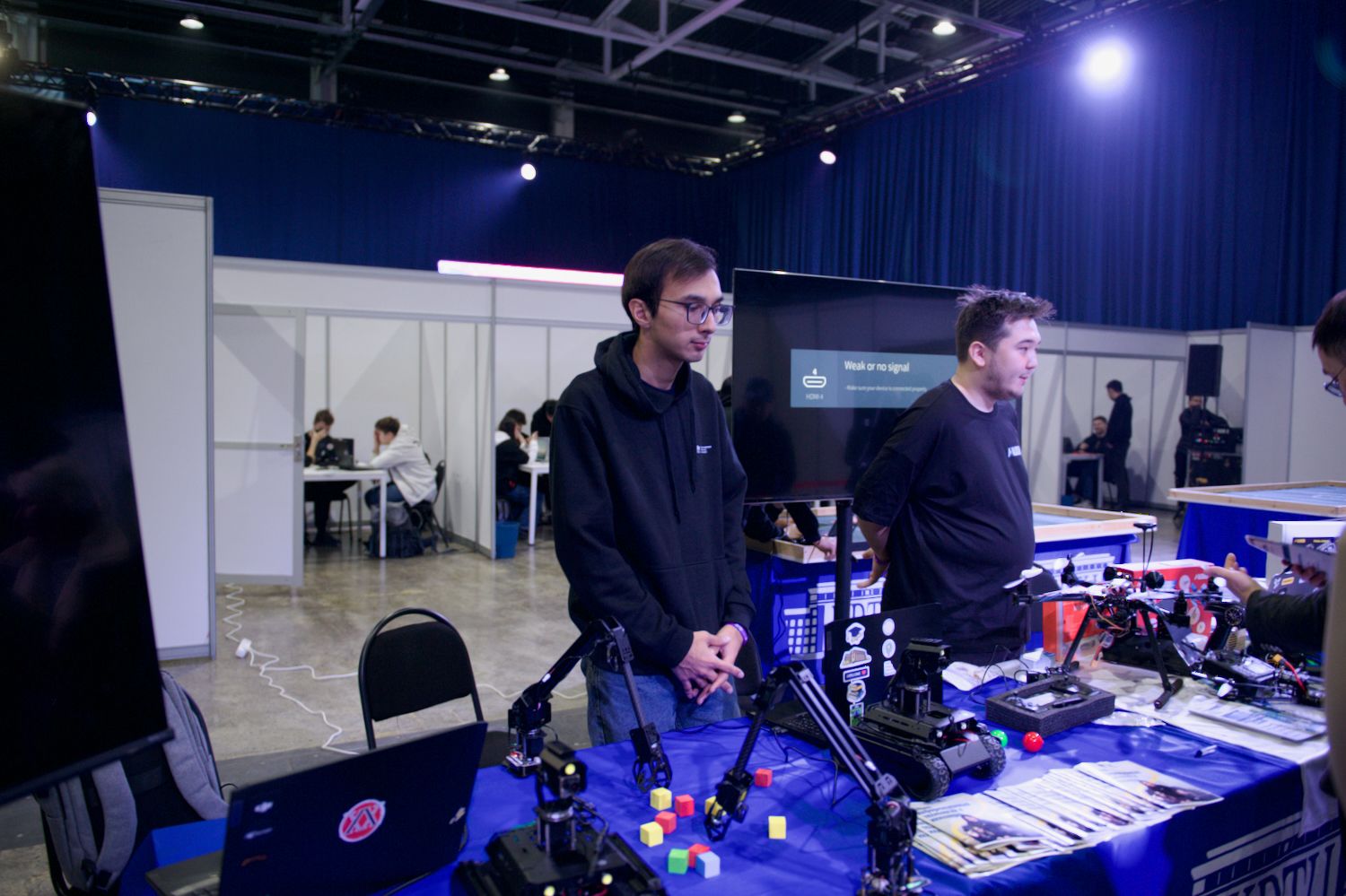
– We are presenting several of our student projects at the festival, – says KBTU student Alimzhan. There is the Master Safe robotic arm, which works like a joystick and allows for remote object control; there are also a series of projects on creating custom drones, where students 3D-print the frames themselves, assemble and configure the devices. In the Master’s program, we are currently working on a system for delivering medicine to remote regions of Kazakhstan, and such projects show students that their ideas can solve real-world problems.
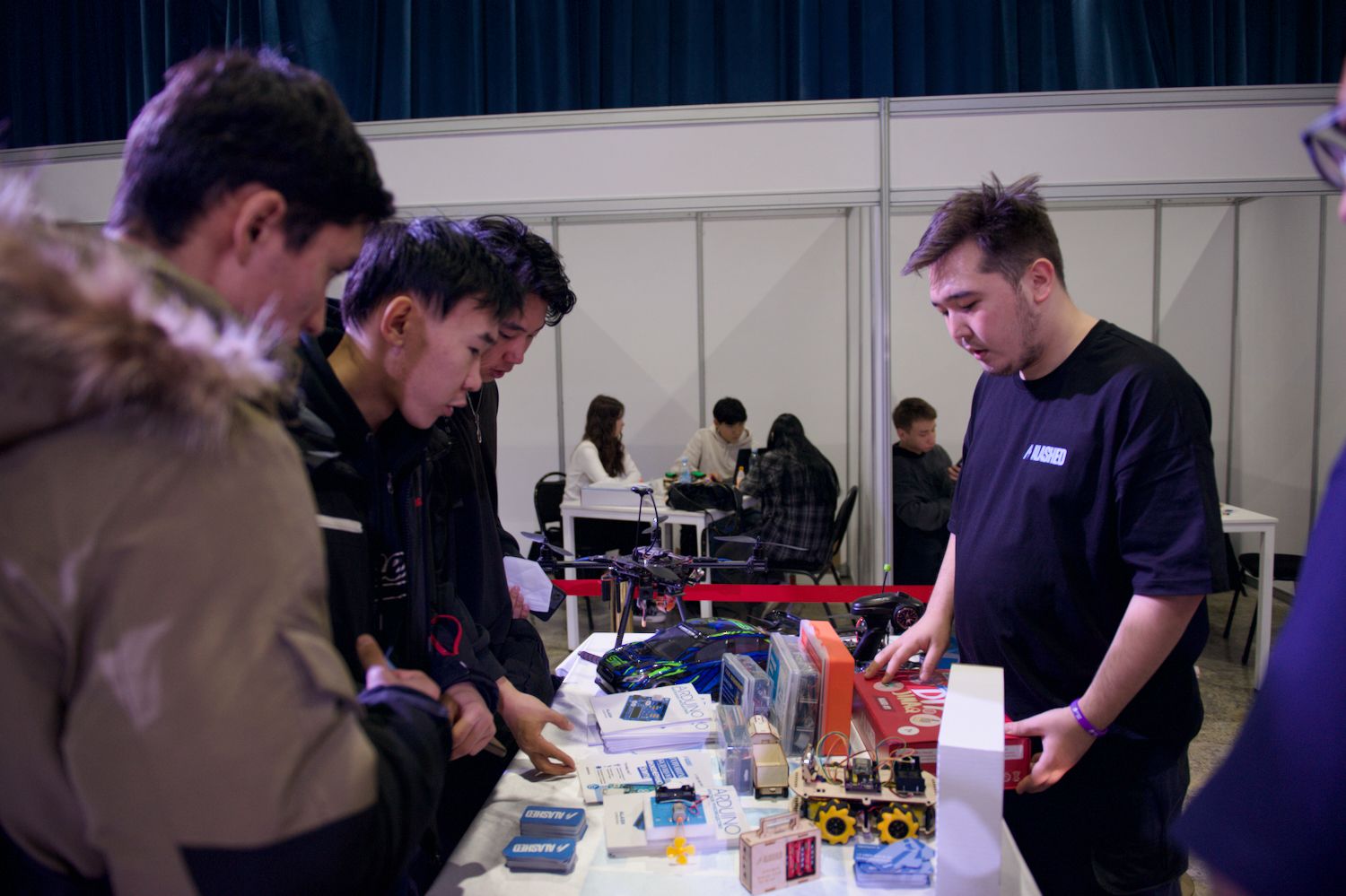
– Our company produces educational kits in Kazakhstan with instructions in three languages, – says Ayten Beksultan, a representative of Alash Electronics. Our platforms allow schoolchildren and students to write code, assemble blocks, run models, and gradually progress from simple tasks to more complex ones. We work with students from first to eleventh grade, as well as with universities and colleges. The company is only four years old, but it already has a net profit of more than one hundred million tenge per year, and demand for domestic educational kits continues to grow.
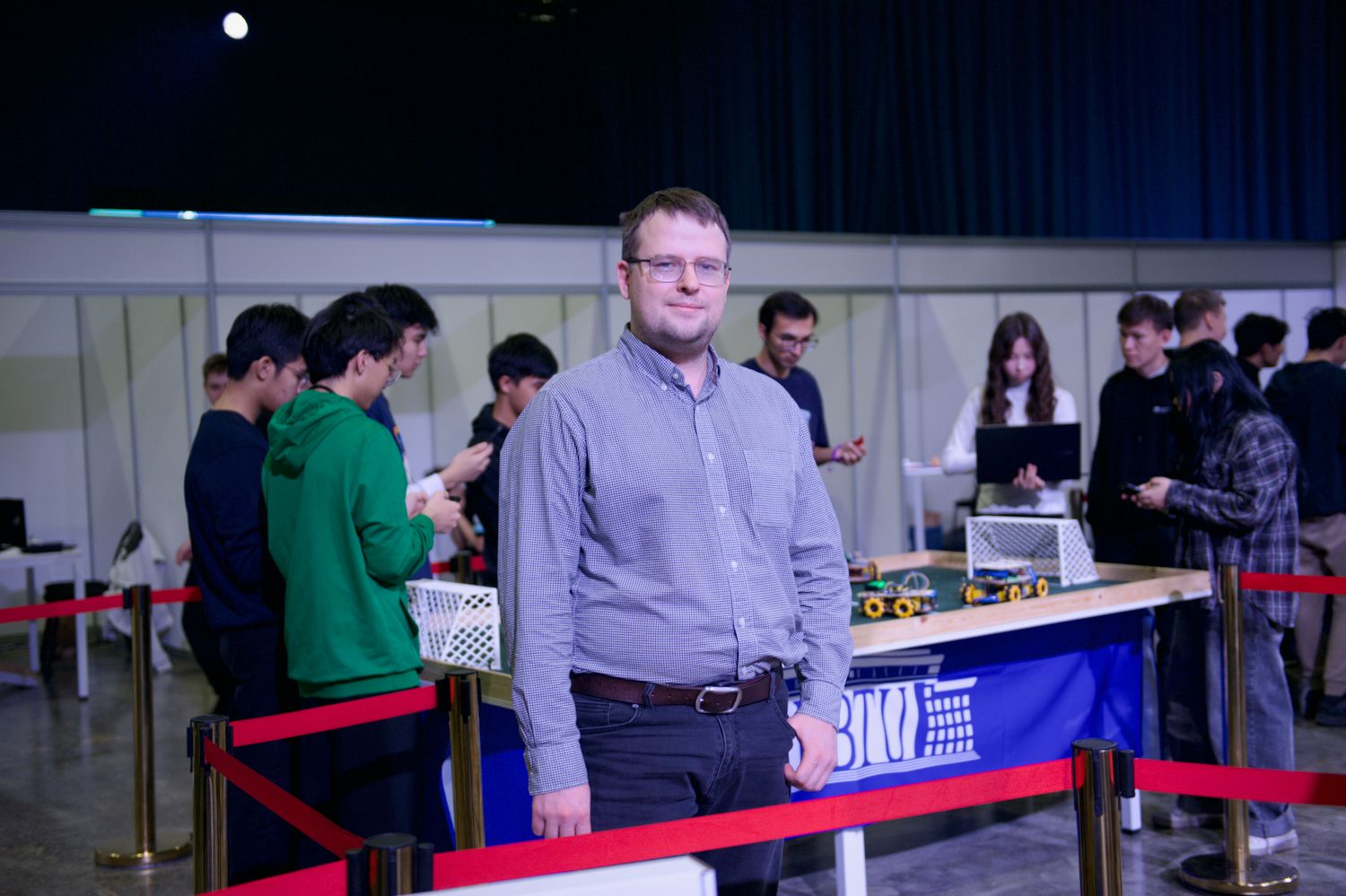
– We have ten teams from different cities of Kazakhstan, and they all consist only of high school students, – says robotics section jury member Igor Moshnikov, Technical Director of “Arcona”. The students design the car body according to the rules, assemble it with a microcontroller, and program the controls from a computer or phone. We give them basic instructions, but the main thing is for them to show creativity and look for solutions on their own — because today’s toy cars may very well become prototypes of real engineering systems tomorrow.
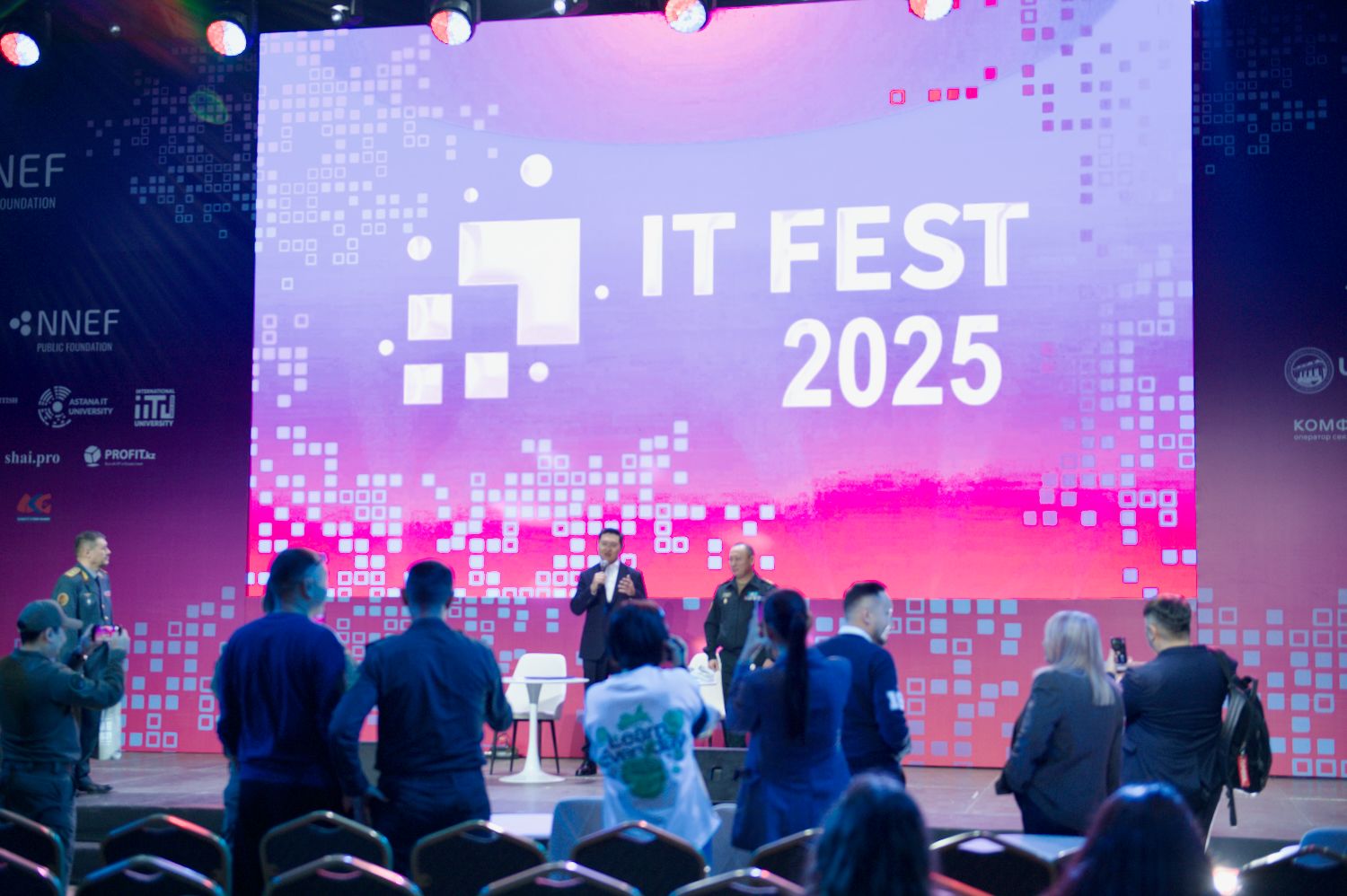
A separate block of the program was dedicated to cooperation between the military and the IT university. As part of IT Fest, a memorandum of cooperation was signed between the Military Institute of the Land Forces and Astana IT University. The document provides for the exchange of experience in military-patriotic work, joint participation in scientific projects and grant programs, as well as information exchange on modern methods of warfare involving robotics and unmanned systems. The Military Institute provides classified training materials, and AITU shares its expertise in cybersecurity, automated control systems, and geoinformation technologies.
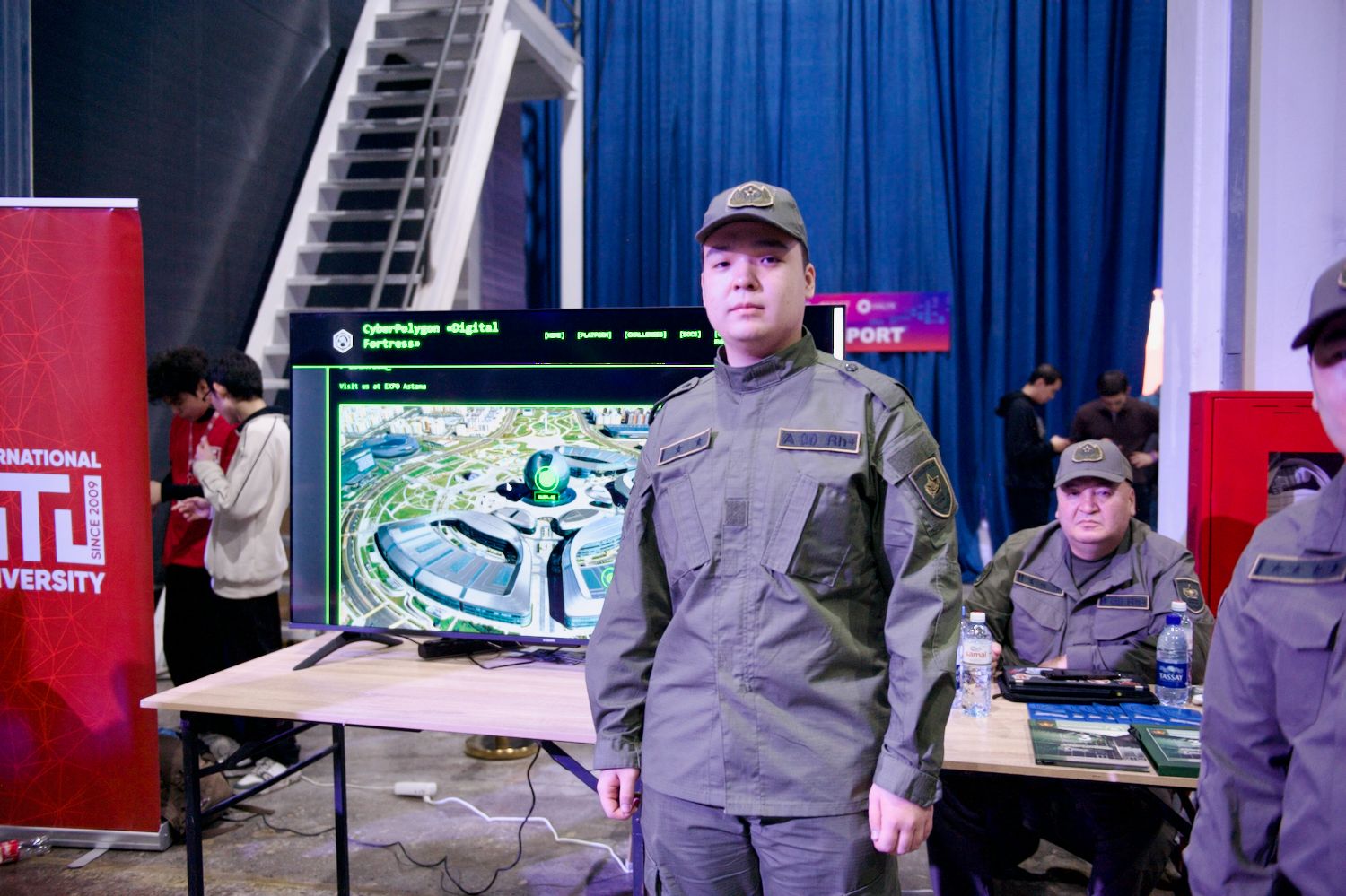
- The virtual cyber range is our military department’s own development, - says Anuar Askarov, an employee of the Military Department at Astana IT University. Since 2023, we have been conducting practical cybersecurity training and competitions at the range, modeling combat conditions and giving students real tasks in attack and defense. Over the past two years, we have held several tournaments, and each time the assignments have become more complex. We are now preparing a new round for first- and second-year students, with an emphasis on tasks that include artificial intelligence components, so that they understand how to protect systems in an environment where technologies are rapidly changing.
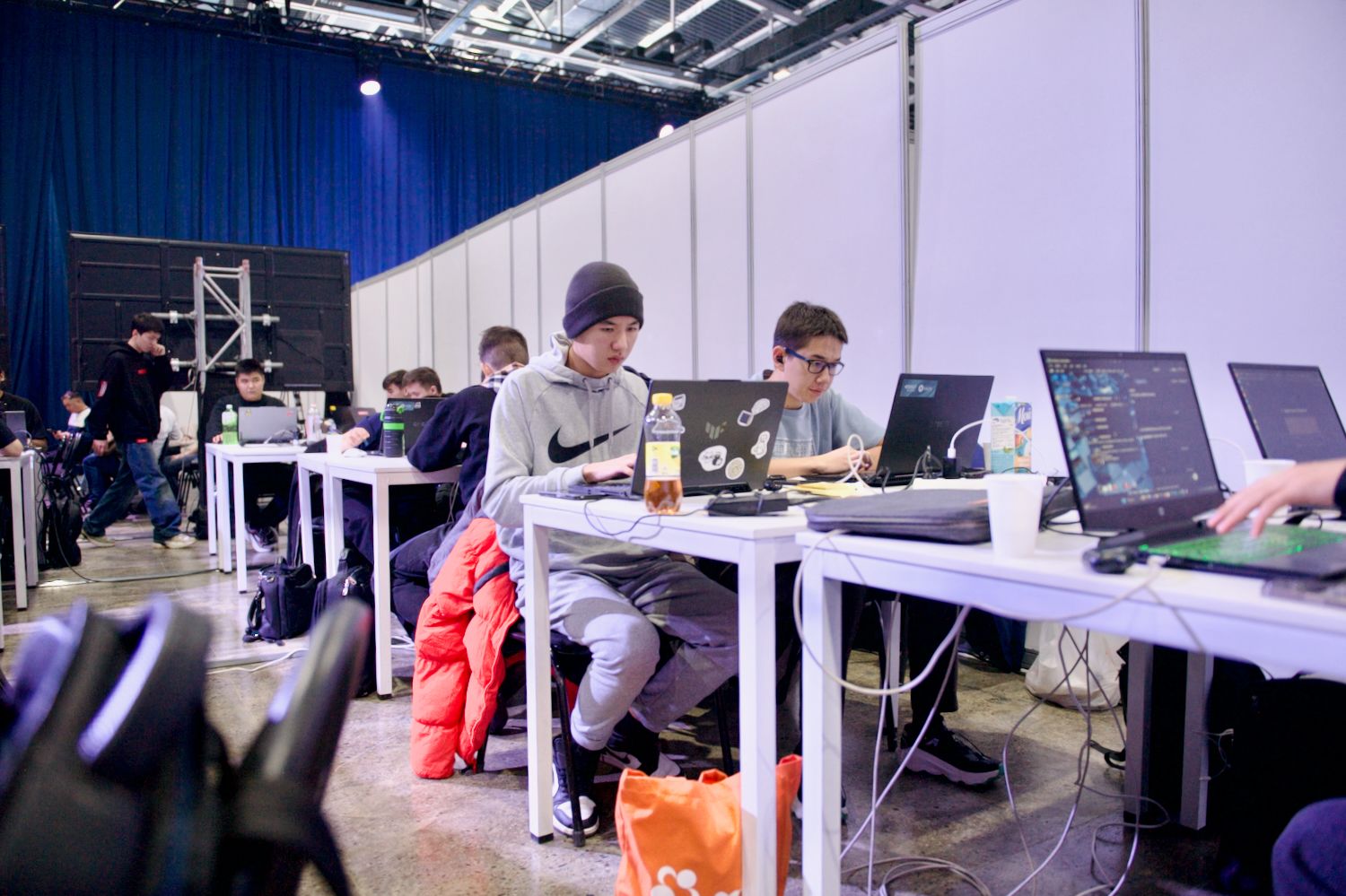
The Arystan team in the cybersecurity section, Arystan Specialized Lyceum.
In the cybersecurity section, more than one hundred sixty teams in online and offline formats simultaneously attempt to hack a physical cyber-range — a smart-city model installed at the institute in Astana. Students attack every element of the infrastructure, receive points for each successful attack, and learn to defend critical systems. The competitions give young specialists a unique opportunity to gain experience in hacking and defense in a safe environment where it does not carry criminal liability.
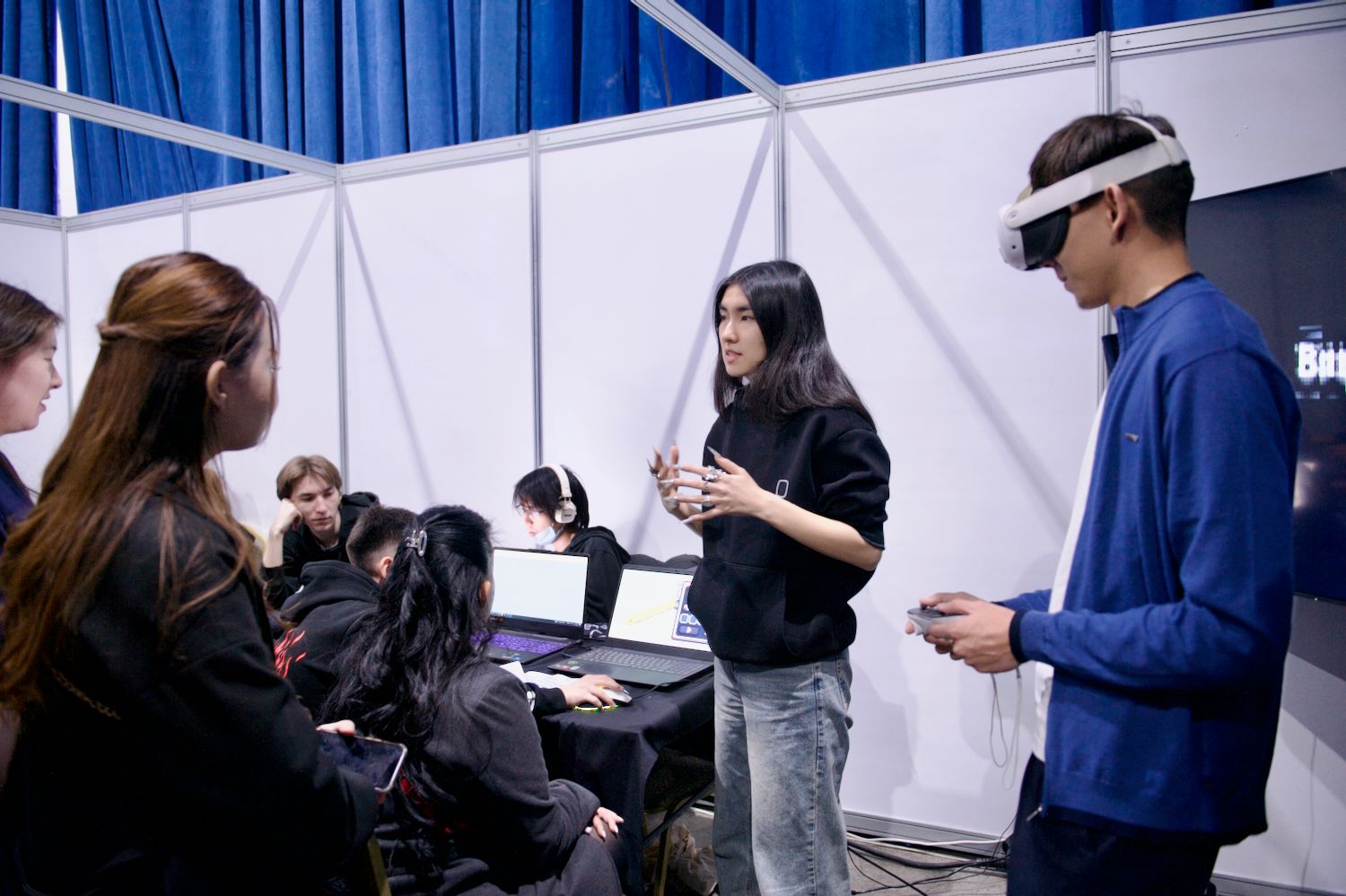
A separate line of IT Fest is connected to the development of the gaming industry, which KBTU actively supports and promotes.
– Starting next academic year, KBTU will launch a new major — game developer, – says Nazym Zhumabayeva, junior researcher at KBTU GameLab. – This is the first such four-year program in Central Asia based at a school of information technologies. Until now, Kazakhstan has not had a full educational program for video game development.
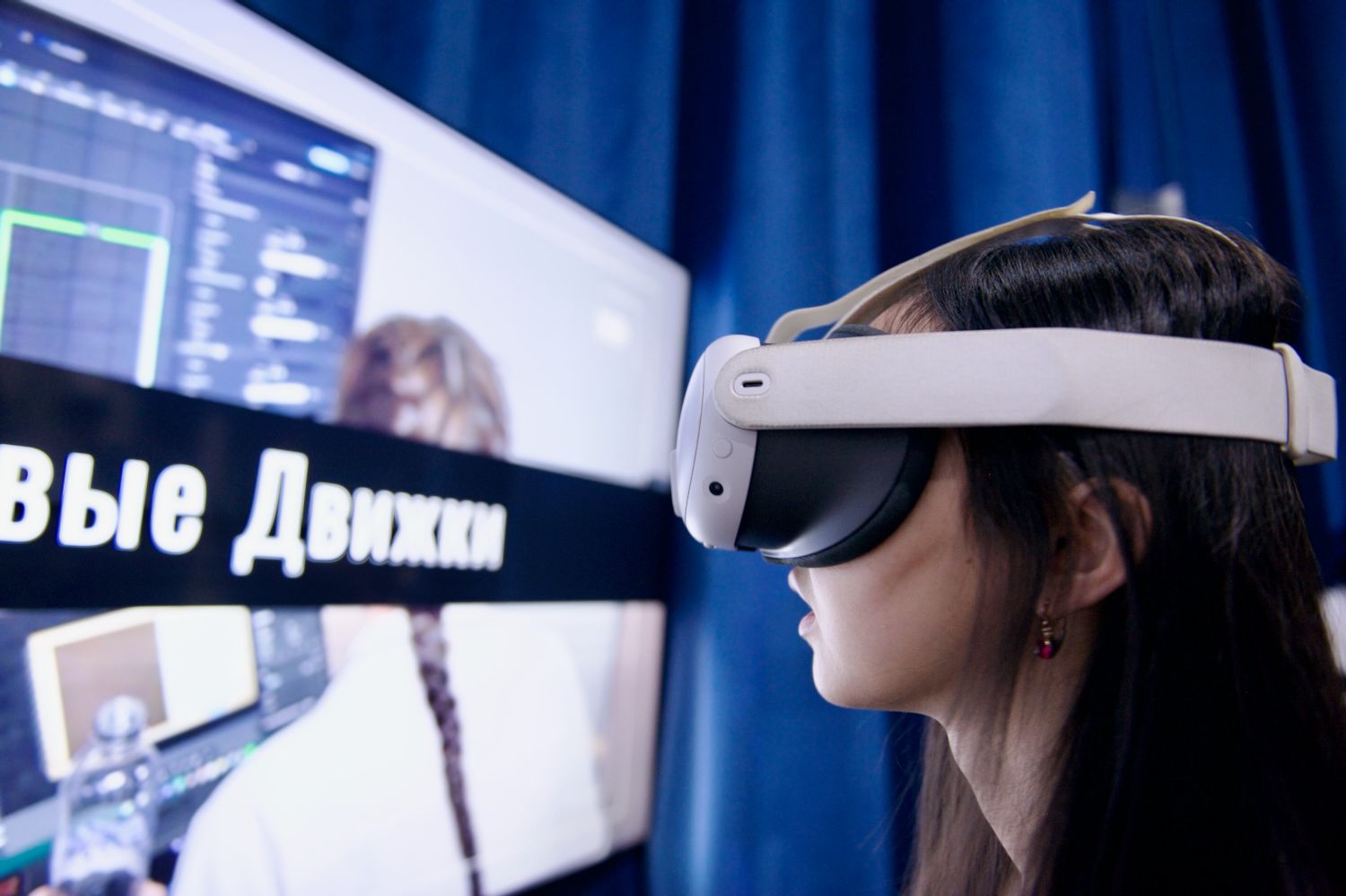
Zhumabayeva shows a quest game on the history of Kazakhstan, on which the GameLab is currently working. In the game, the player chooses levels associated with the era of the Kazakh Khanate, the Saka period, and modern Kazakhstan, and through gameplay learns the country’s history by immersing directly into it.
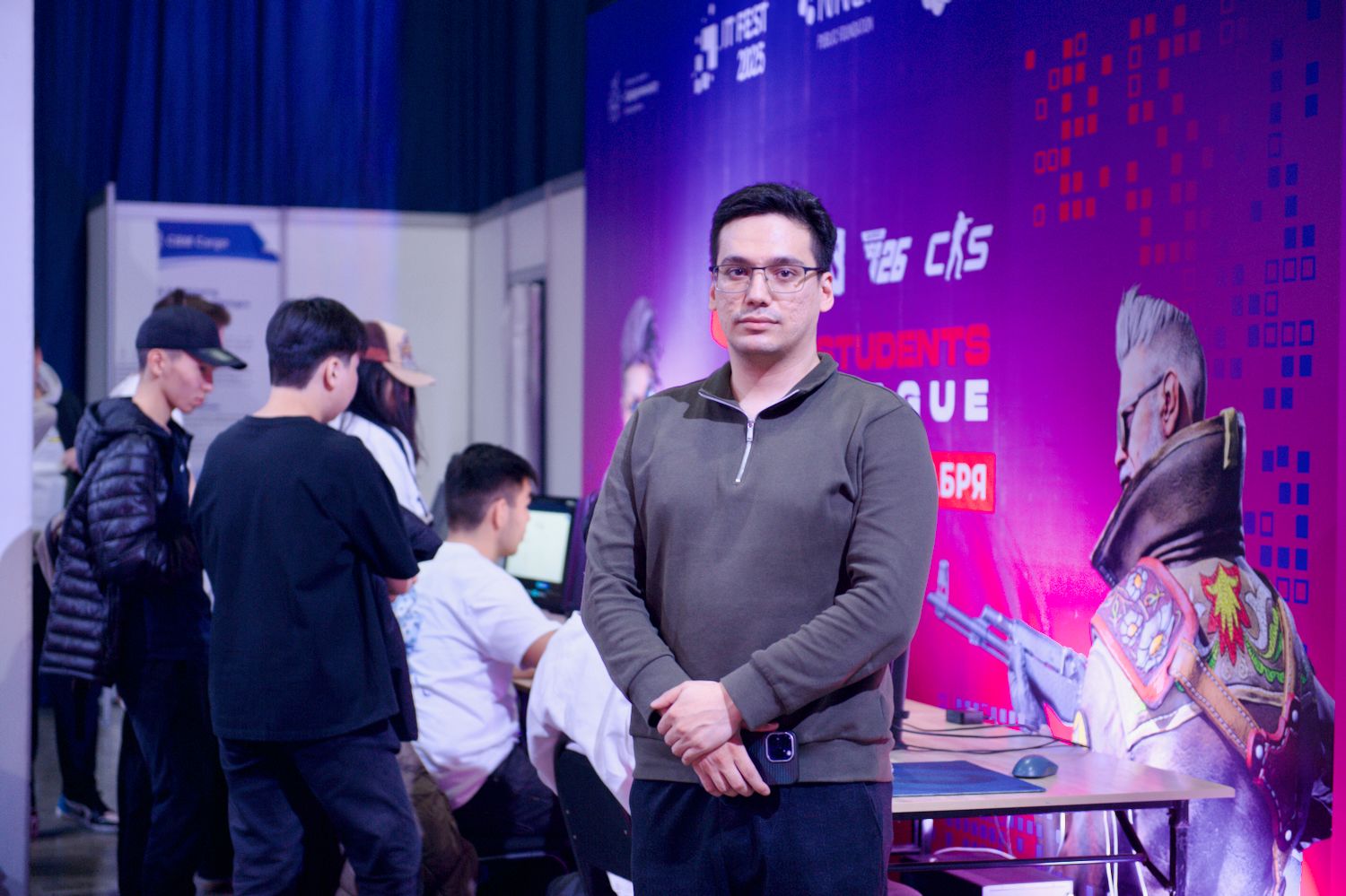
Esports at the festival is represented not only by tournaments but also by the expertise of organizers.
– As part of IT Fest, we are holding a student tournament in Counter-Strike 2, Dota 2, and the football simulator EA FC 24, – says Bakhtiyar Zaraev, a representative of Almaty Cyber Games. – The Halyk Foundation of Timur Kulibayev actively supports esports, thanks to which Kazakhstan is beginning to catch up with Europe and major global platforms in terms of the number and level of tournaments. Prize pools at world championships reach tens of millions of dollars, and esports has long ceased to be a children’s game — it is a serious industry in which Kazakhstani players can fully participate, provided there are enough tournaments and systematic support.
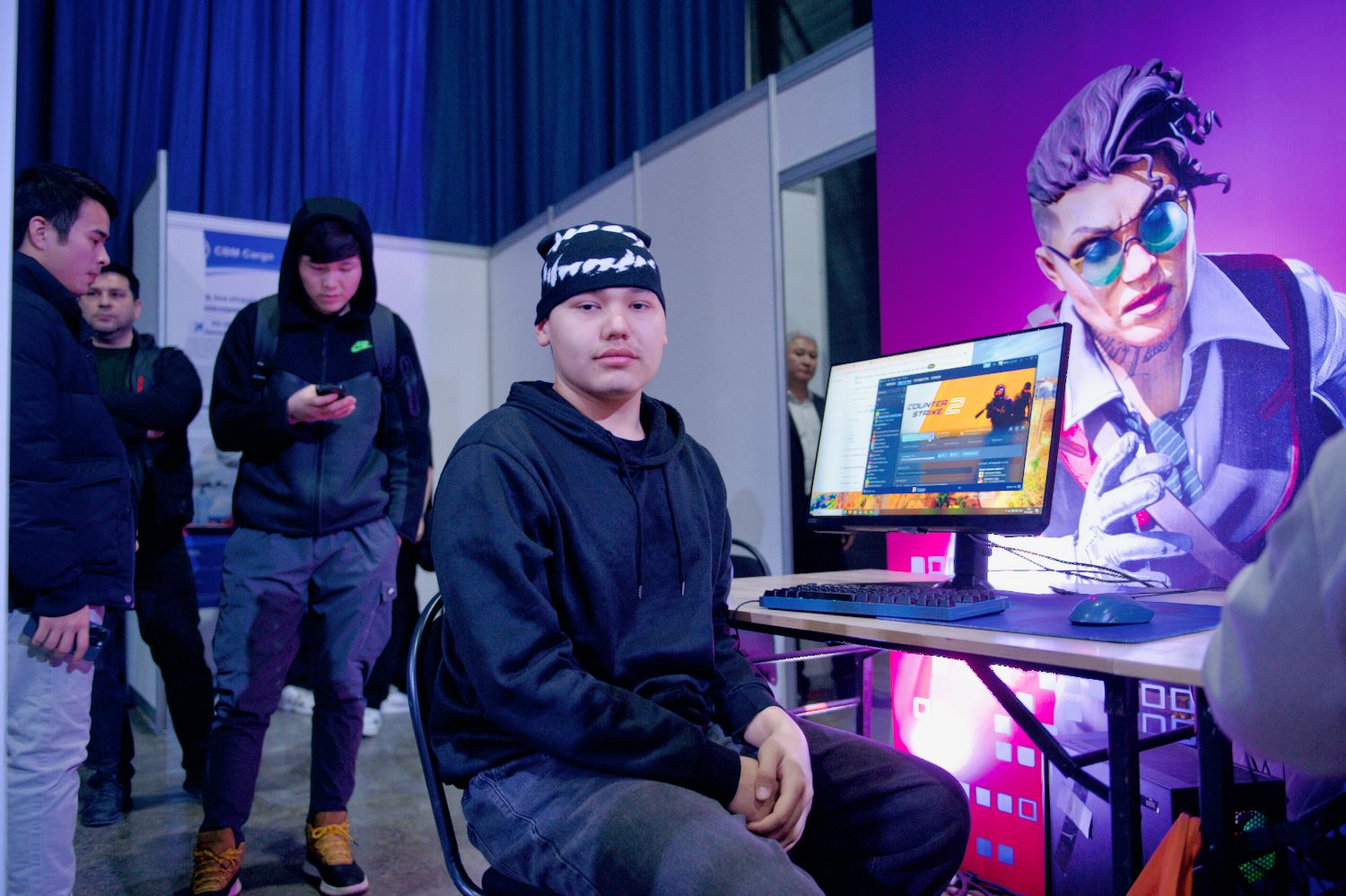
– Preparation for competitions is underway now, I have been participating for about six months and am still at the most basic level, – shares Altair Erezhepov, a student of the Almaty State College of Service and Technology. – For me, esports is not a goal but rather a way to spend time with the team. Mountains, hiking, and live communication are more important to me.
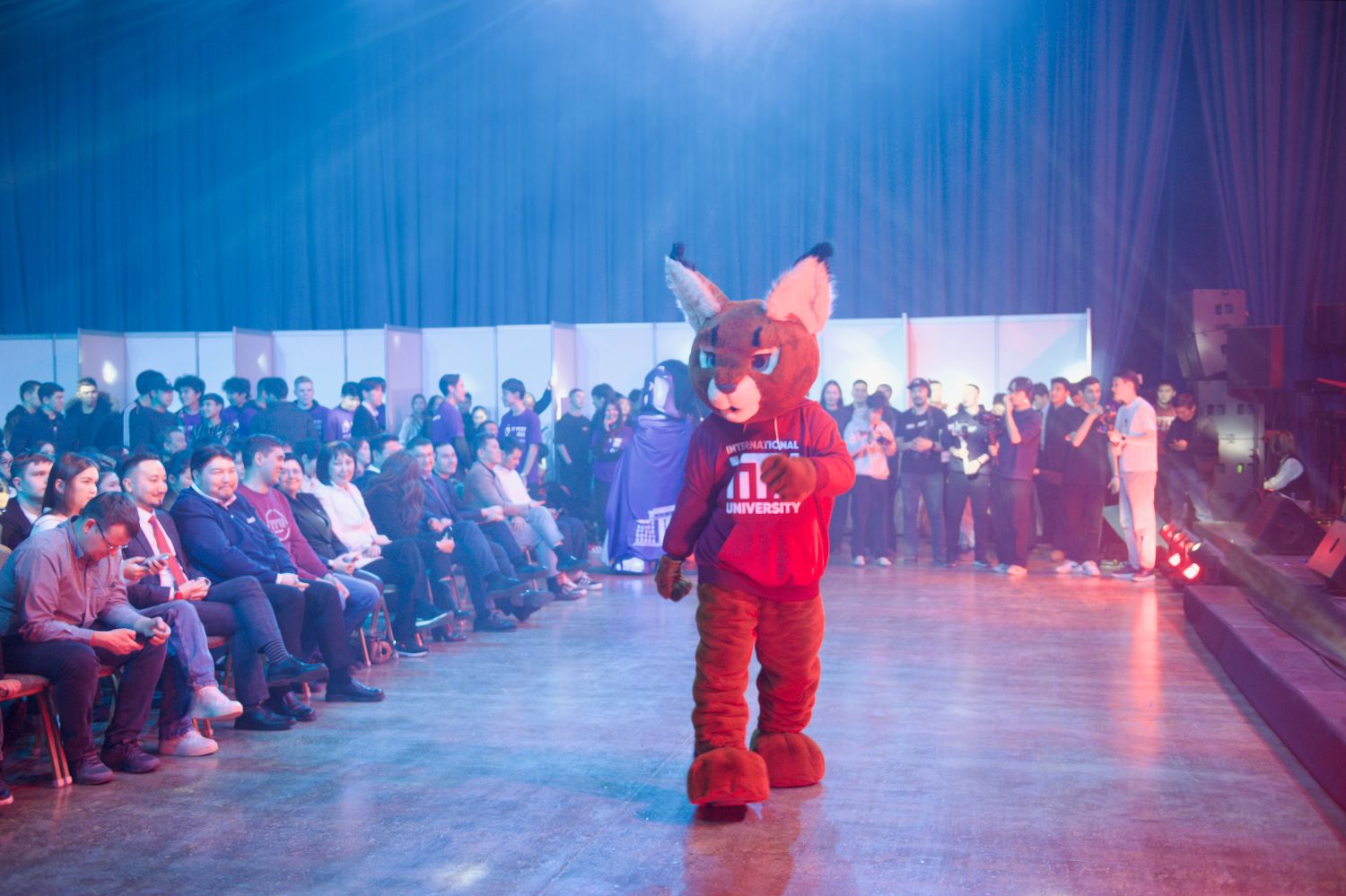
One of the bright characters enlivening the festival is a performer in a caracal costume — the symbol of IITU.
– My name is Arystanbek Zhortuyl, I am a first-year student at IITU. The caracal is a steppe lynx, a free, wild animal, and this association with independence and freedom became the basis for the choice of our symbol. I agreed to wear the costume because it is important to me to support the development of IT in the country and simply bring joy to the festival participants.
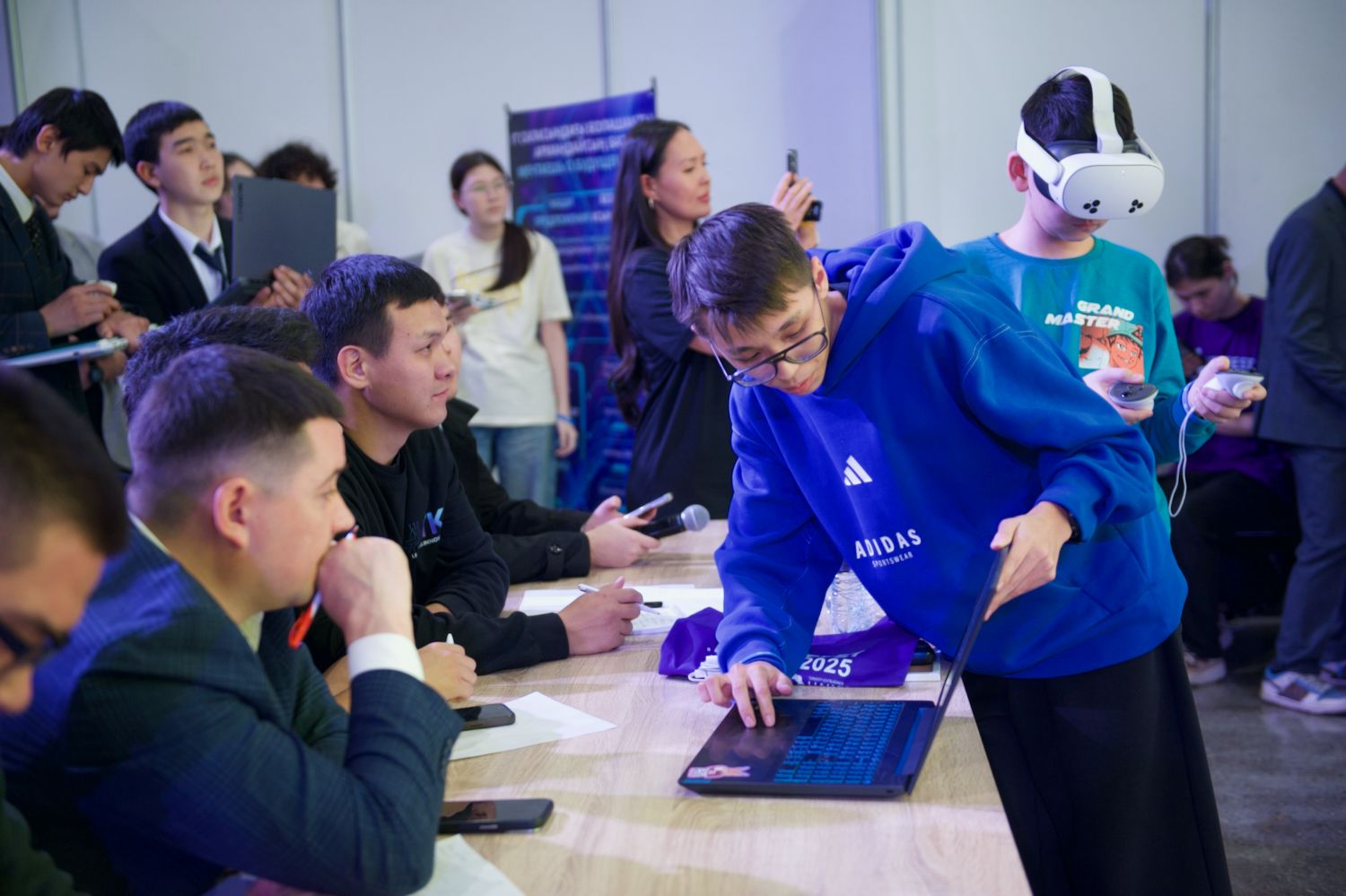
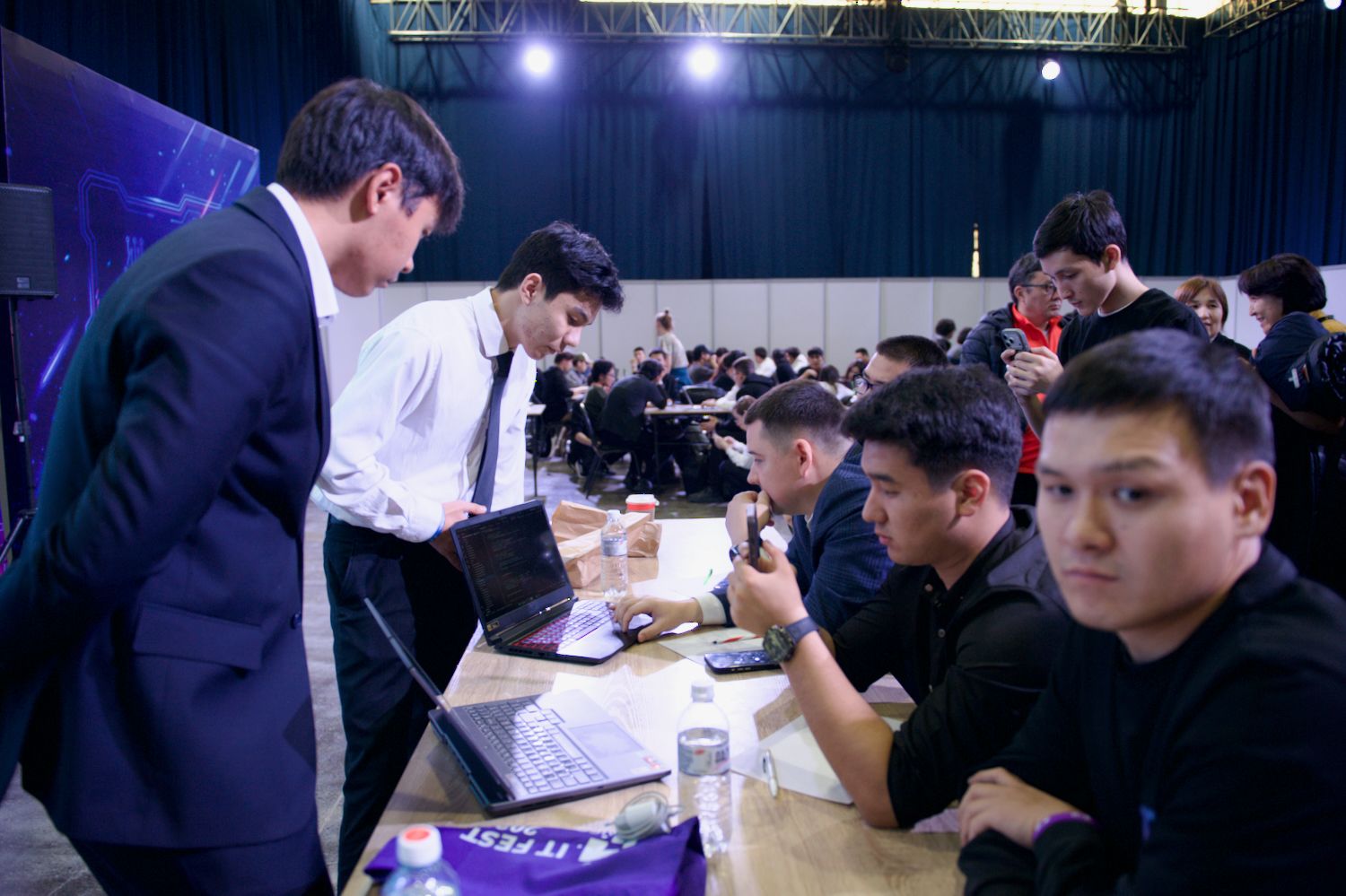
As part of IT Fest, a large-scale hackathon was held with nearly one hundred participating teams. Schoolchildren and students formed groups of three, registered on a special website, came up with a team name, and within twenty-four hours developed solution prototypes. One of the tasks was a data hub for universities in Kazakhstan, where participants had to create a catalog website featuring 3D tours and information about academic programs. Co-organizers of the hackathon were AI Talents Almaty, who provided expert support and guided teams throughout the entire marathon.
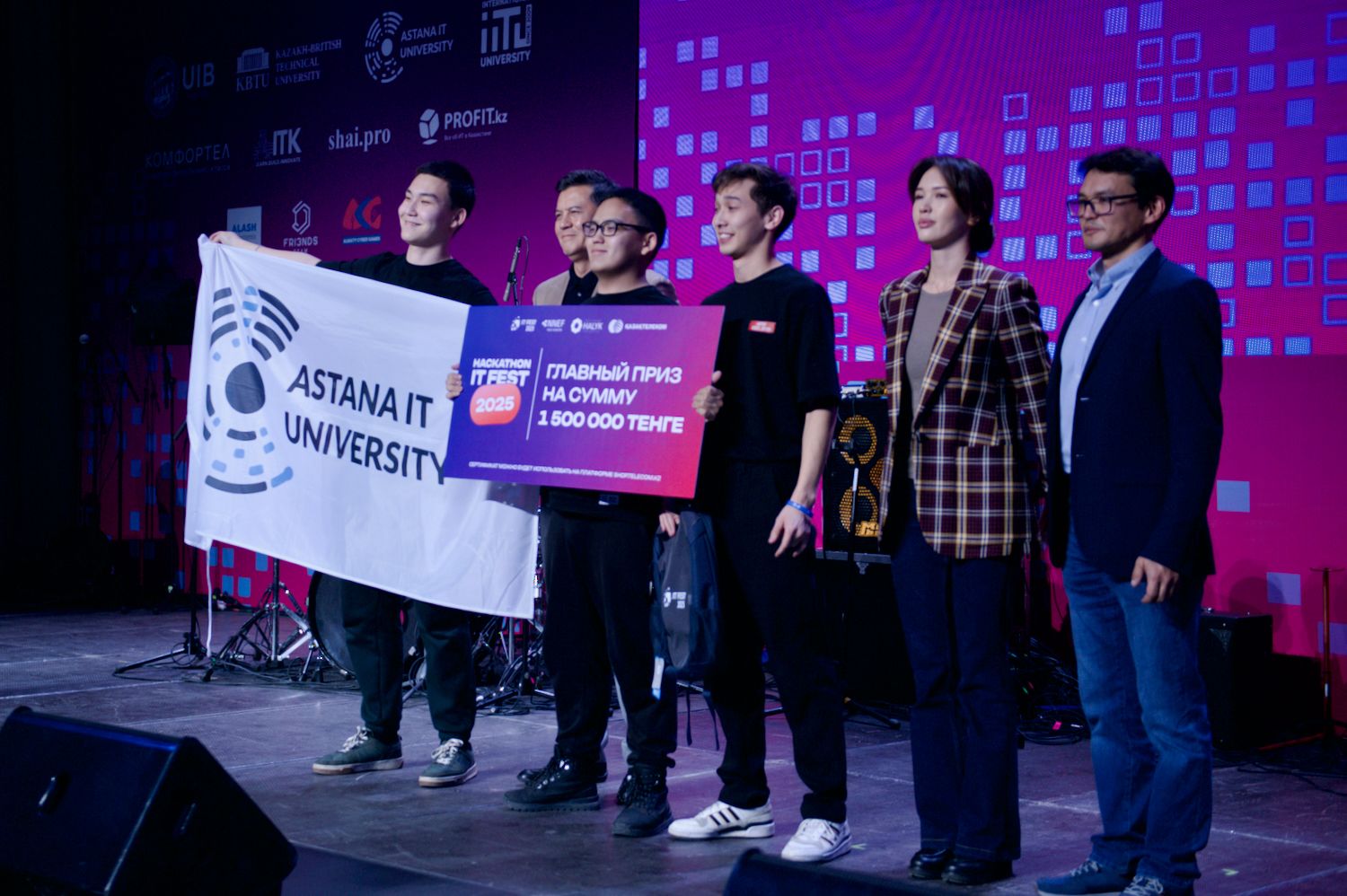
Another task was offered by Kazakhtelecom, with a grand prize of one and a half million tenge, which the winner could spend on equipment from the company website. Teams could choose which assignment to complete; schoolchildren and students were evaluated separately, and participants were given only a few minutes to present their project and convince the jury of its viability.
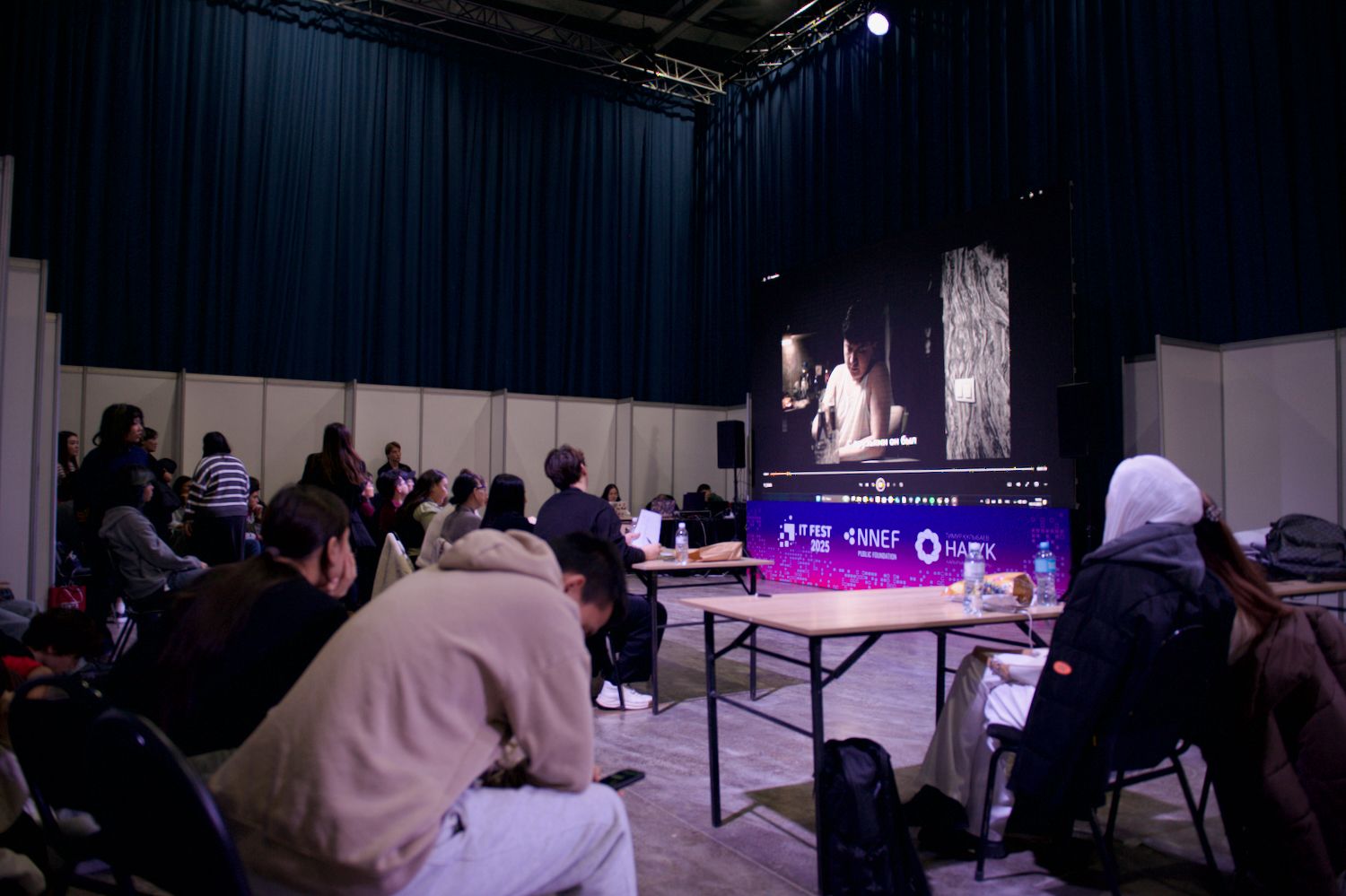
Film and video were also given notable attention at the festival, where teams from IT universities competed to produce short films on assigned topics within a limited timeframe.
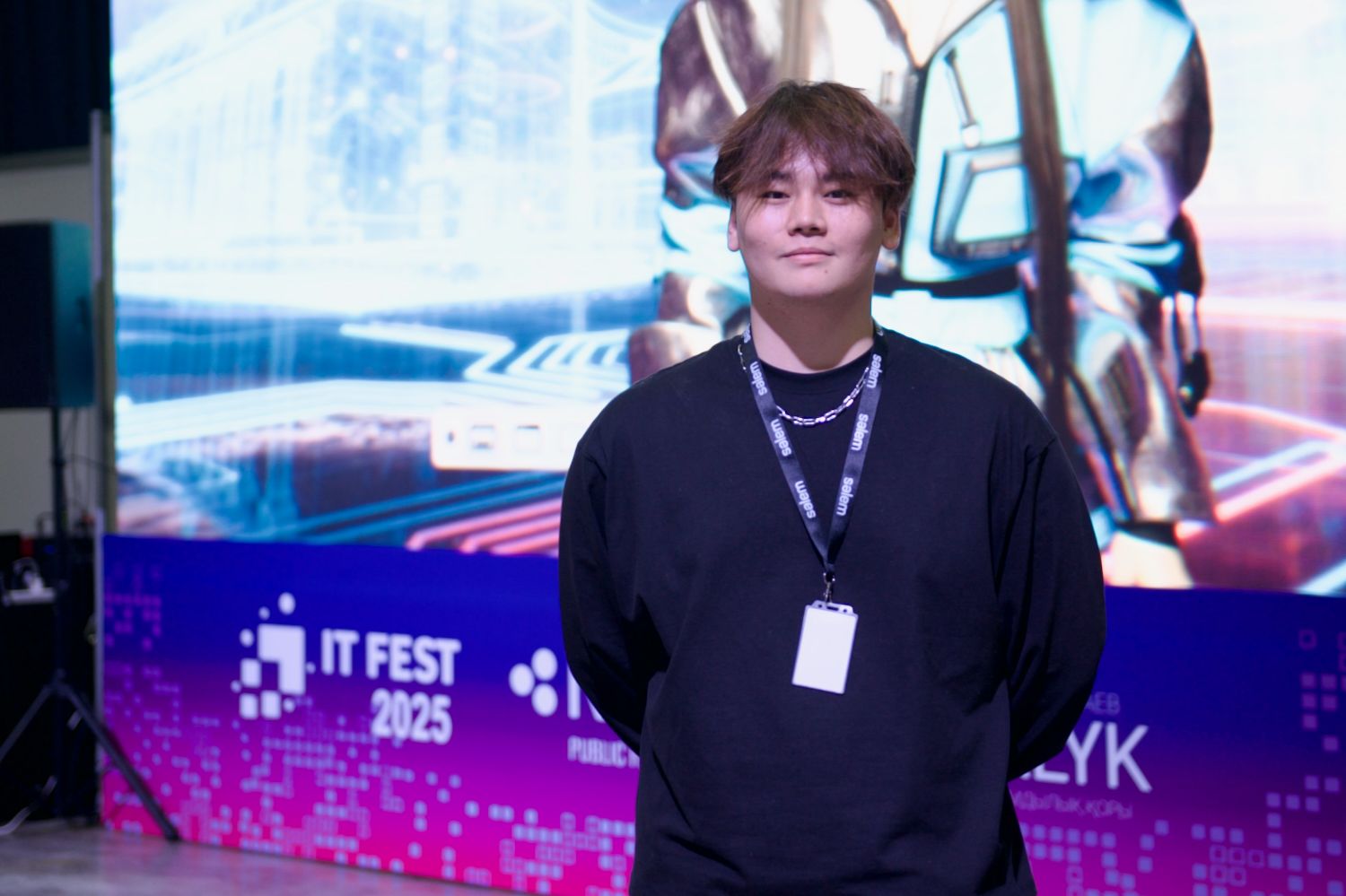
– Today at IT Fest, students from various universities are showcasing the films they managed to create in just half a day, – says Timur Kaby lgazy, digital producer at Salem Entertainment. – The jury evaluates runtime, relevance to the theme, technical complexity, editing, sound, lighting, and artistic quality. Every film must include an element related to artificial intelligence — either a plot device or a visual technique. Among the works, I especially remember the Final Cut team from IITU and the team from Astana IT University, who addressed the topic of domestic and social violence.
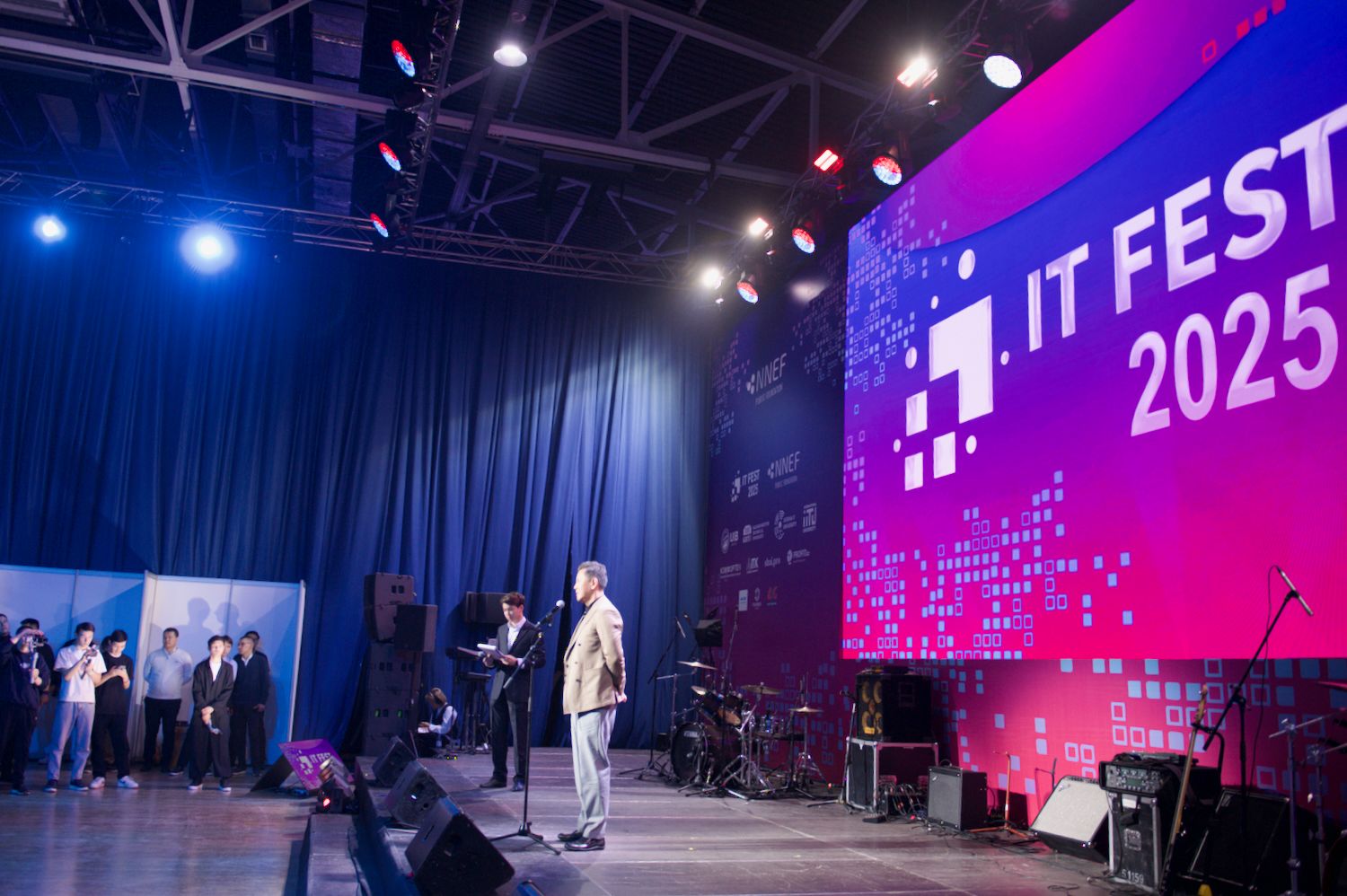
Guests of the festival include representatives of ministries, media, cosplay communities, and major companies. They observe IT Fest from the outside, assessing the dynamics of the industry’s growth and how much students and schoolchildren have changed in recent years.
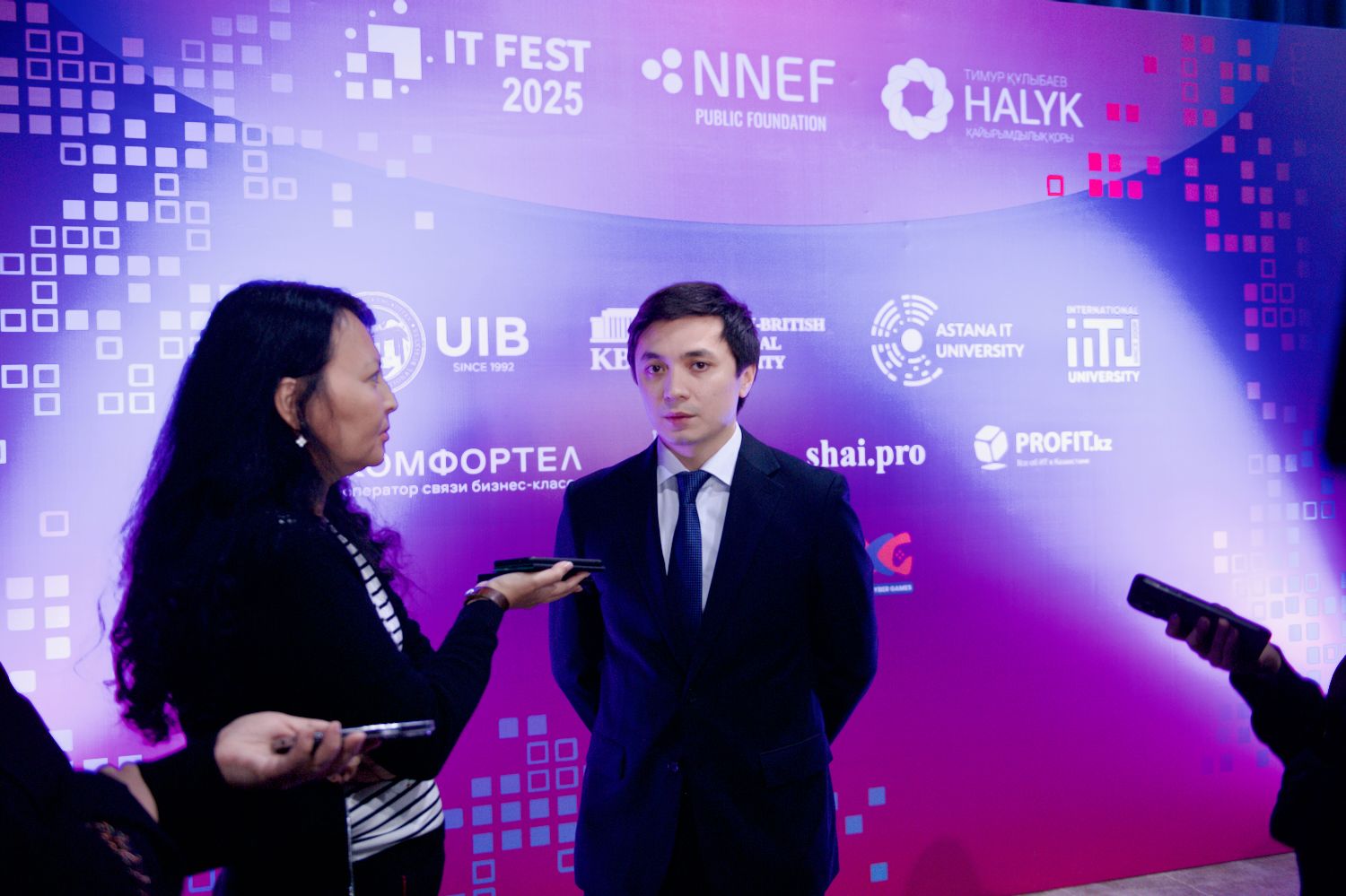
– We have many tasks ahead, and we need to move faster, – says Dmitry Mun, Vice Minister of the Ministry of Artificial Intelligence and Digital Development of Kazakhstan. – Kazakhstan ranks tenth in the world in the UN Online Services Index and has entered the list of the world’s most powerful supercomputing systems, placing eighty-sixth. Over the next three years, digitalization can significantly improve efficiency in mining, agriculture, and other complex industries, and festivals like IT Fest help train specialists who will implement these changes.
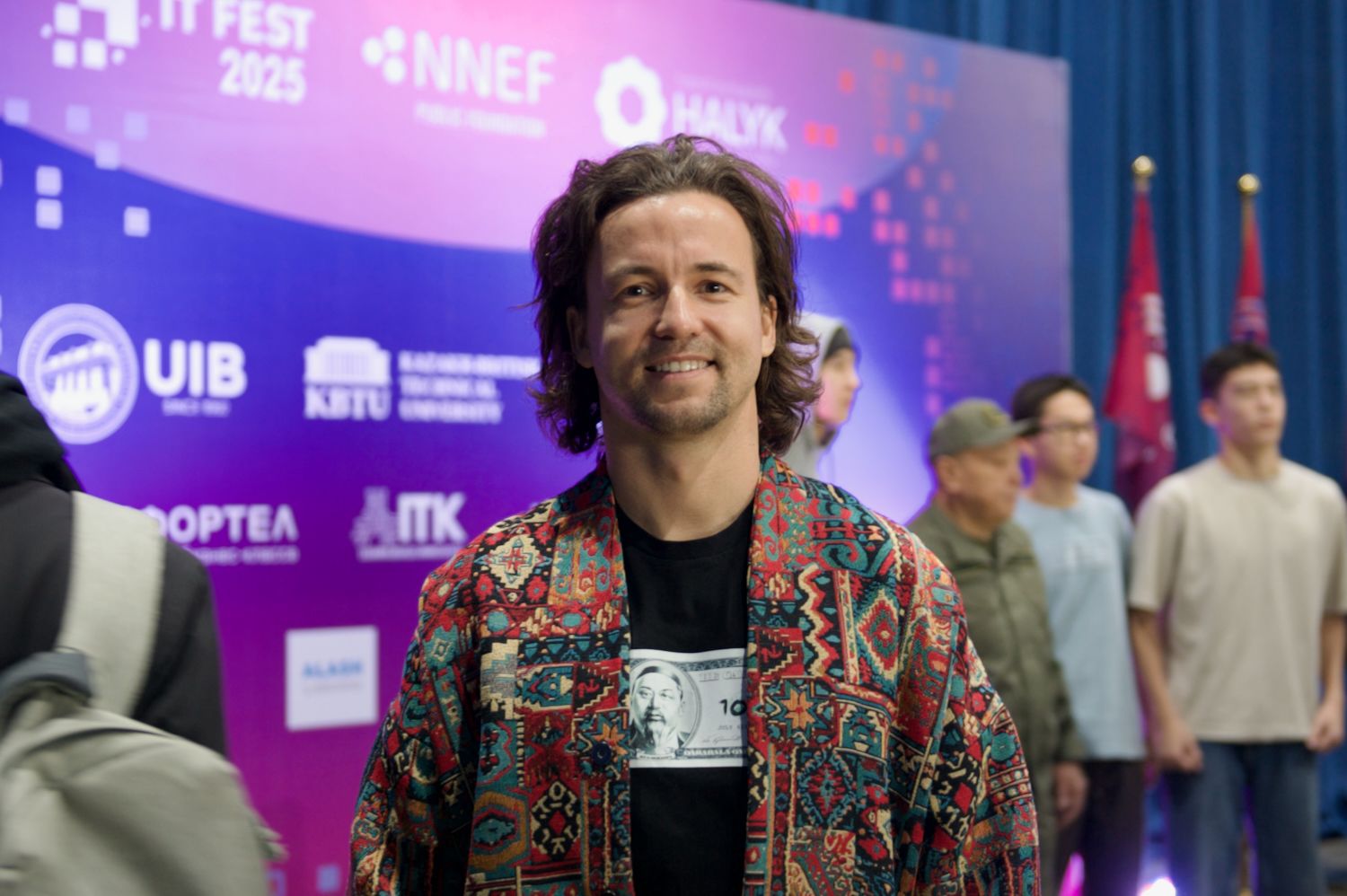
– In terms of development pace, Kazakhstan is now one of the leaders in modern education, – says Ivan Chervinsky, host of the “Alğa Kazakhstan” TV channel. – The country is becoming an international hub for higher education, with branches of leading global universities opening in Kazakhstan, and Kazakhstani schoolchildren have been world champions in robotics for several years in a row. This is due to both national character and the flexibility of the educational system, which quickly integrates new technologies, including artificial intelligence. Projects of the Halyk Foundation, such as “Auyl Sport”, show how even children from small villages can be given an international path.
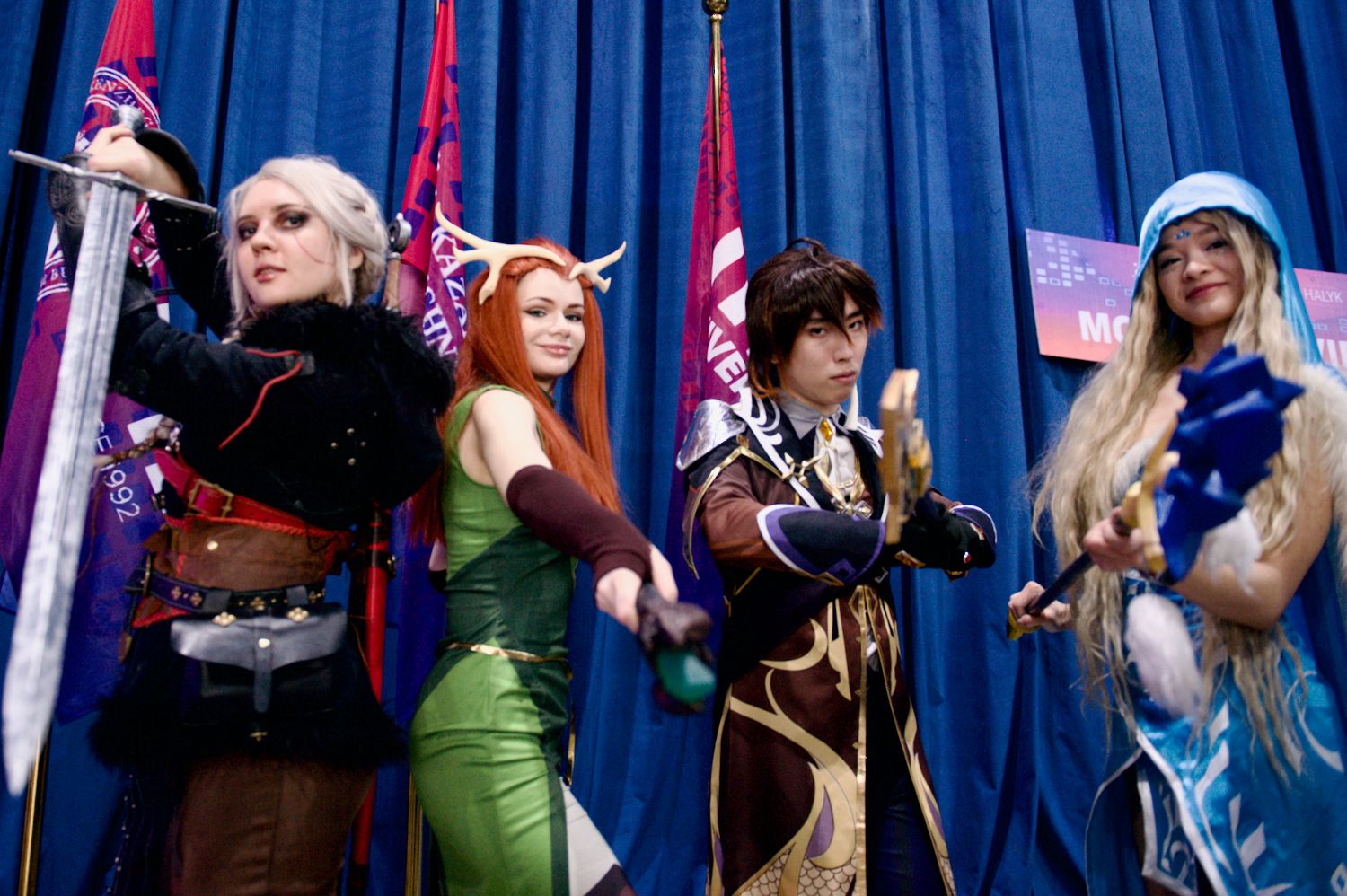
Margarita (left) with her cosplay team.
– It’s amazing that students can travel, showcase their work, or win prizes, – says Margarita, a member of the cosplay community. – Digitalization must continue to develop because today almost all processes depend on information technologies — from internet banking to managing large factories. Robots should replace dangerous jobs, and eventually every household will have personal assistant robots. She is convinced that if Kazakhstan has the capability to create its own android, it absolutely should.
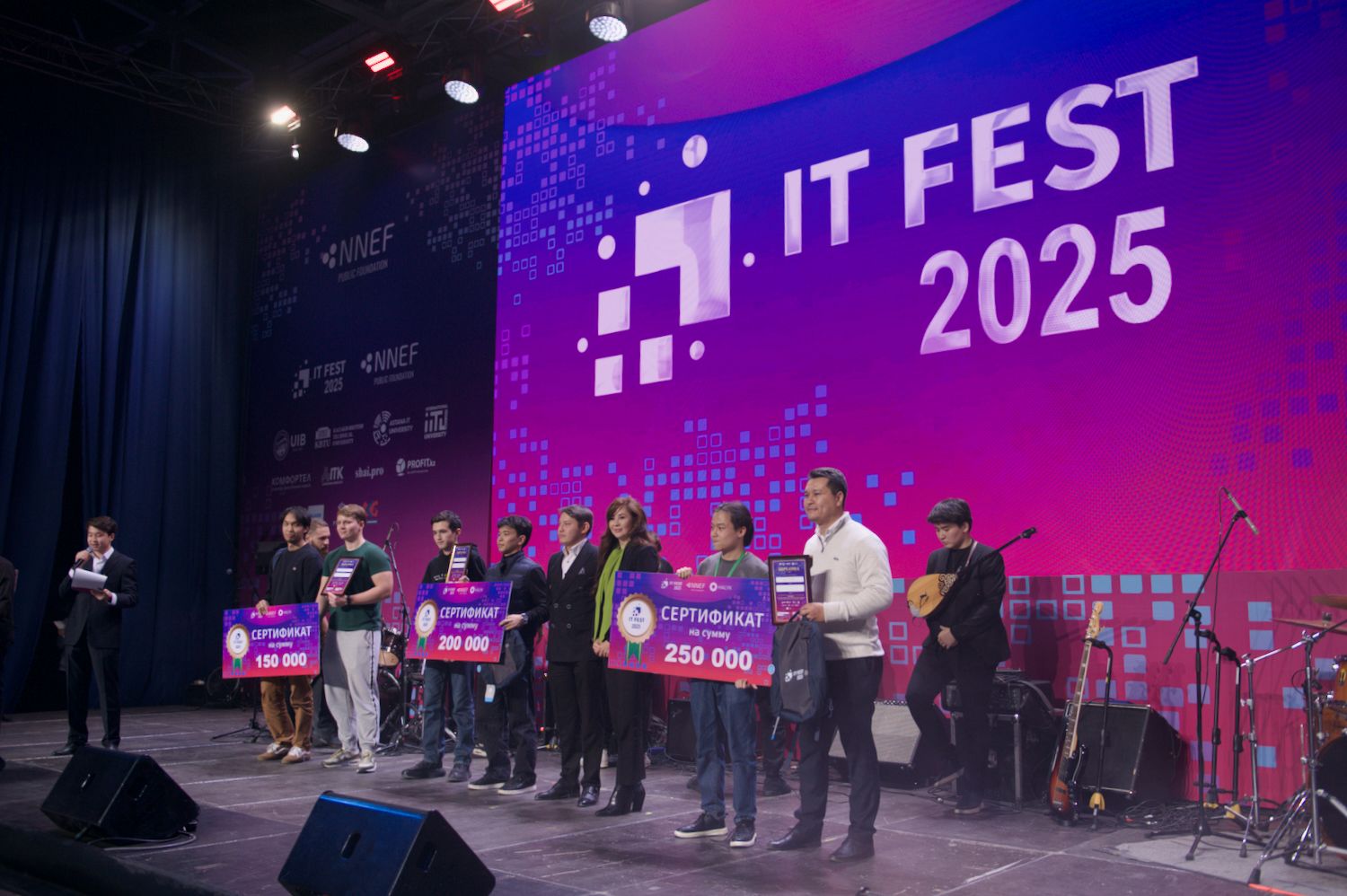
Following the festival, the jury selected winners in each section. Teams received cash prizes and educational grants from IITU and KBTU, and the best projects were recommended for further development with support from partners.
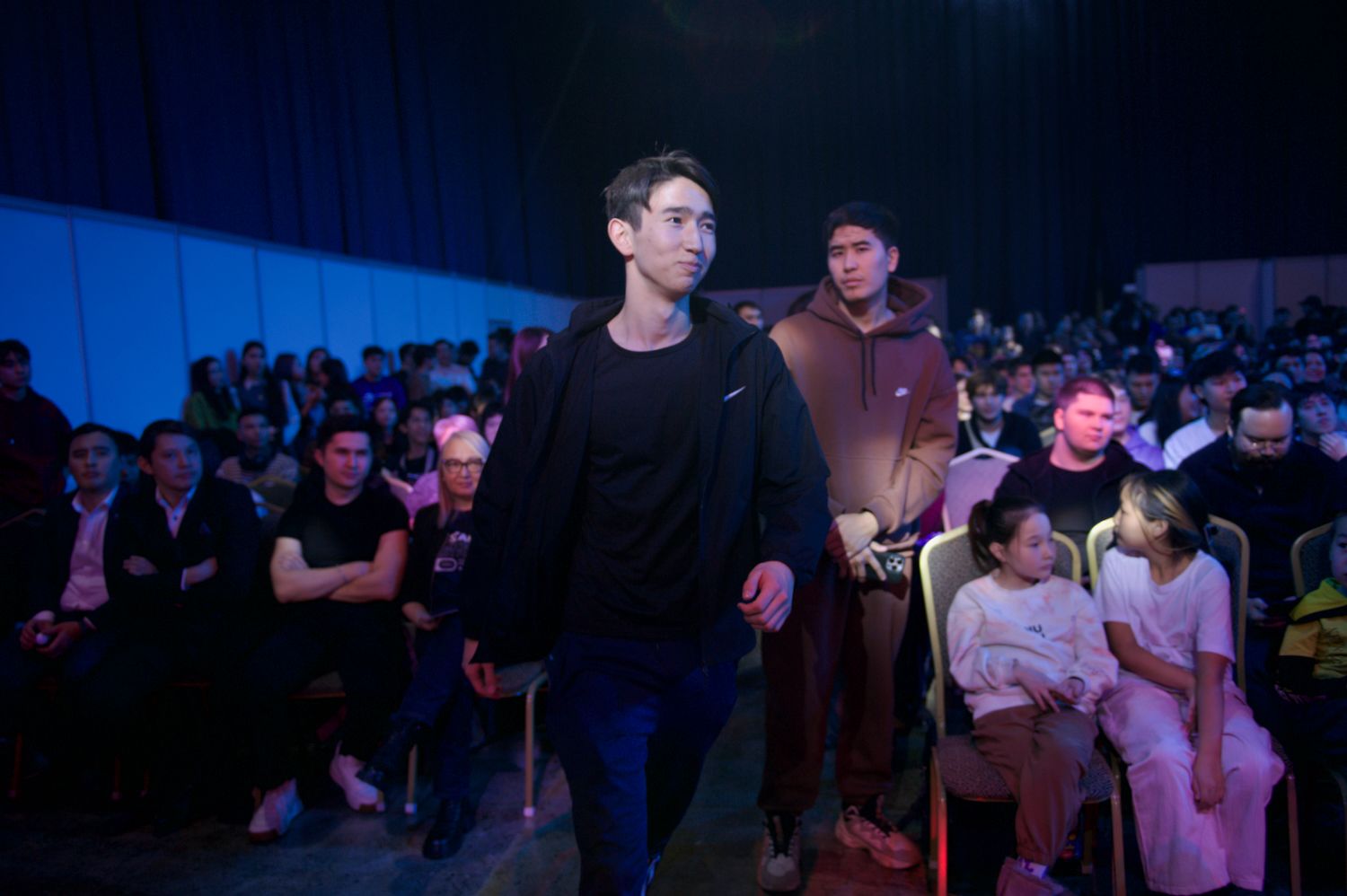
Some participants found new clients during their project presentations. Special attention was given to the winners in the film and video section, who demonstrated that IT students not only know how to program but also how to speak about complex social issues through the language of cinema.
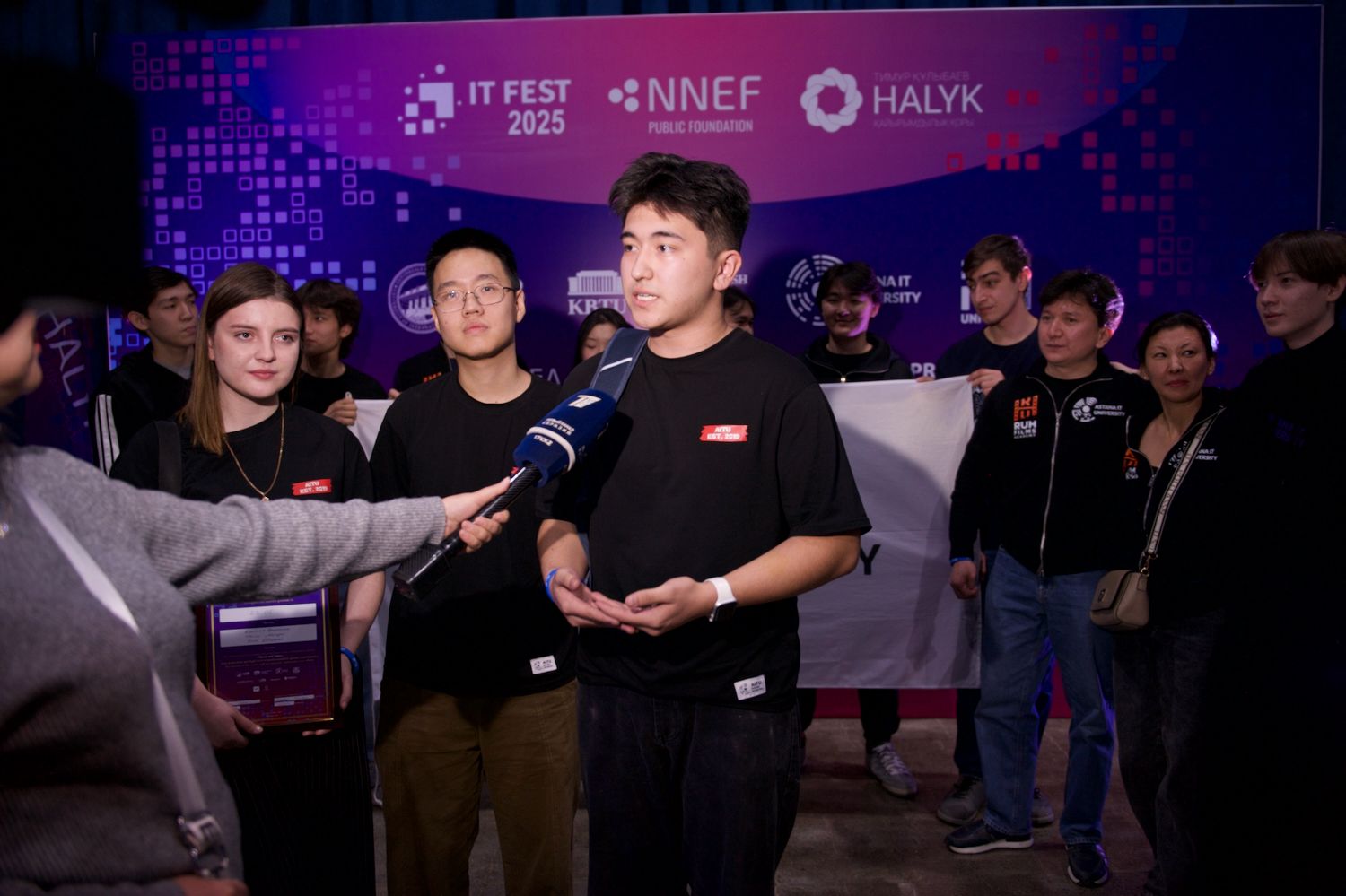
– We had an idea in mind and confidence that we could do more, but we had very little time, – says Ilyas Maidan, a student at AITU. – Our team deliberately chose a difficult topic — the relationship between father and son. We didn’t want to portray the father as a straightforward antagonist; instead, we wanted to show that every person has their own role and their own pain. The story is based on a true event from someone we know. Our relatives helped us film and became the actors. There is a shortage of youth cinema and series for teenagers in the film industry, and platforms like IT Fest give young directors the chance to show that they can create socially meaningful films.
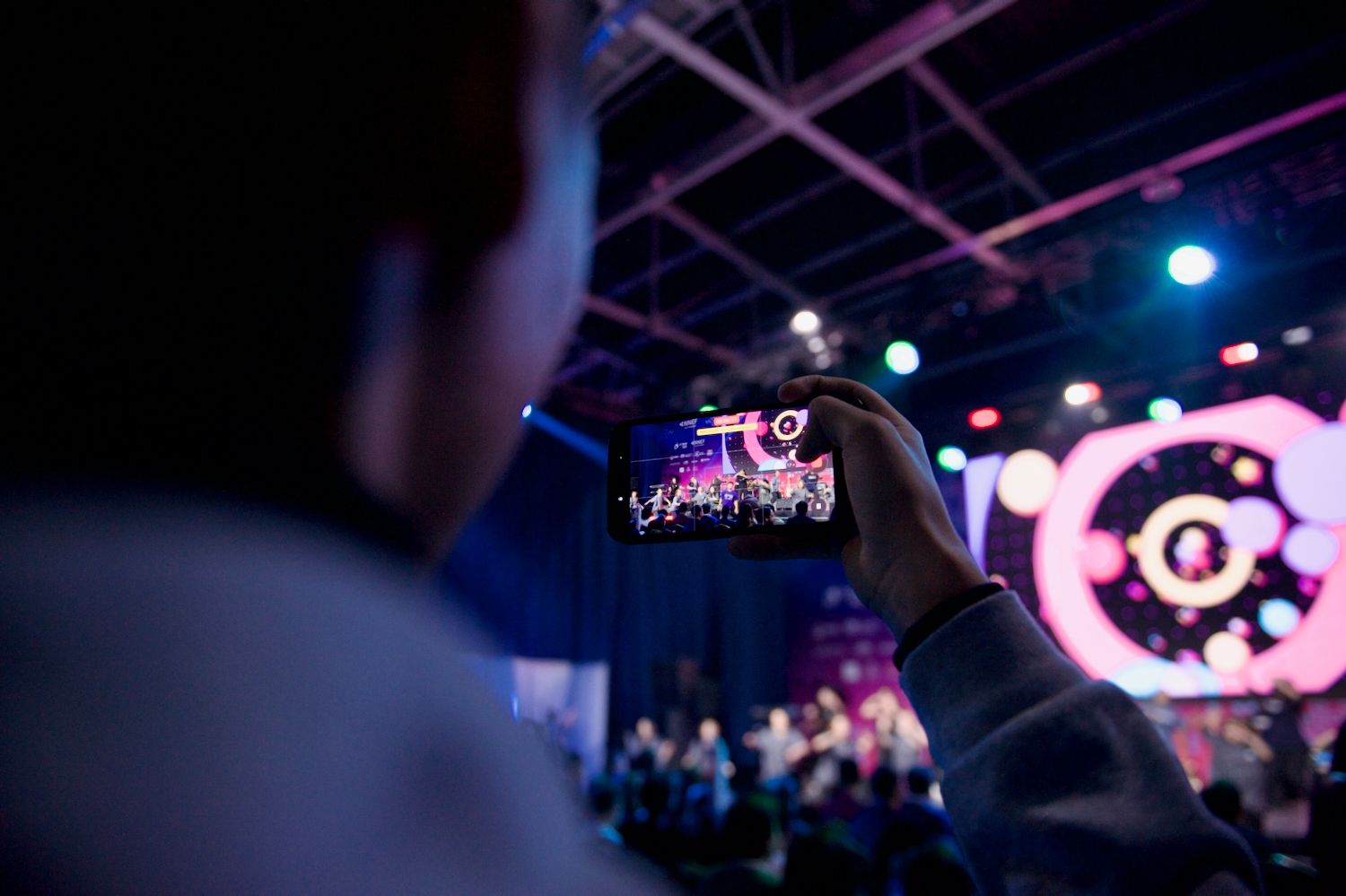
IT Fest 2025 demonstrates that the full digitalization of Kazakhstan is no longer an abstract strategy but a reality in which schoolchildren and students are already creating serious and useful IT projects. The most important thing is that society — along with foundations like NNEF, Halyk, and others — continues to support youth development through universities, IT clubs, and IT festivals. And who knows, perhaps in the near future tourist spacecraft will begin departing from Kazakhstan into space, and mass production of Kazakhstani androids will emerge very soon.
Festival organizers: the NNEF Public Foundation and the University Alliance of Science and Technology (IITU, KBTU, UIB, Astana IT University), with the support of Timur Kulibayev’s HALYK Charity Foundation, within the framework of the AI-Sana state program.
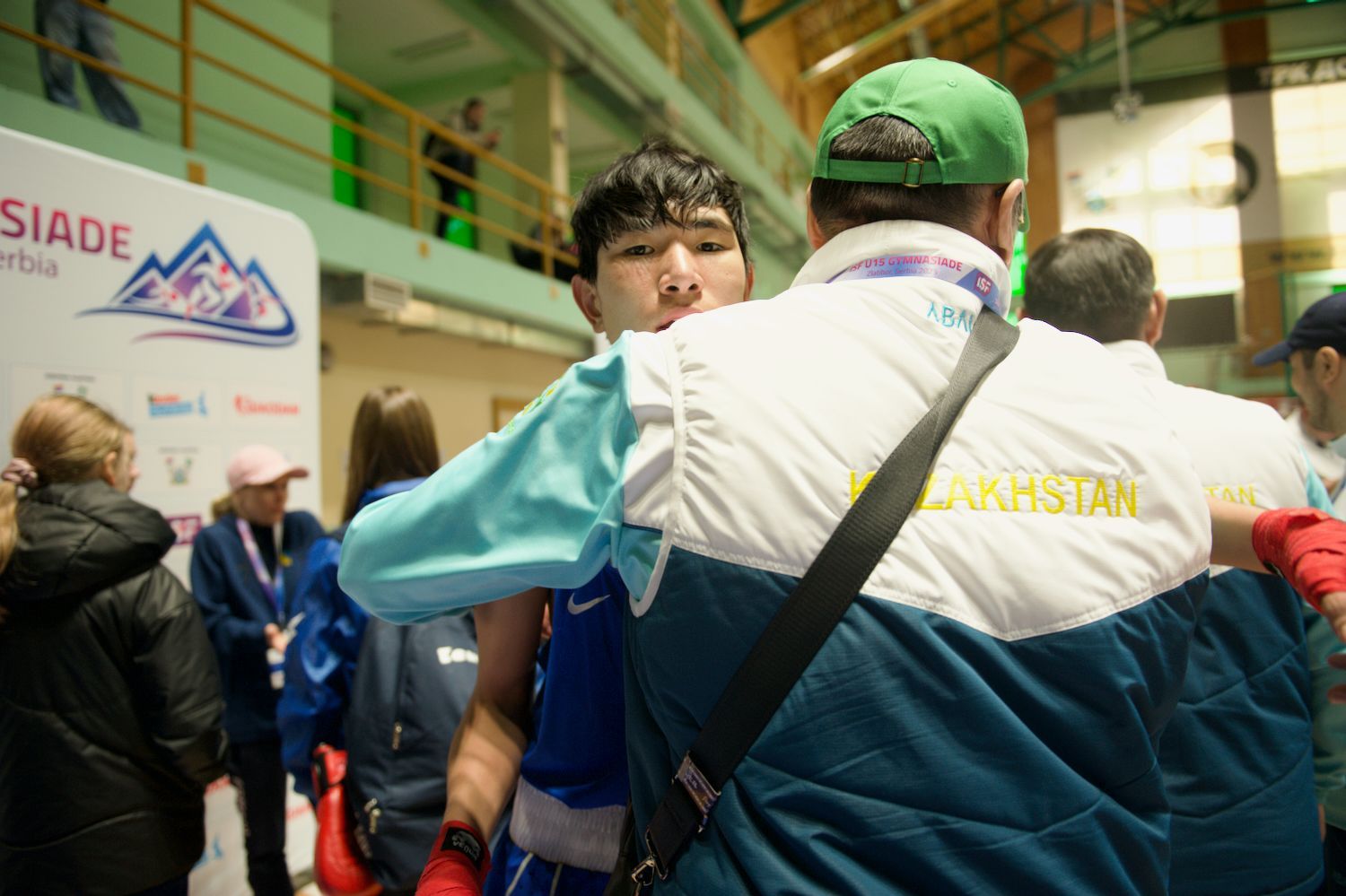
How Auyl Sport opens the path to global victory for rural youth…Photo report by Karlygash Nurzhan for Shanger.kz

KBTU’s AI system helps judges find similar cases, align legal practice, and speed up analysis of millions of court documents.
AITU and NNEF initiatives accelerate AI development in Kazakhstan, equipping educators and experts with new skills and opportunities.
Ekaterina Smolyakova’s journey from childhood to KBTU, her love for Kazakh language, teaching, and inspiring a new generation of students.
Modern facilities, new laboratories and enhanced learning opportunities for senior students at Miras International School.
Comments
No comments yet. Be the first to comment!