Truly Happy People – Life of Shepherds in Kyzylagash
VoxPopuli and Karla Nur
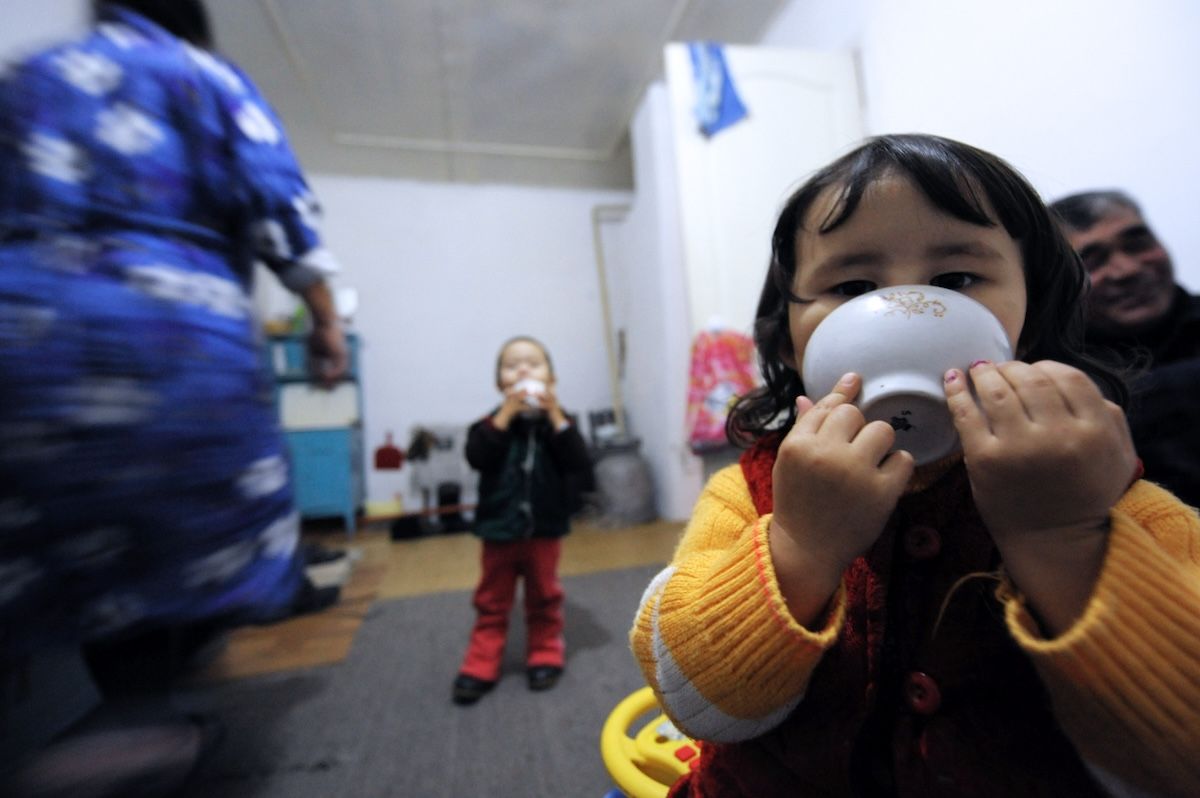
Our photo correspondent Karla Nur had long dreamed of creating a photo story about the daily life of an ordinary Kazakh family living far from the hustle of the city and familiar comforts, with only the minimum needed for existence — and simple joys. In such a home, people do not rush through life striving to build a career; they warmly invite guests inside, sit them at the table, and gladly share stories of their simple but genuine life…
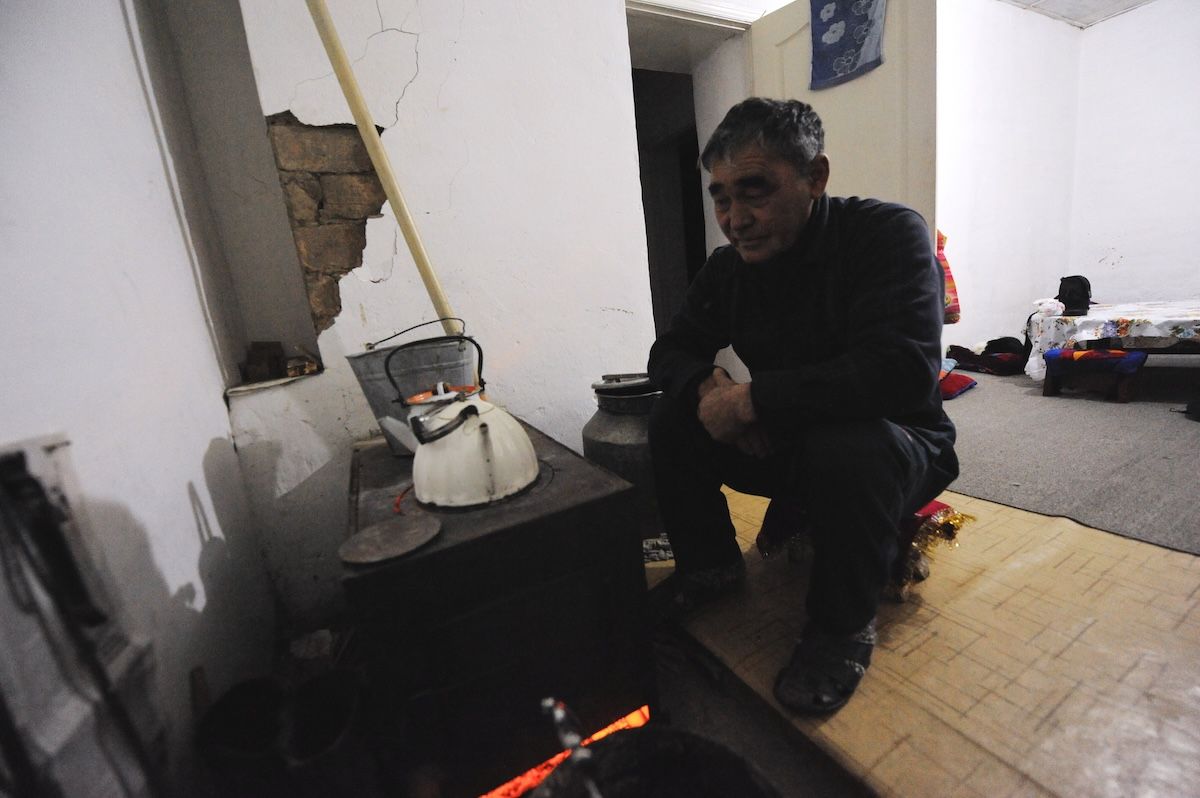
Shepherd Zhumagali’s morning begins at 6 a.m. with lighting the stove. Outside it is still dark and cold. “I can’t sleep for long,” he says. “First I light the stove, then I have breakfast with everyone, and go out to feed the livestock.”
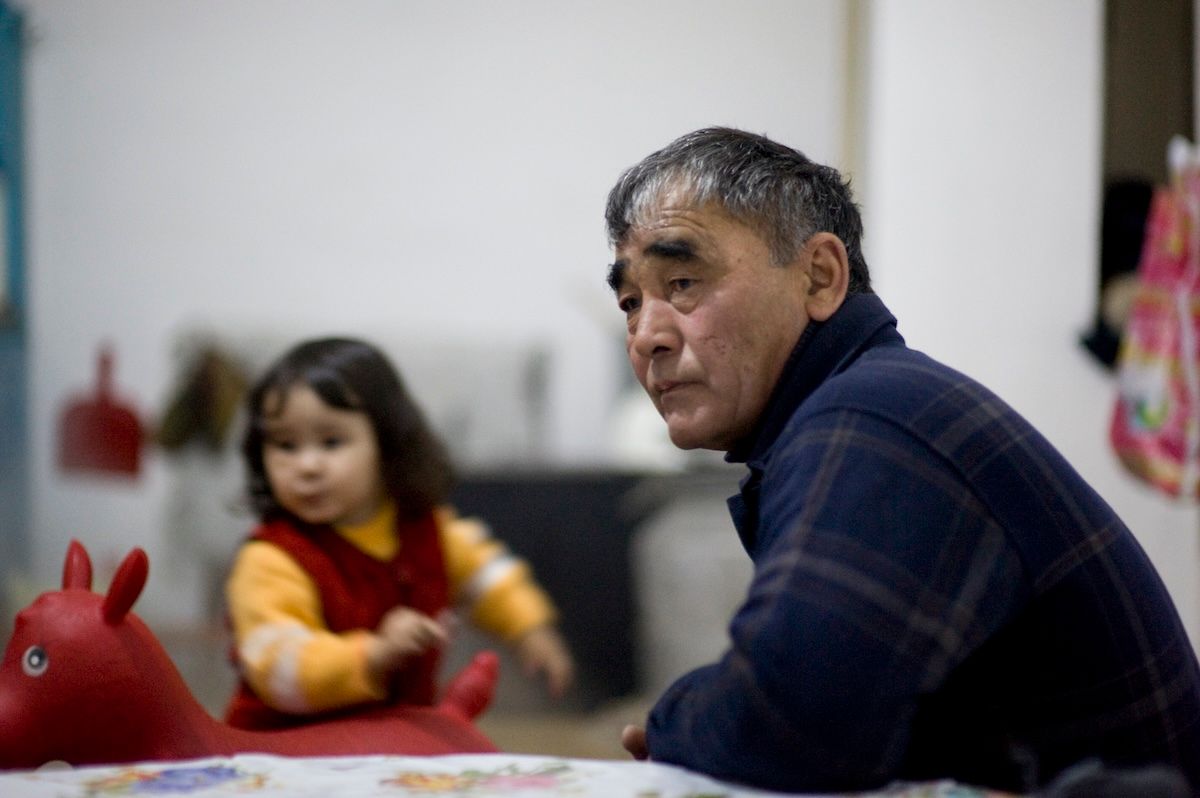
Zhumagali has worked as a shepherd for 13 years. His home is located 6 km from the village of Kyzylagash, in a tiny settlement of eight houses. “We used to graze many animals — ours and others’, but this year we stopped: too many problems after the flood, and people don’t have much livestock now.”
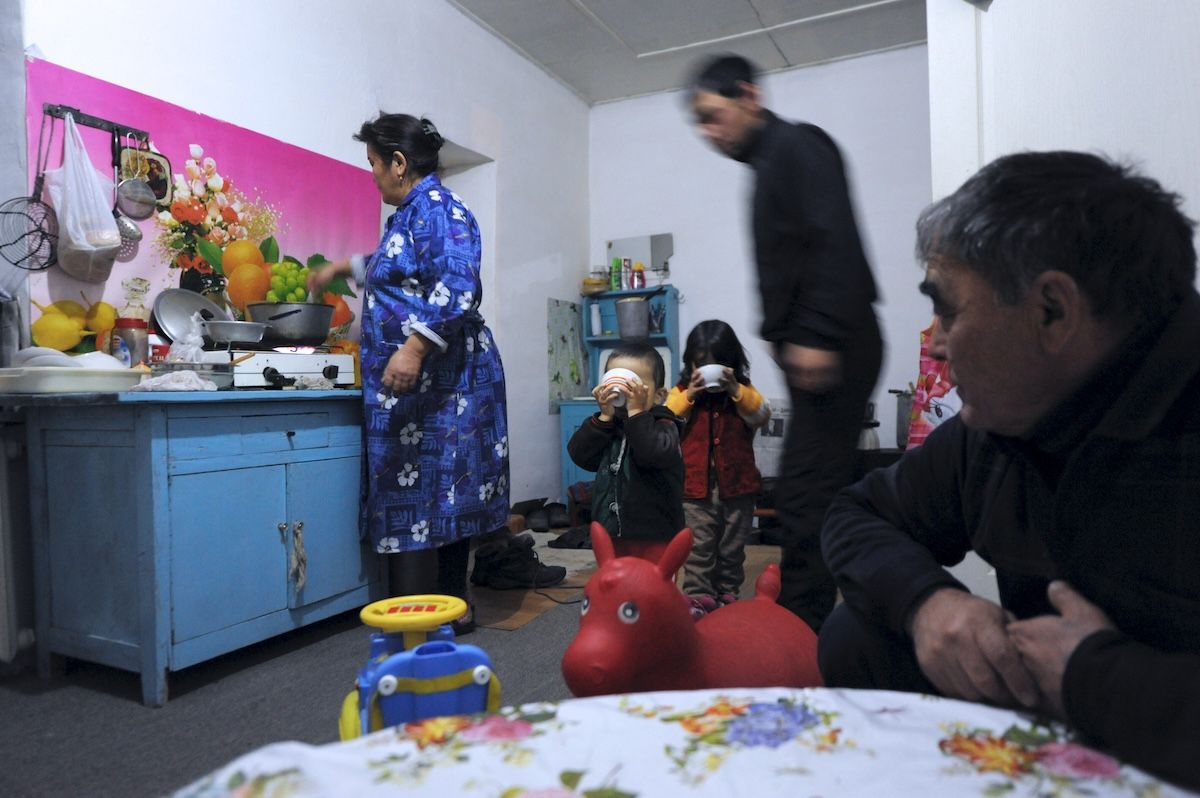
His wife, Kultaı-apa, heats the food and calls everyone for breakfast. On the table: homemade butter, bread, sweet cottage cheese. “I bake around five loaves of bread per week, and we prepared the butter in autumn — enough for the whole winter,” says Kultaı-apa. “Even though this is an aul, there’s always plenty of work.”
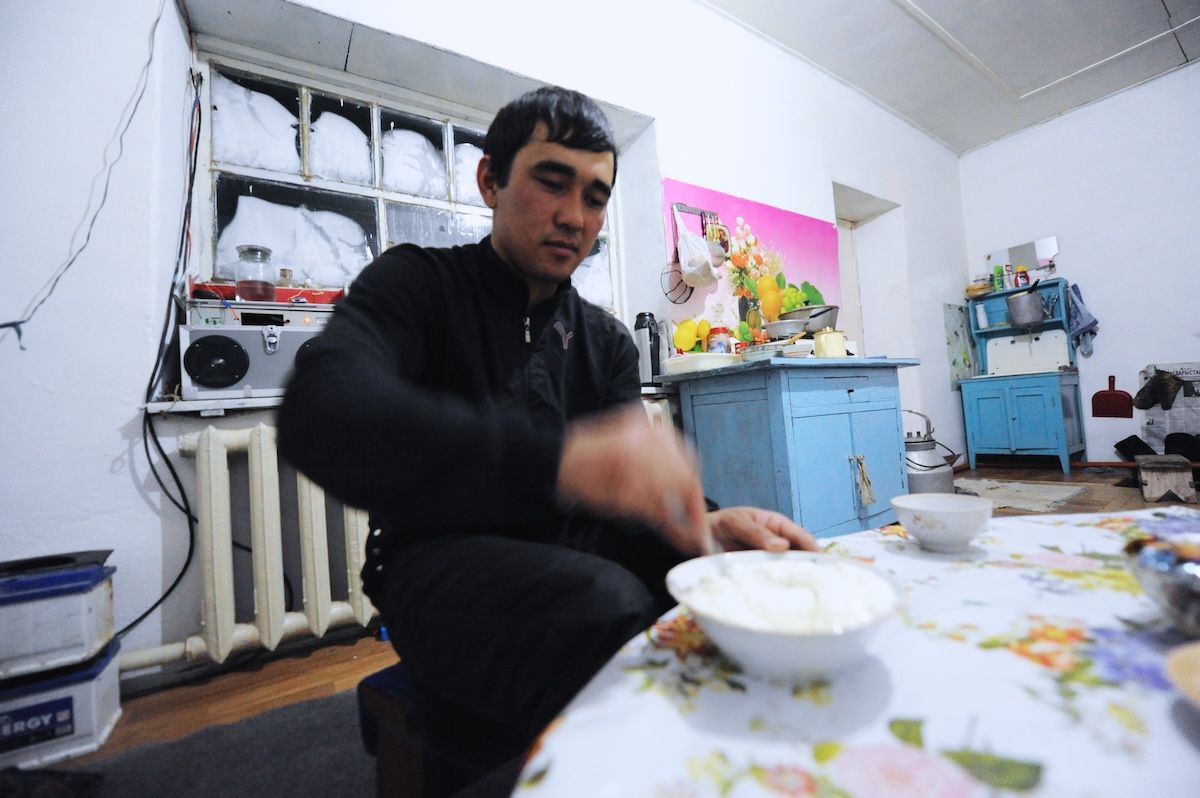
Living with Zhumagali and Kultaı are their youngest son Azamat and two grandchildren from their elder son. “The grandkids have been with us since infancy, their mother, Dinara, studies at the institute,” says Zhumagali. “Our youngest son lives with us and helps with the household, while our other two sons and daughter study and work in Taldykorgan.”
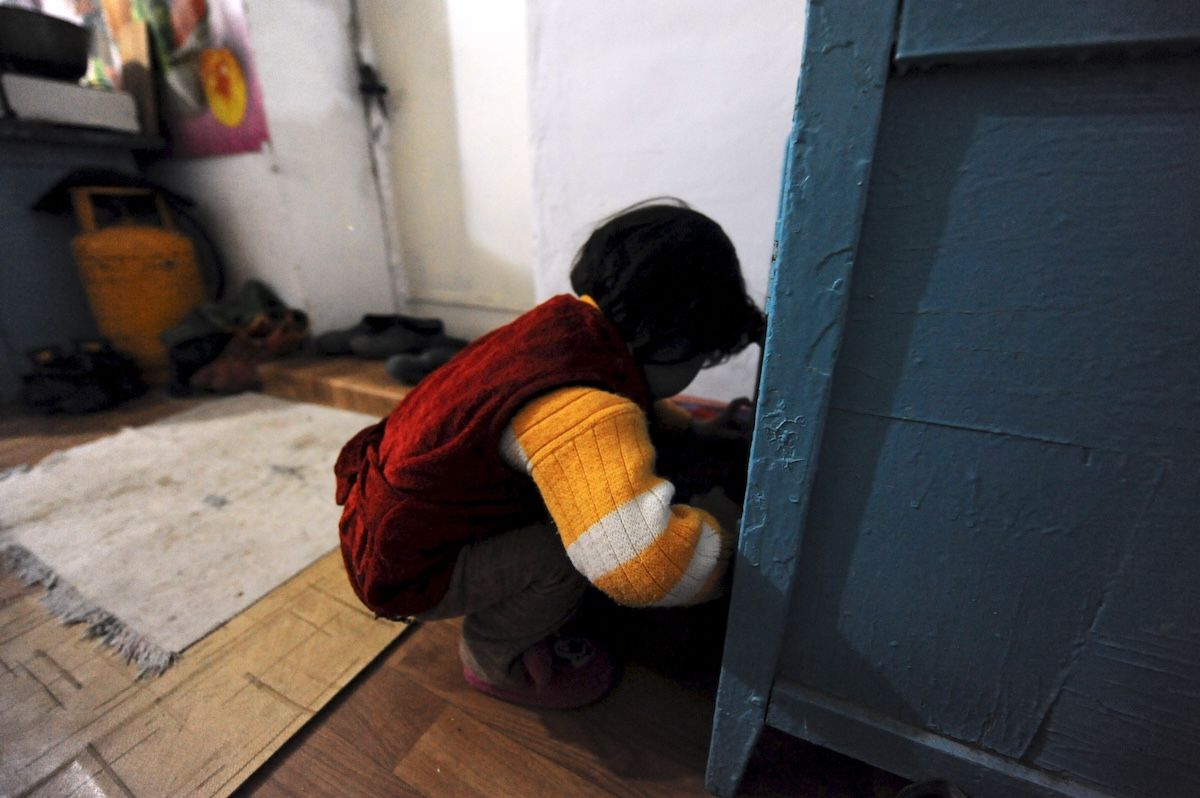
At breakfast, little Tolganai gets upset with her uncle because Azamat didn’t let her wash her hands first at the basin. But she doesn’t sulk for long…
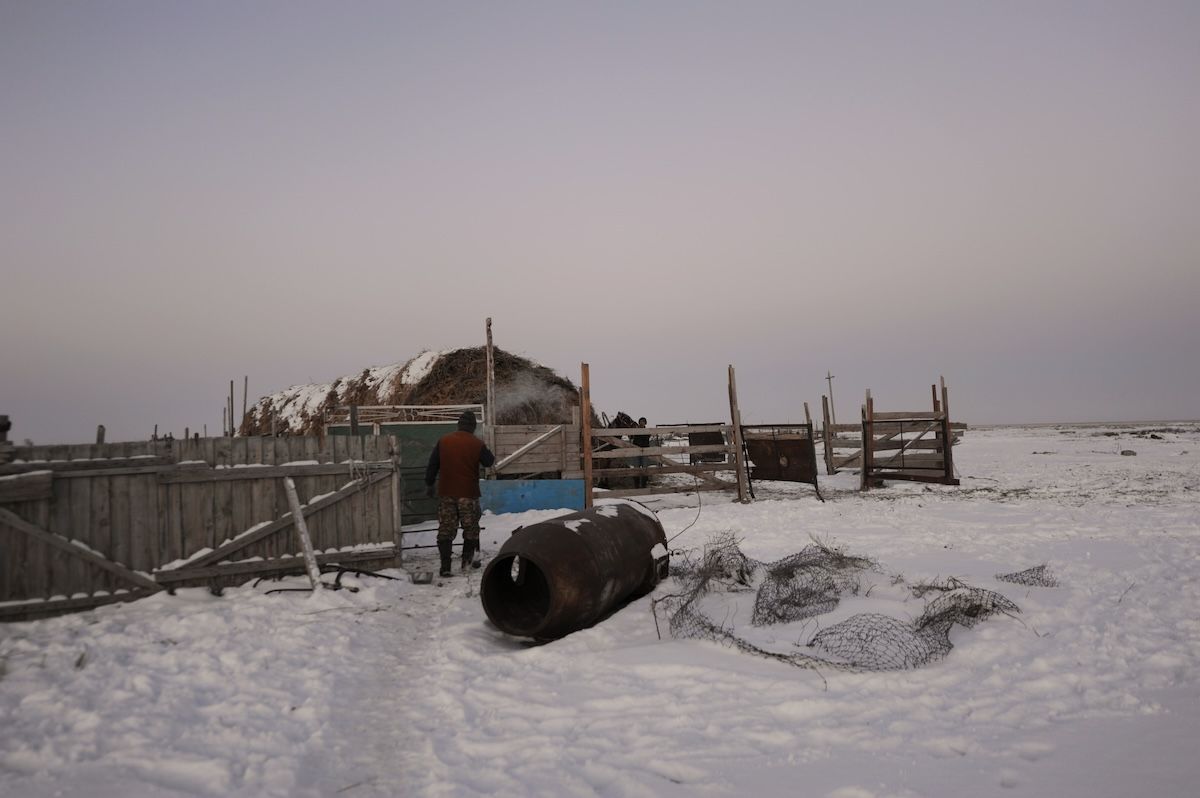
After breakfast, Zhumagali heads out to collect hay for the calves. Snow crunches under his feet, the temperature is around –25°C.
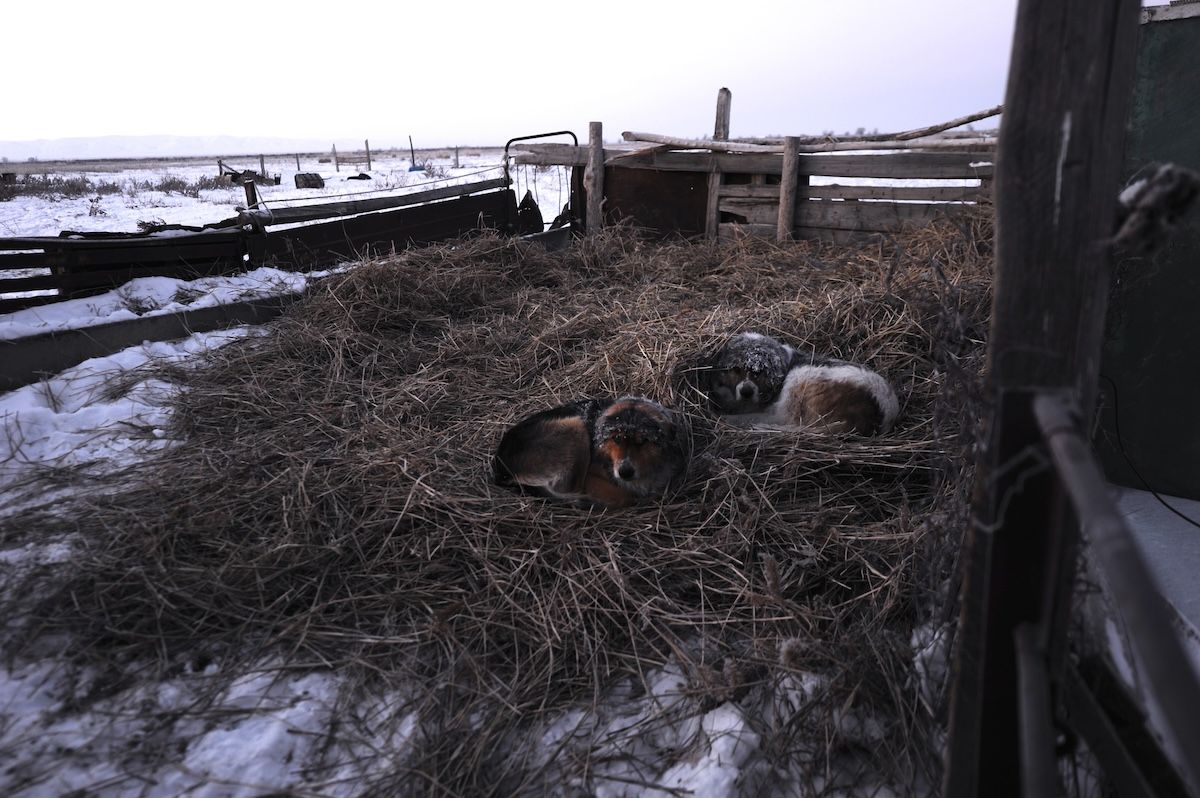
Guard dogs curl up on the hay, warming themselves from the frost.
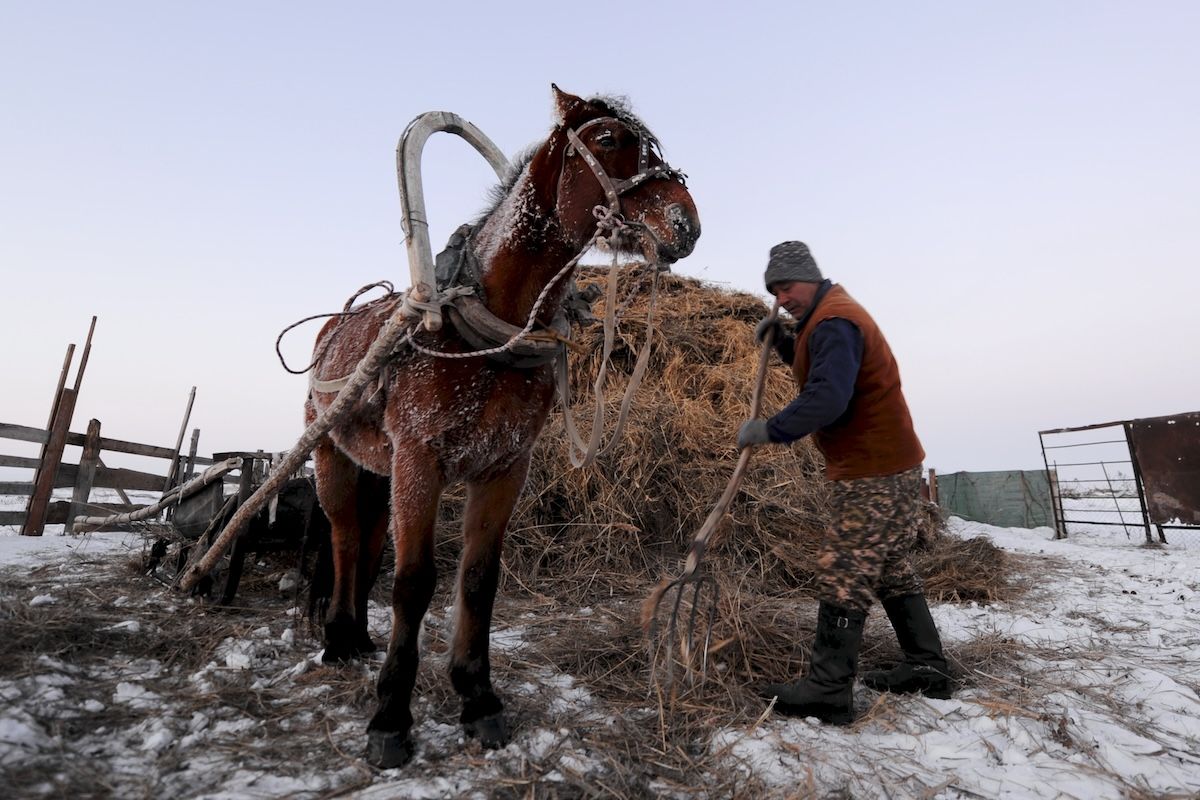
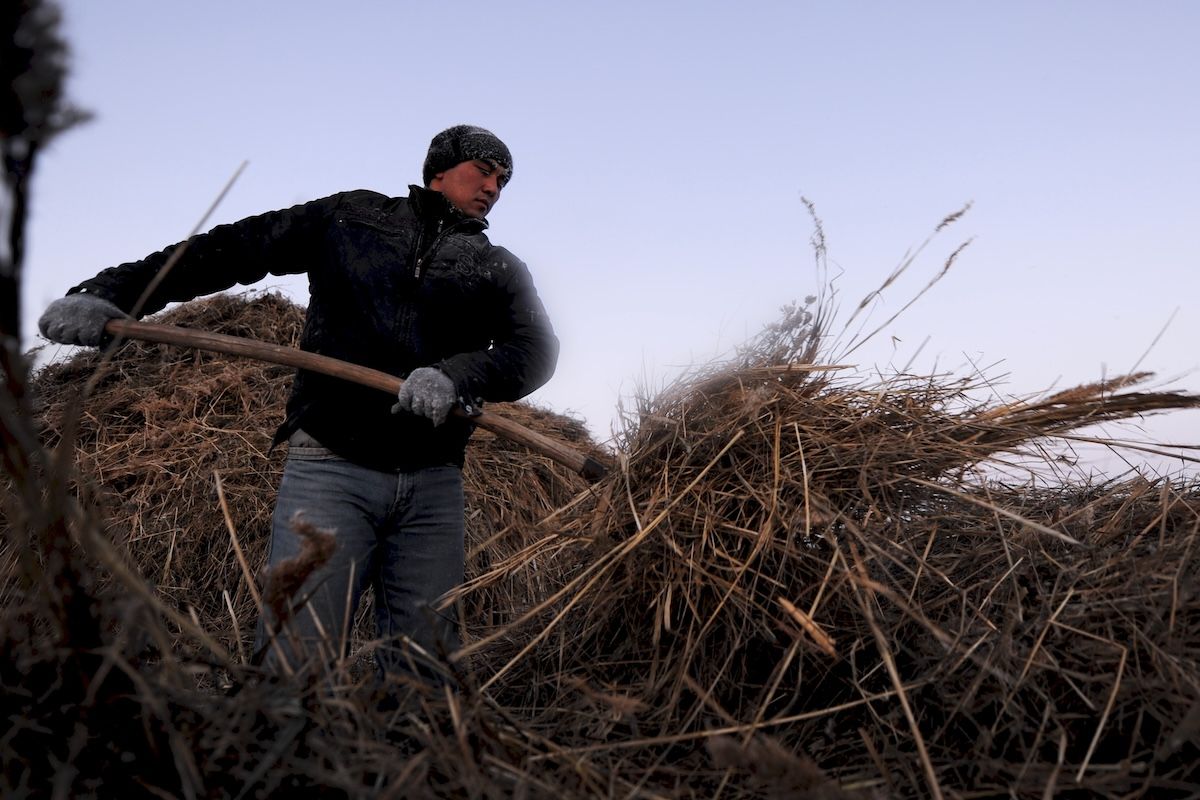
Azamat helps his father. His eyelashes, hair, and eyebrows are covered with frost, but both he and his father are accustomed to such bitter cold.
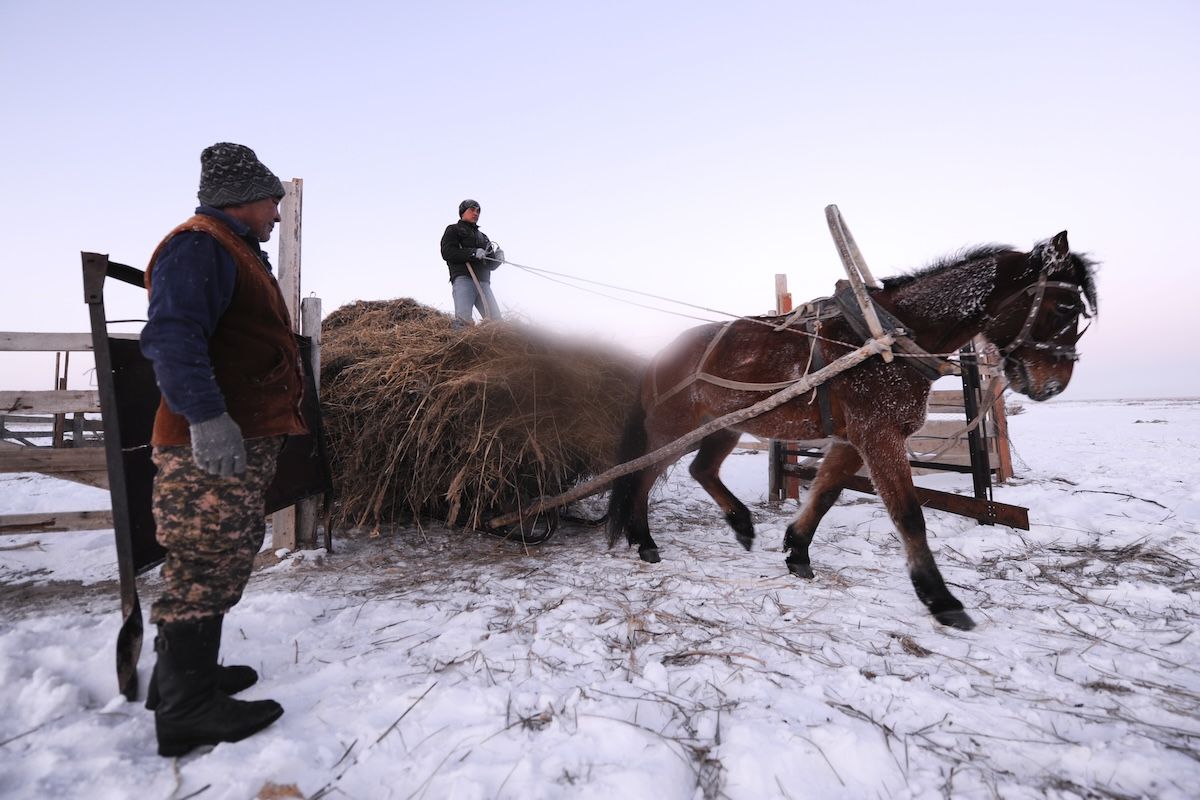
After the hay is loaded, they head toward the “base,” the place where the livestock is kept.
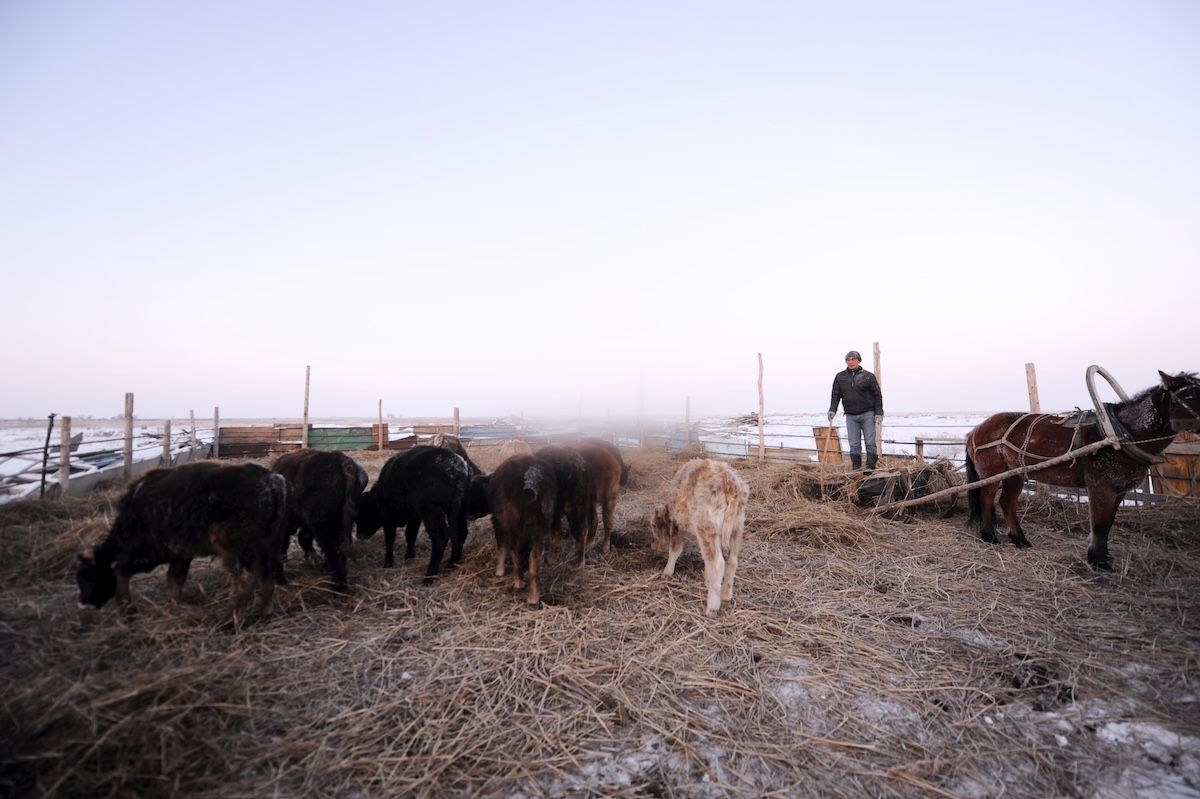
Hungry calves immediately rush to the feed. Adult cows go separately to eat in the hay barn.
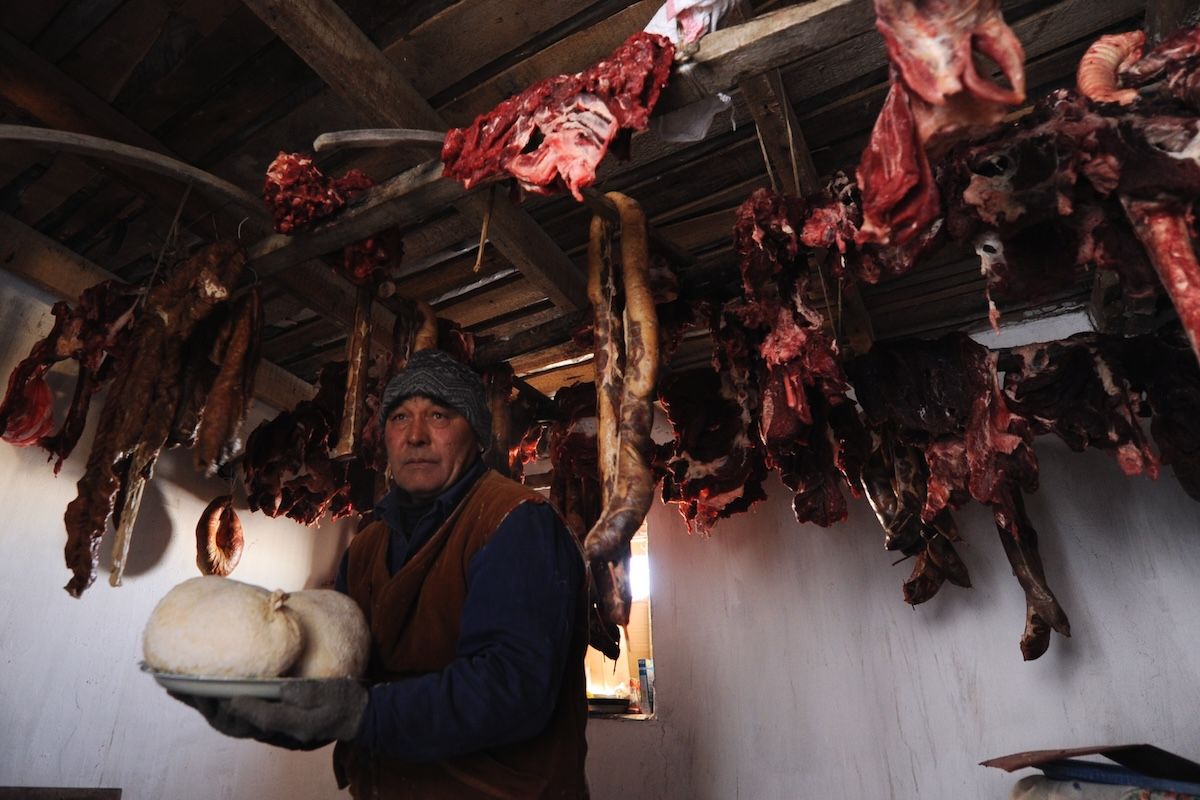
While the livestock is feeding, in the storage room Zhumagali shows the family’s winter reserves. “Here we have horse meat (sogym) and salted butter stored in a sheep’s stomach (karyn),” he says.
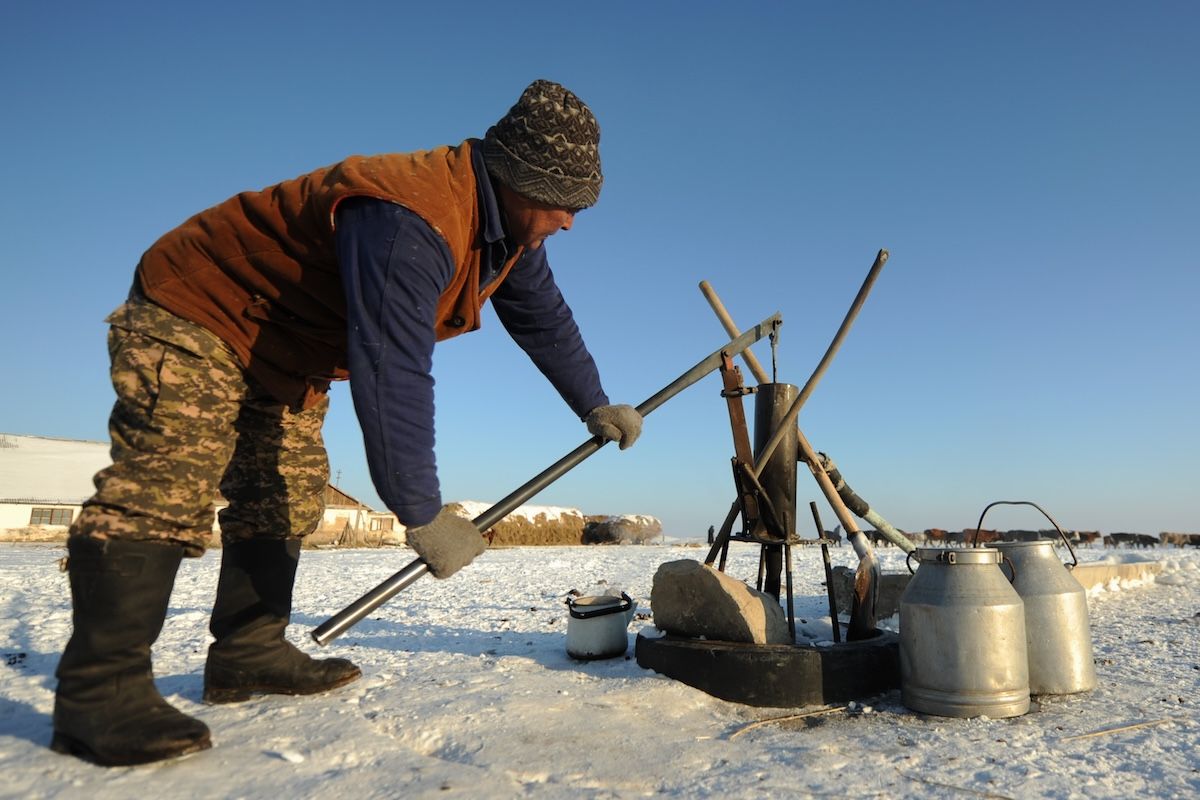
Now they need to water the livestock and fetch water for the house.
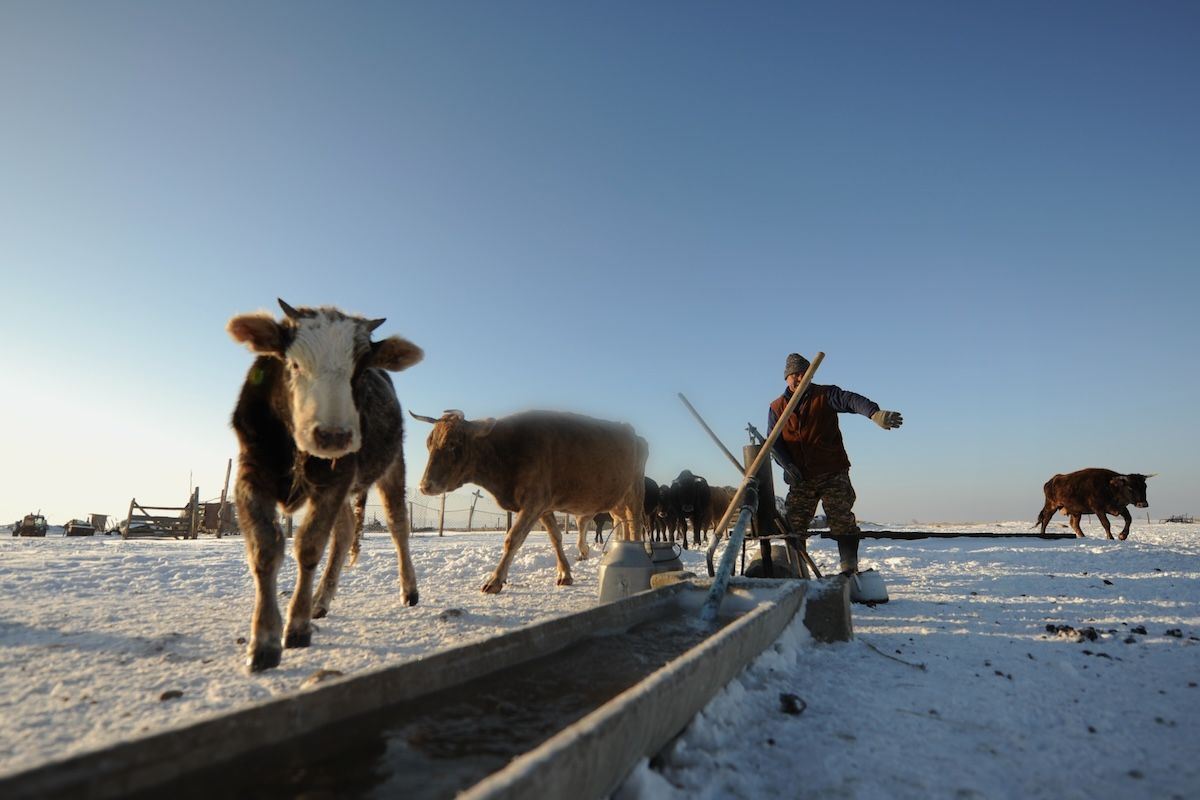
Afterward the cows go to pasture until evening.
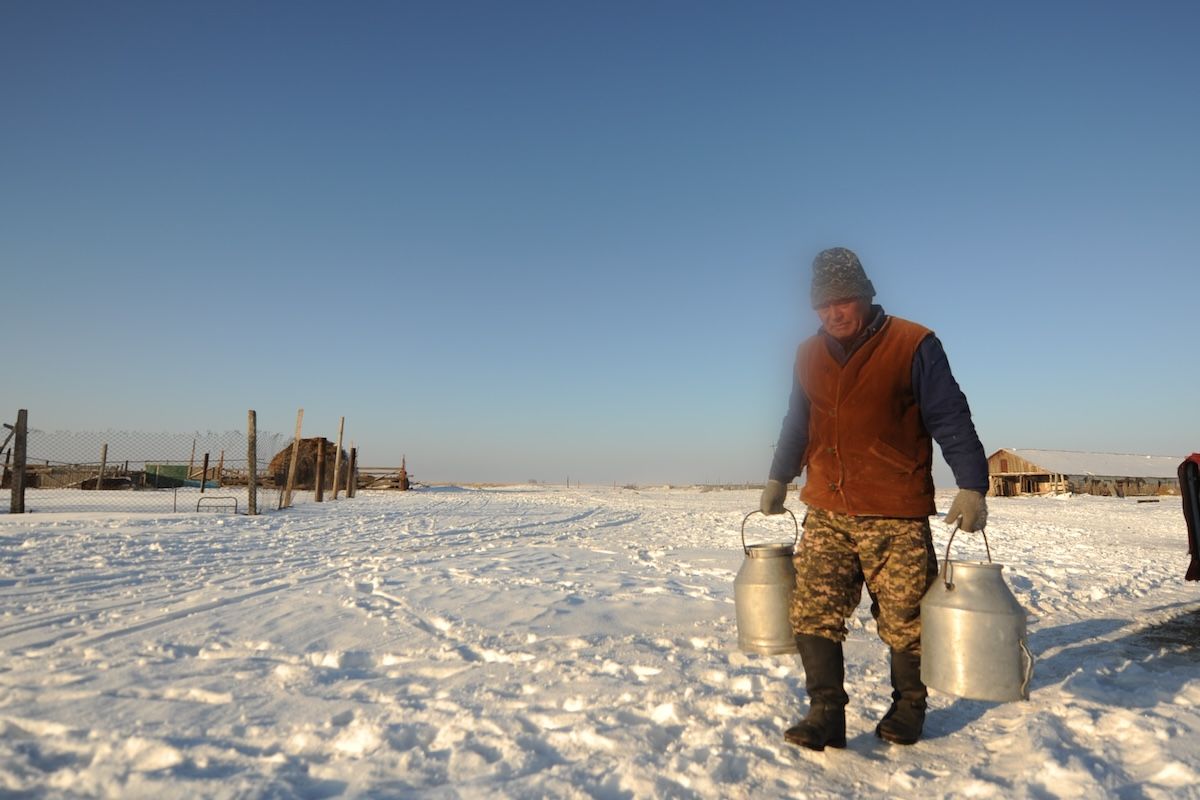
Two cans of water should be enough for the household for a day.
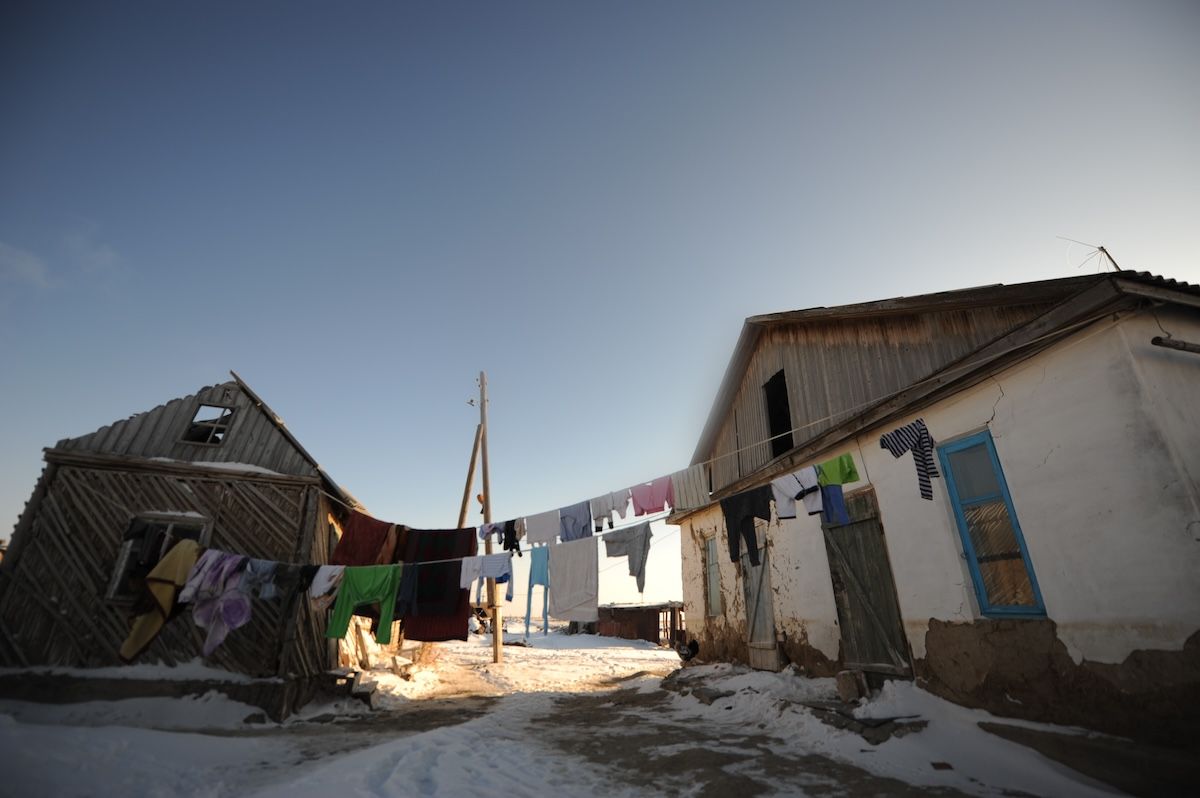
Near Zhumagali’s home live several other shepherd families.
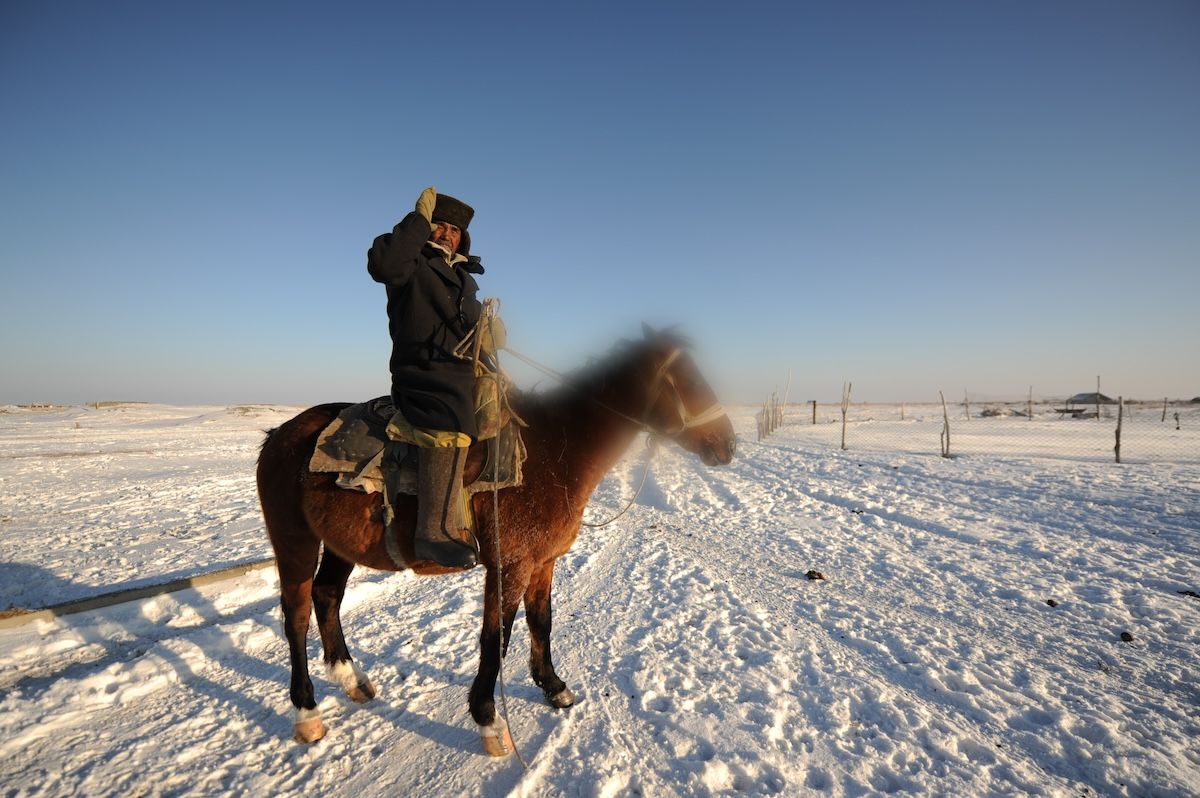
“Orısbai-ata is the most respected shepherd in this area!” Zhumagali introduces his friends.
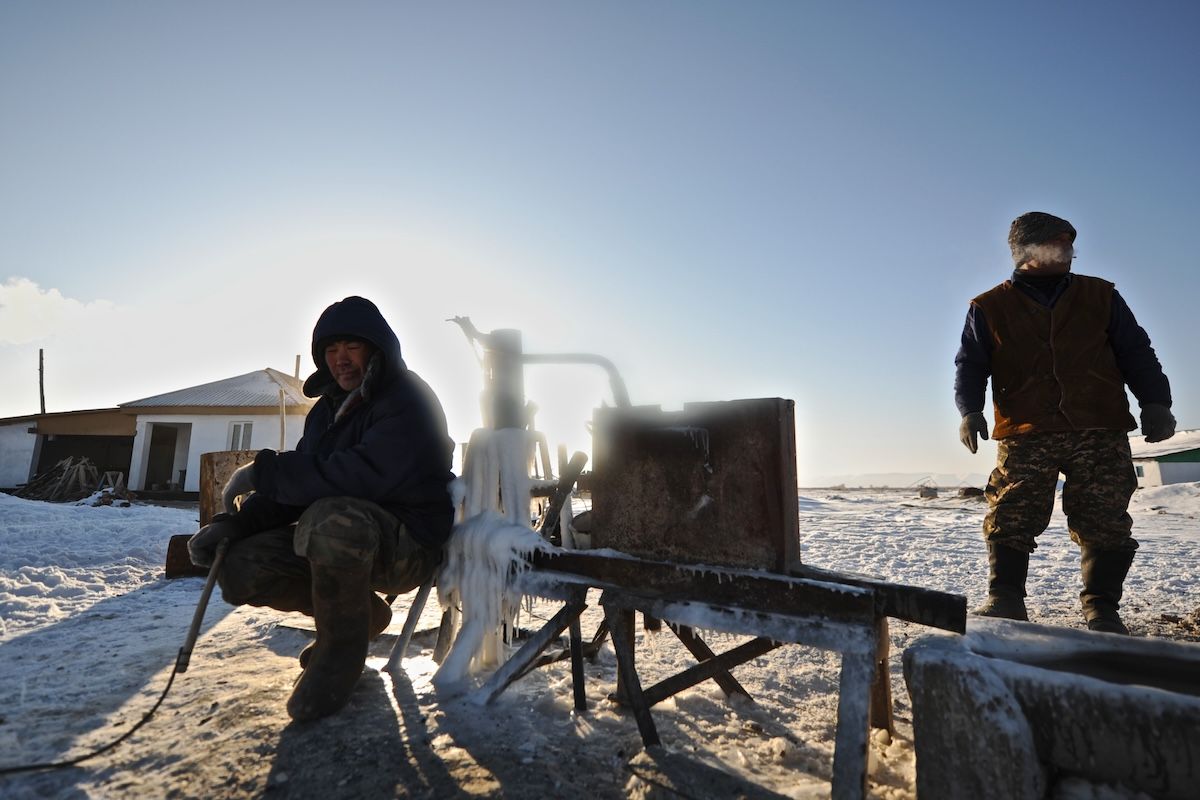
Shepherd Daulet, nicknamed “Cool Alex.”
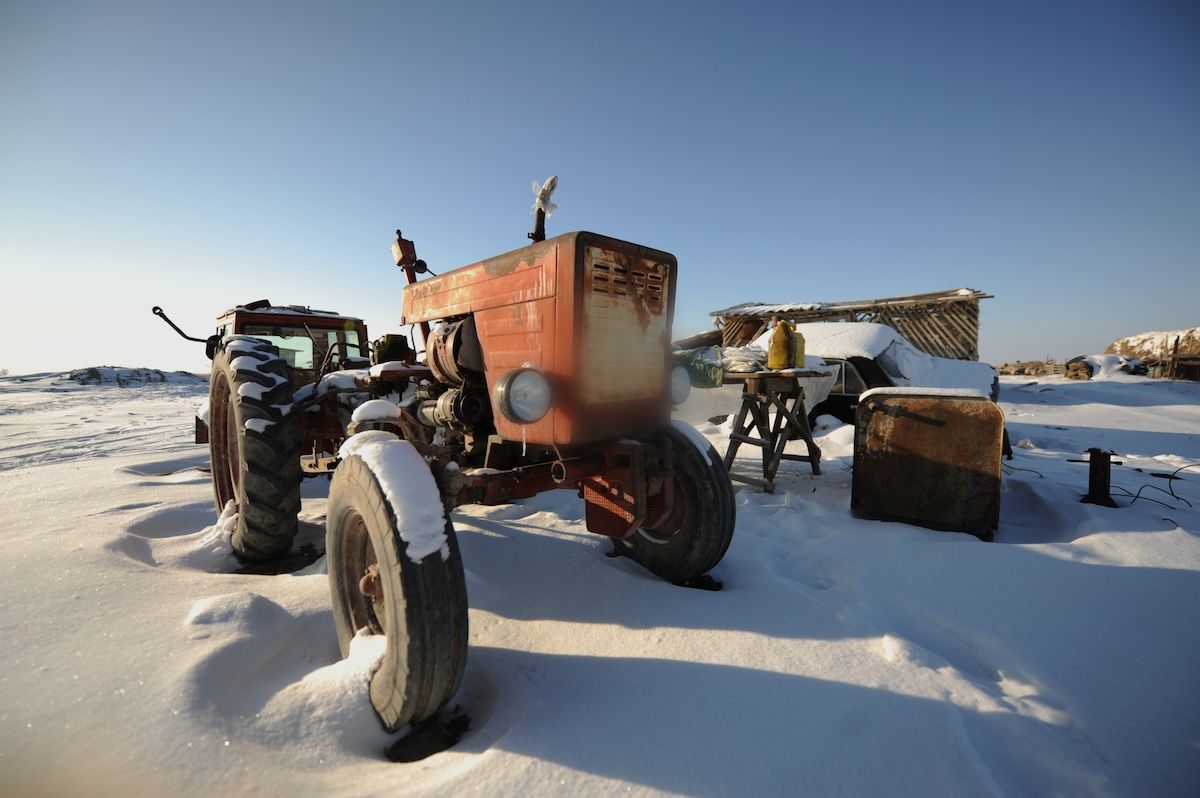
In the yard, Zhumagali has broken machinery, rusty cars, and other scrap metal.
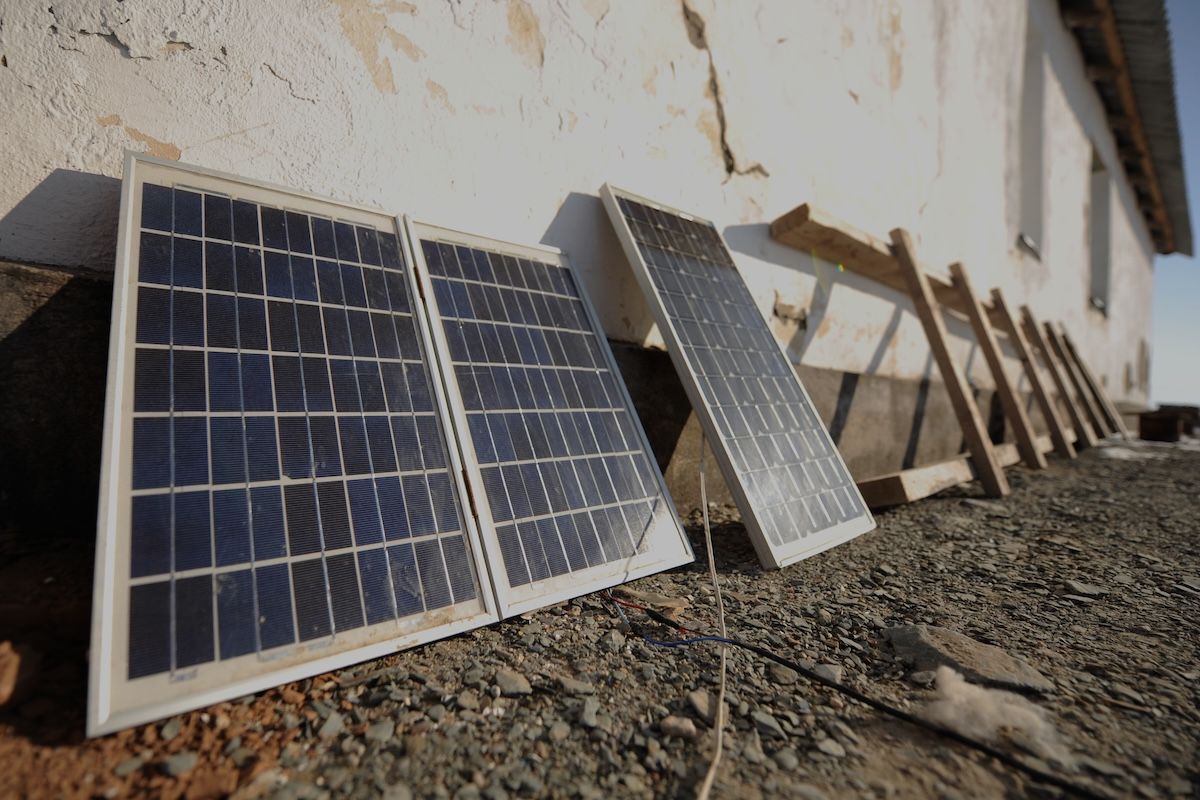
“We have no electricity, so we get light from charged solar panels,” says Zhumagali. “That lasts for a few days. After the flood they cut off the power, promised to fix it, but still haven’t.”
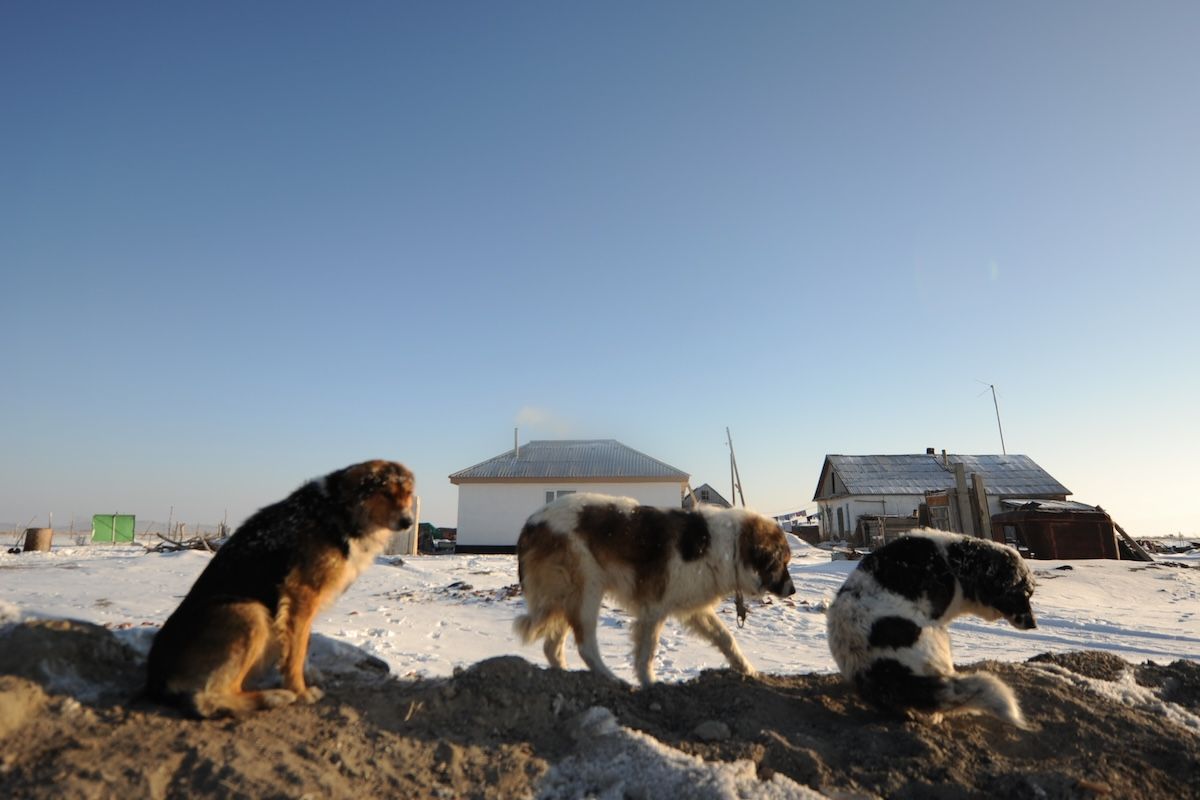
By midday it gets a little warmer, and the guard dogs come out to bask in the sun.
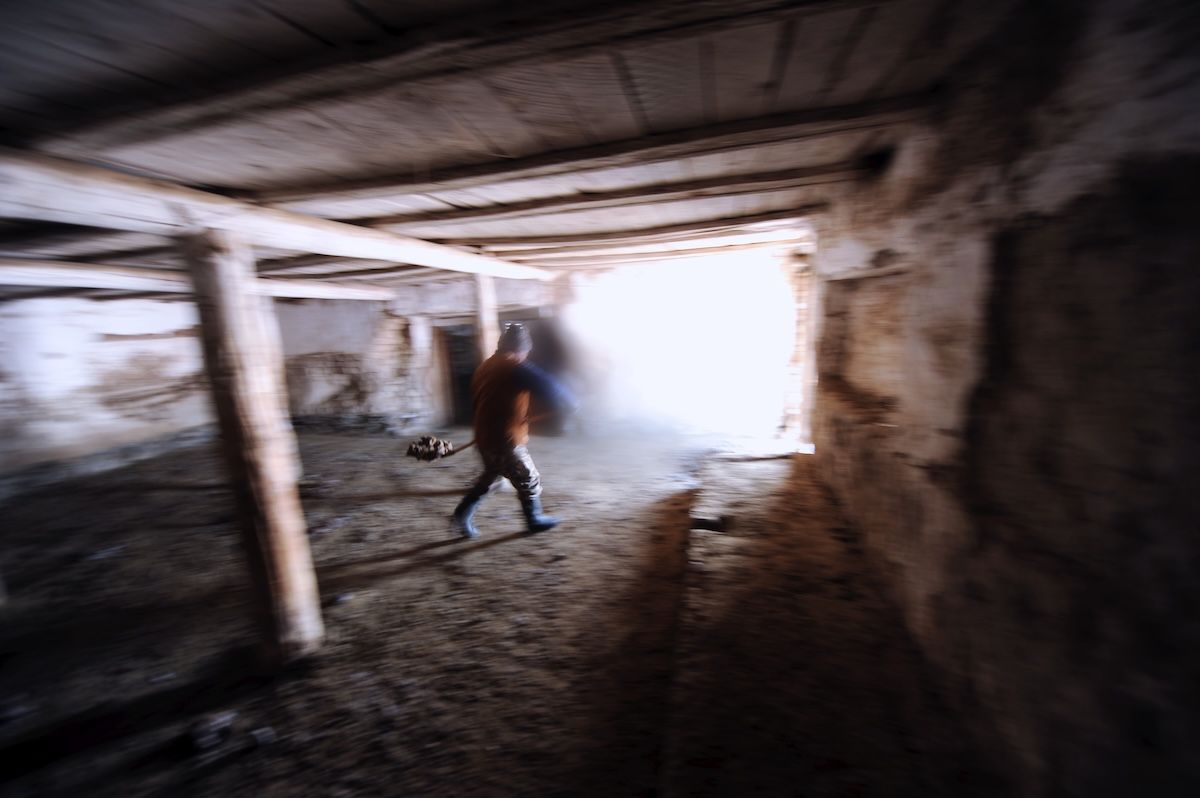
Every day, after the livestock heads to pasture, Zhumagali and Azamat clean the base from manure.
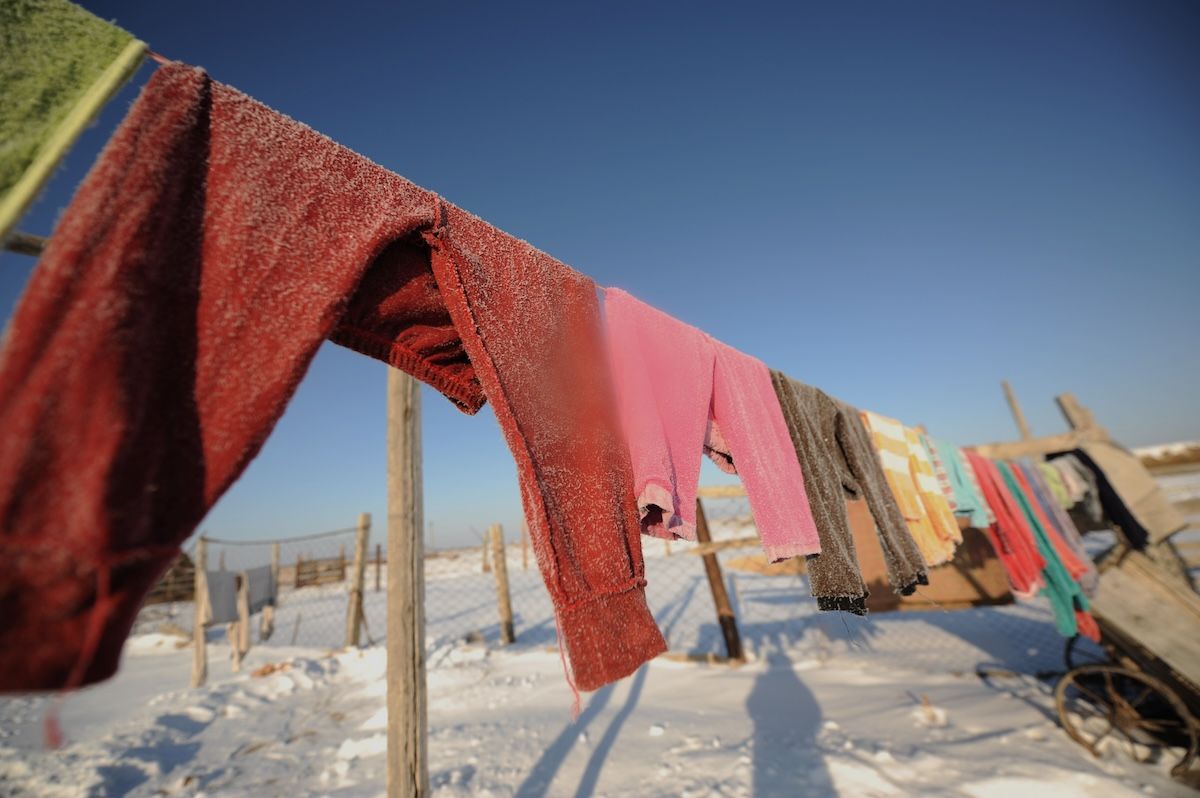
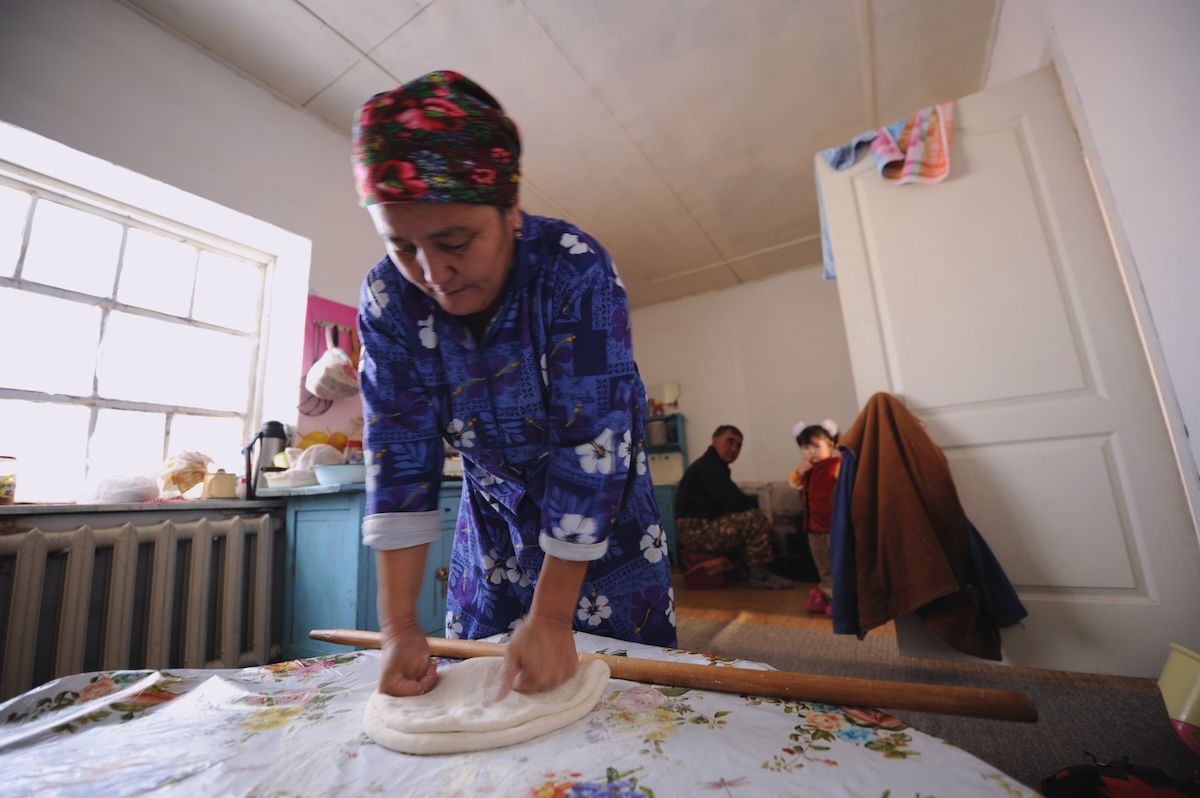
While the men work, Kultaı-apa takes care of house chores. She prepares lunch for the family.
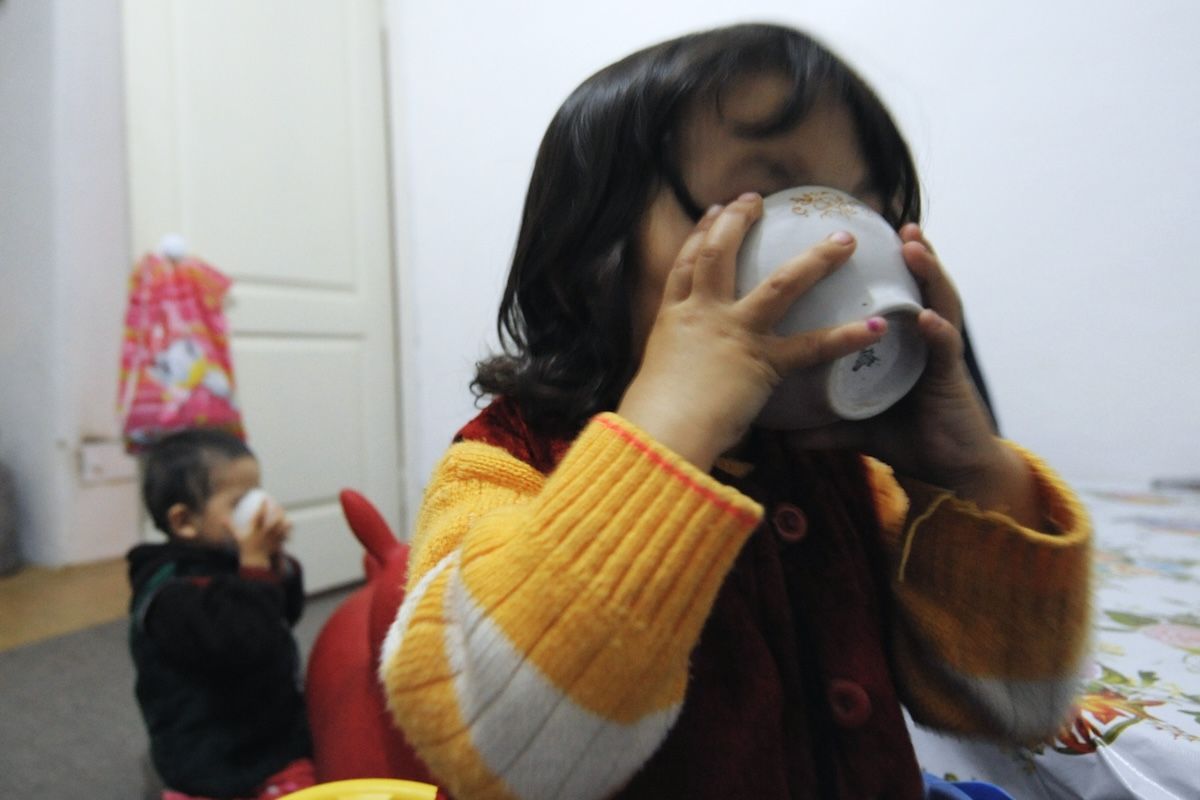
Tolganai, despite being only three, is a good helper to her grandmother. She takes care of her younger brother Yerasyl, recites poems, and dances beautifully.
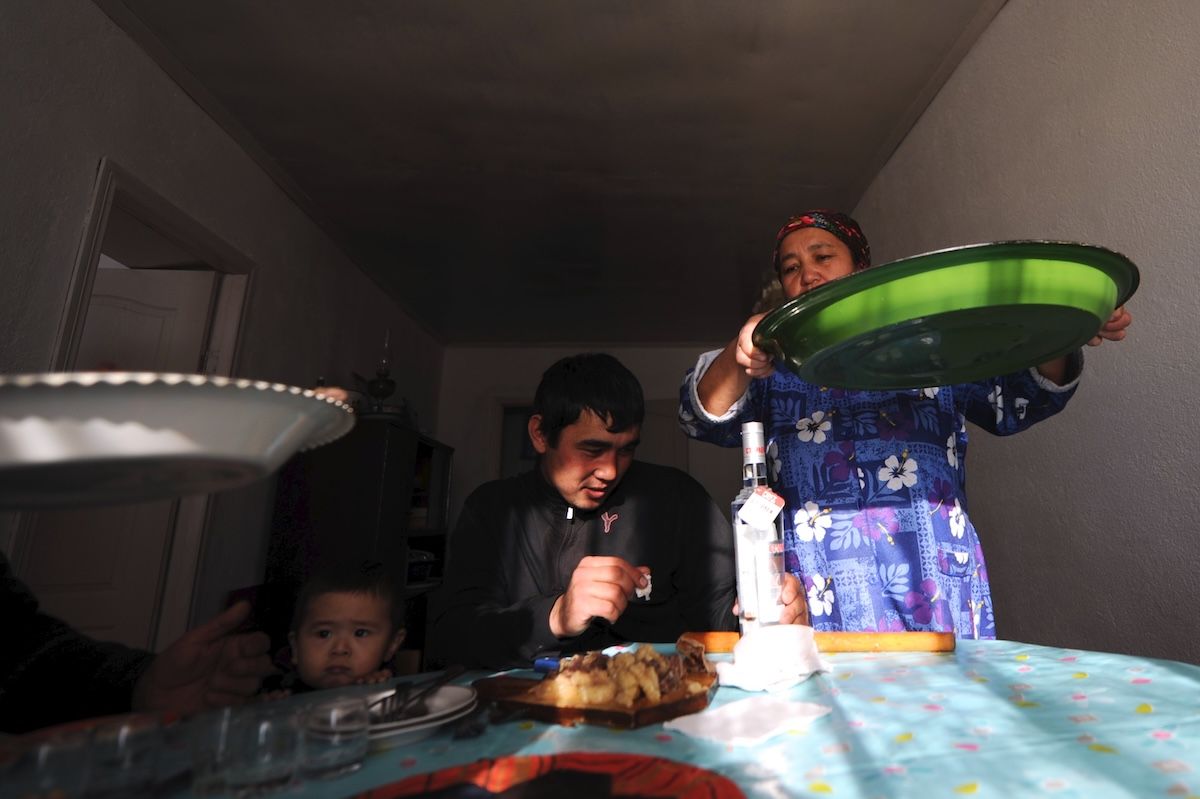
In such cold weather, one craves something fatty and hot. In the house of a shepherd, there is always meat for such occasions.
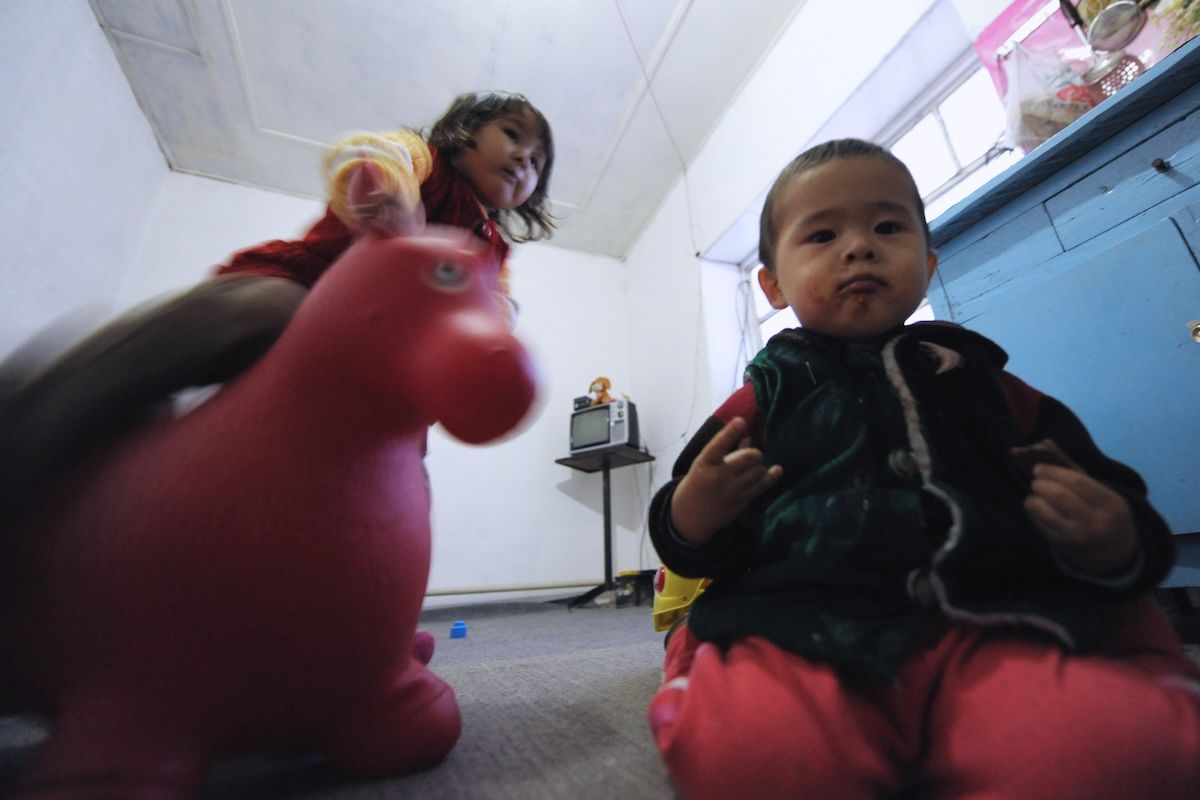
The children happily devour chocolate — their grandparents never refuse them anything.
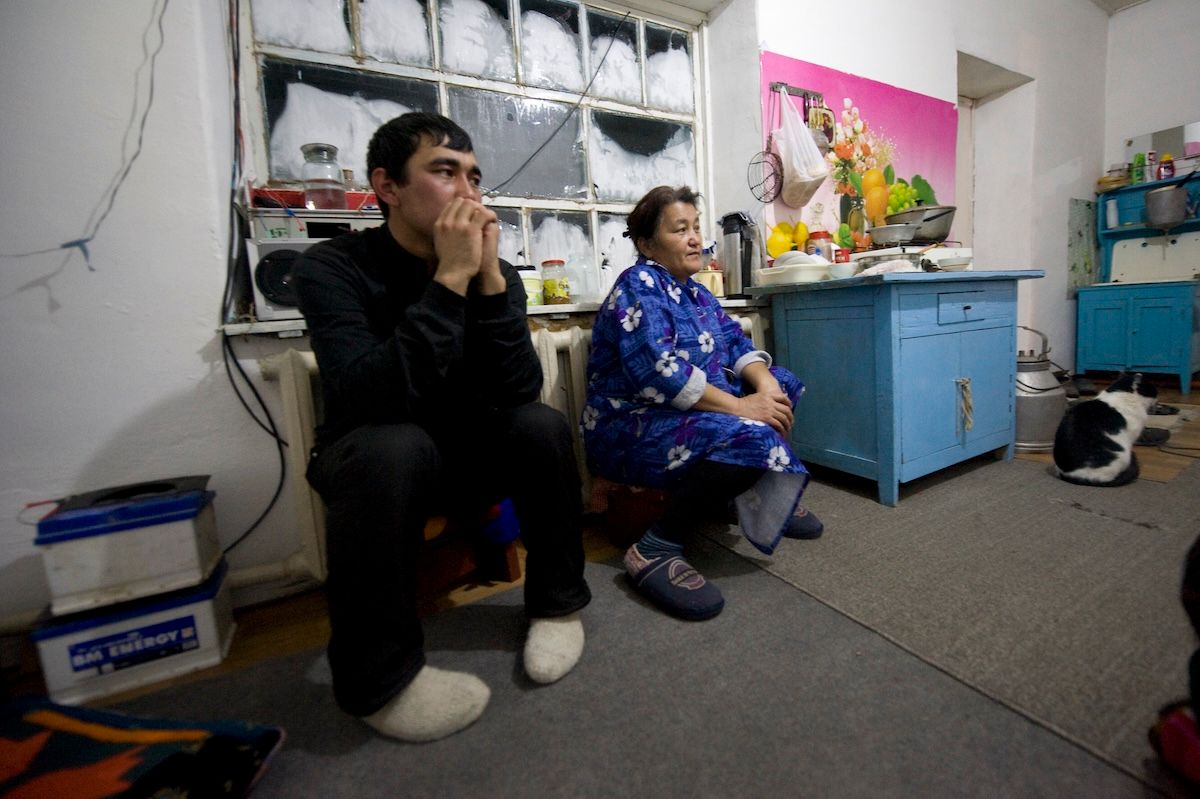
Another day comes to an end. The livestock has been brought back, the household chores finished. After dinner, everyone sits together to discuss the plans for tomorrow. “My husband and I grew up in the village of Kyzylagash,” says Kultaı-apa. “I used to be the first beauty in my youth, then I met Zhumagali. We loved each other, and have lived here ever since. Our children grew up, grandchildren appeared, and we are still here…”
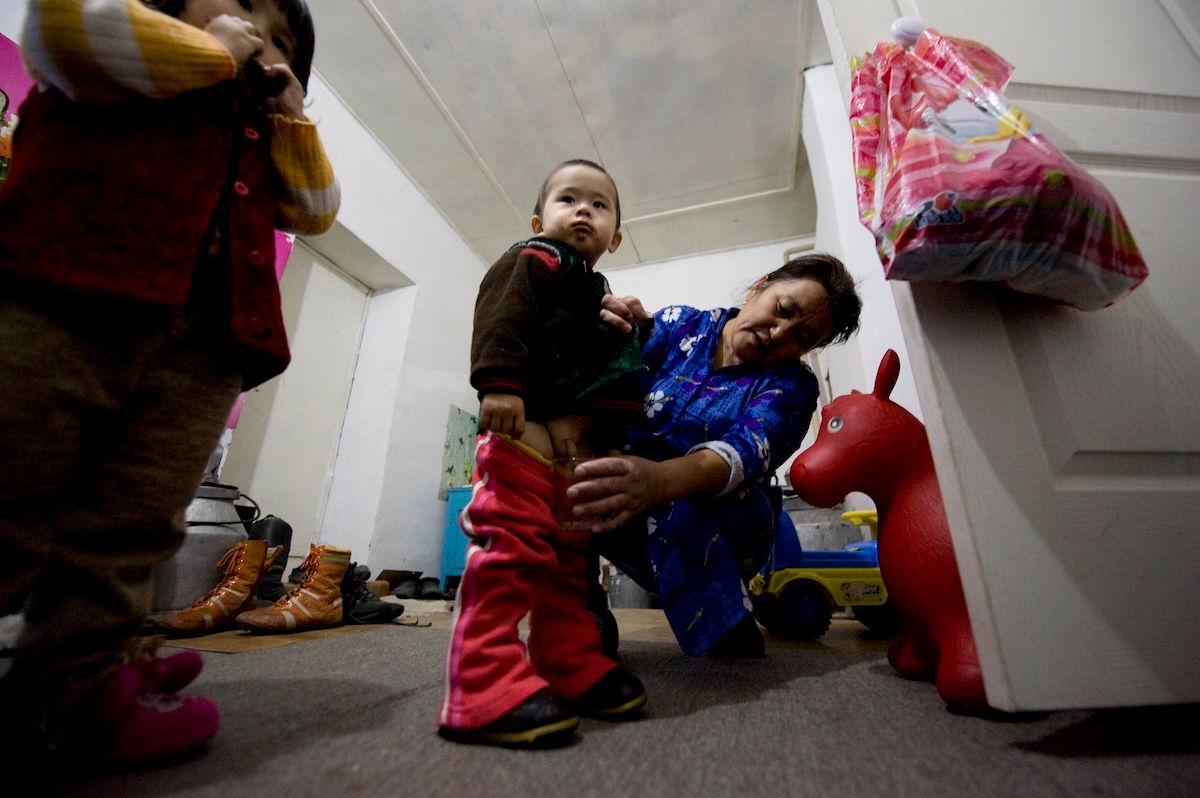
Evening wash time. Outside, the temperature drops to –33°C, so children hardly go out: all amenities for them are inside the house.
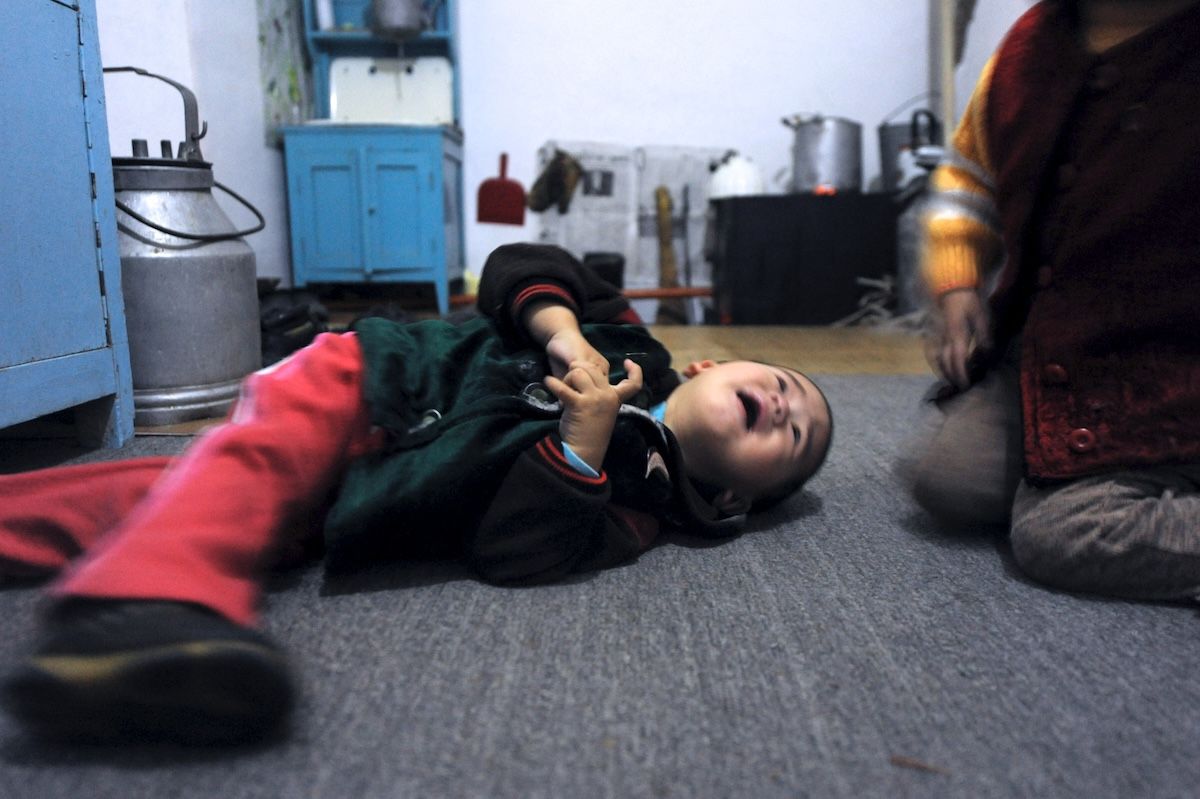
Little Yerasyl, like all children, gets fussy before sleep.
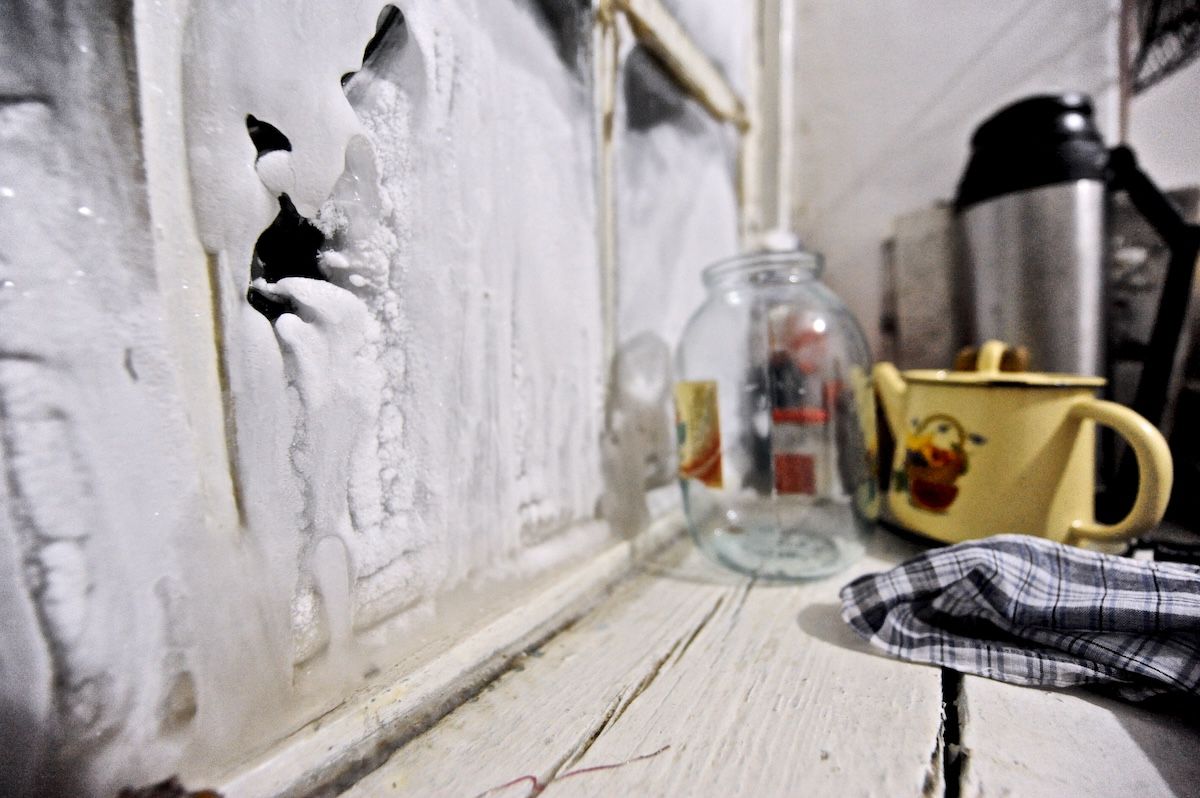
In the evening, the kitchen windows are covered with frost, but inside the home it is warm and cozy. Darkness falls, the family turns off the lights, and everyone goes to bed. Tomorrow is a new day…
The original version of this material was published on the Voxpopuli.kz portal (before its closure in 2023). Author Karlygash Nurzhan restored the text and photos from her personal archive to preserve documentary and historical materials.
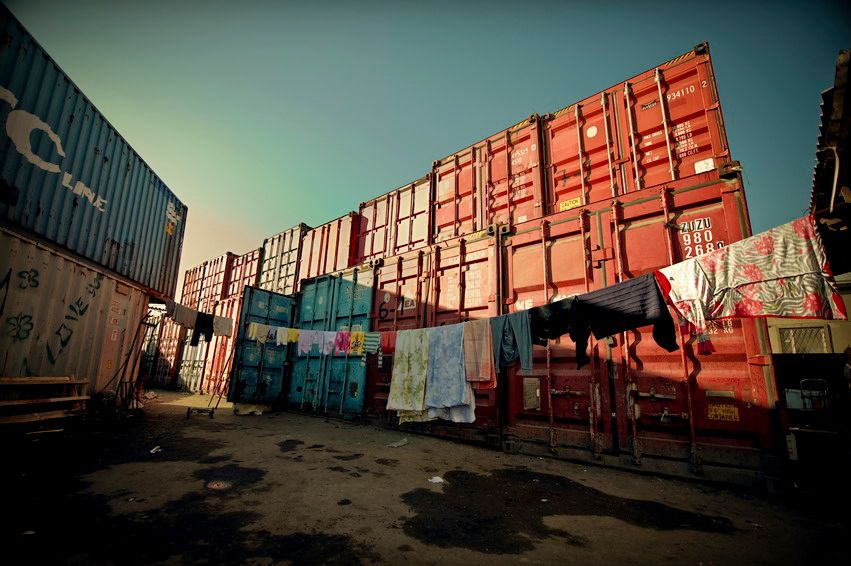
Жизнь людей барахолки Алматы, где труд, семьи и надежда переплетаются среди контейнеров и рынков. Фоторепортаж Карлыгаш Нуржан для Shanger.kz.
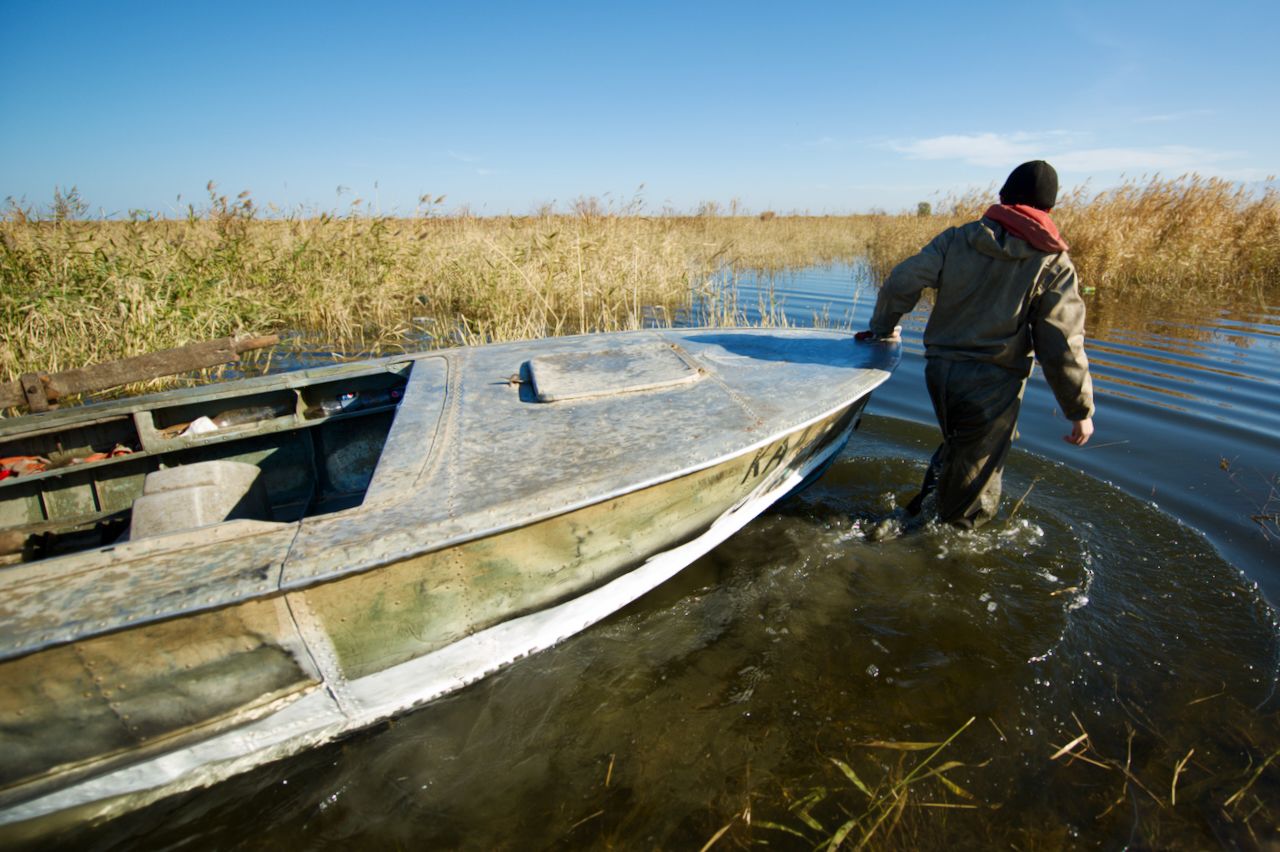
A documentary story of Koldy’s fishermen, their lives and traditions…Photo report by Karlygash Nurzhan for Shanger.kz
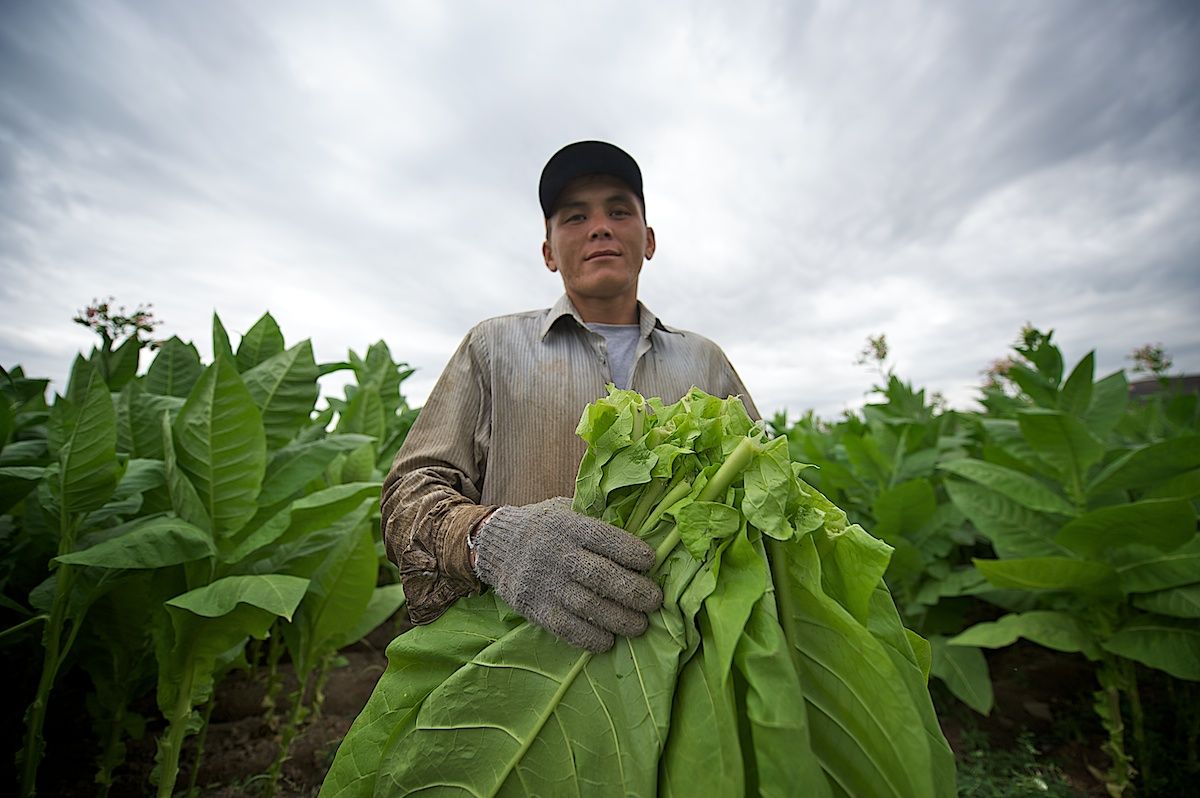
Выращивание табака в Алматинской области от посева и ухода за растениями до сушки листьев и подготовки урожая к переработке.
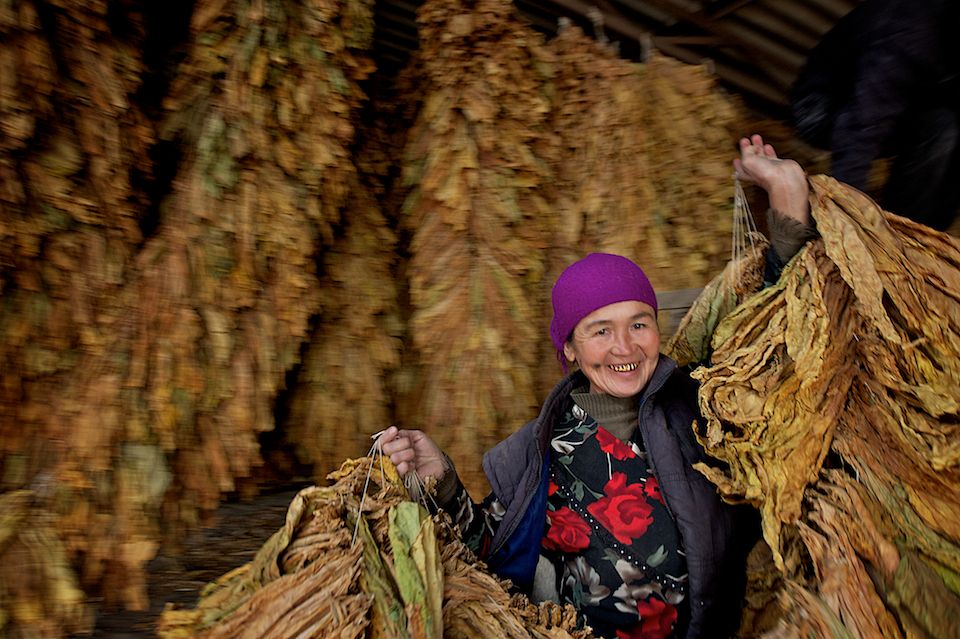
Второй этап табачного сезона в Казахстане — от сортировки и прессовки до сдачи урожая на пункт приёма компании «Филип Моррис»
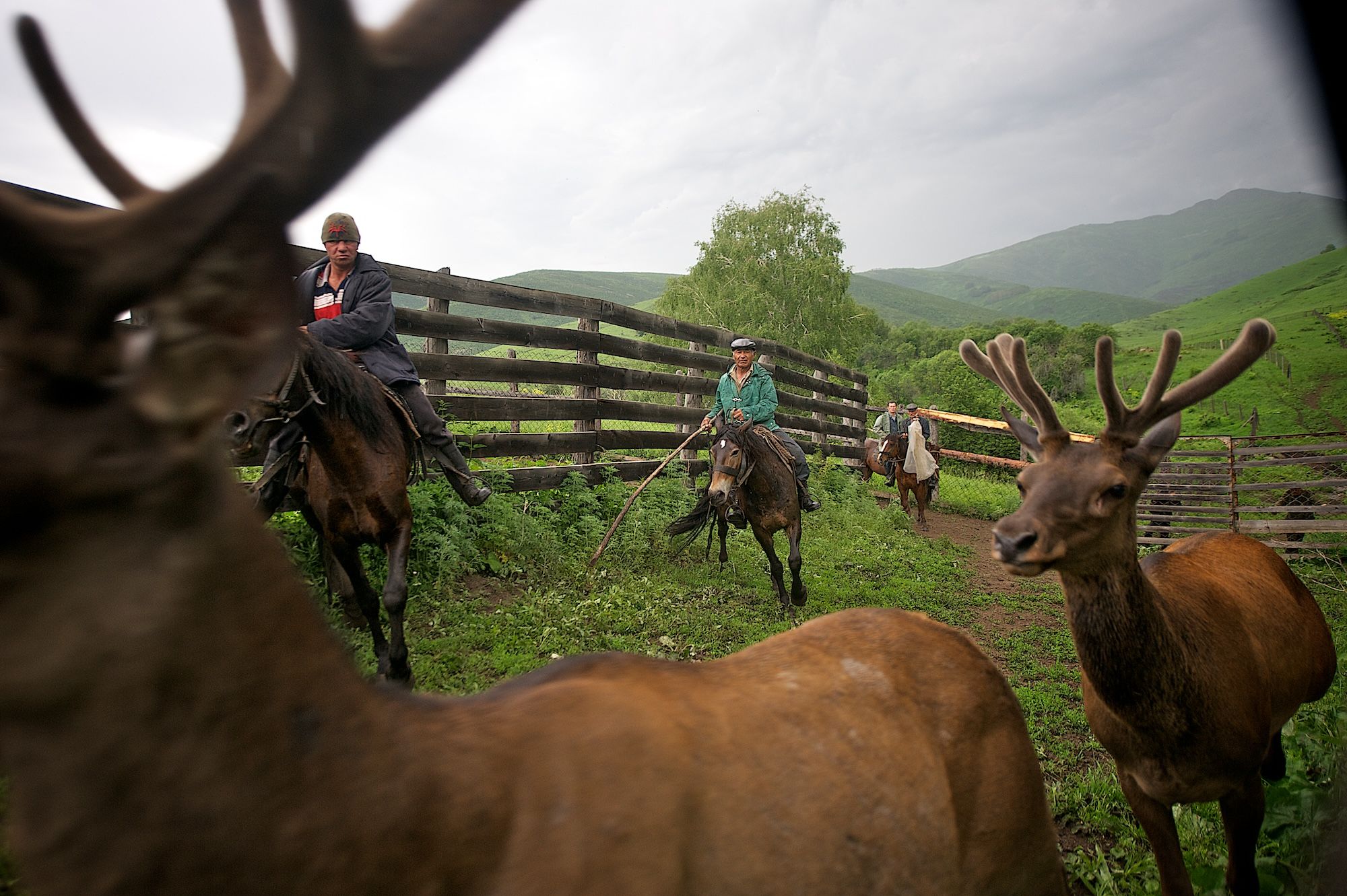
Velvet antler harvesting in East Kazakhstan: traditions, healing benefits, and rare maral farm practices. Report by Karlygash Nurzhan for Shanger.kz
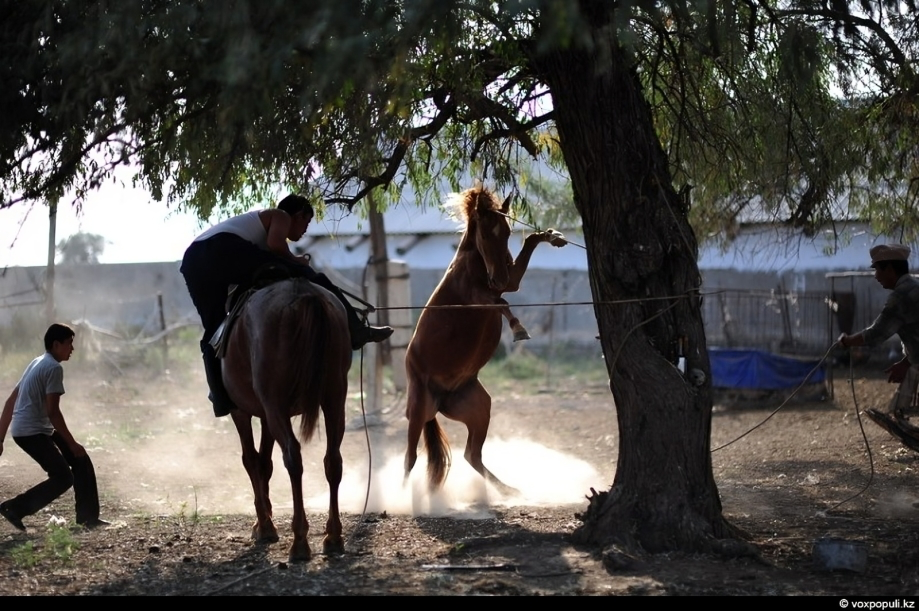
Kazakh sogym traditions: horse slaughter, kazy making, and ancestral food culture… Photo report by Karlygash Nurzhan for Shanger.kz
Comments
No comments yet. Be the first to comment!