Koldy Fishermen: Life, Traditions and the Sea’s Legacy
VoxPopuli and Karla Nur
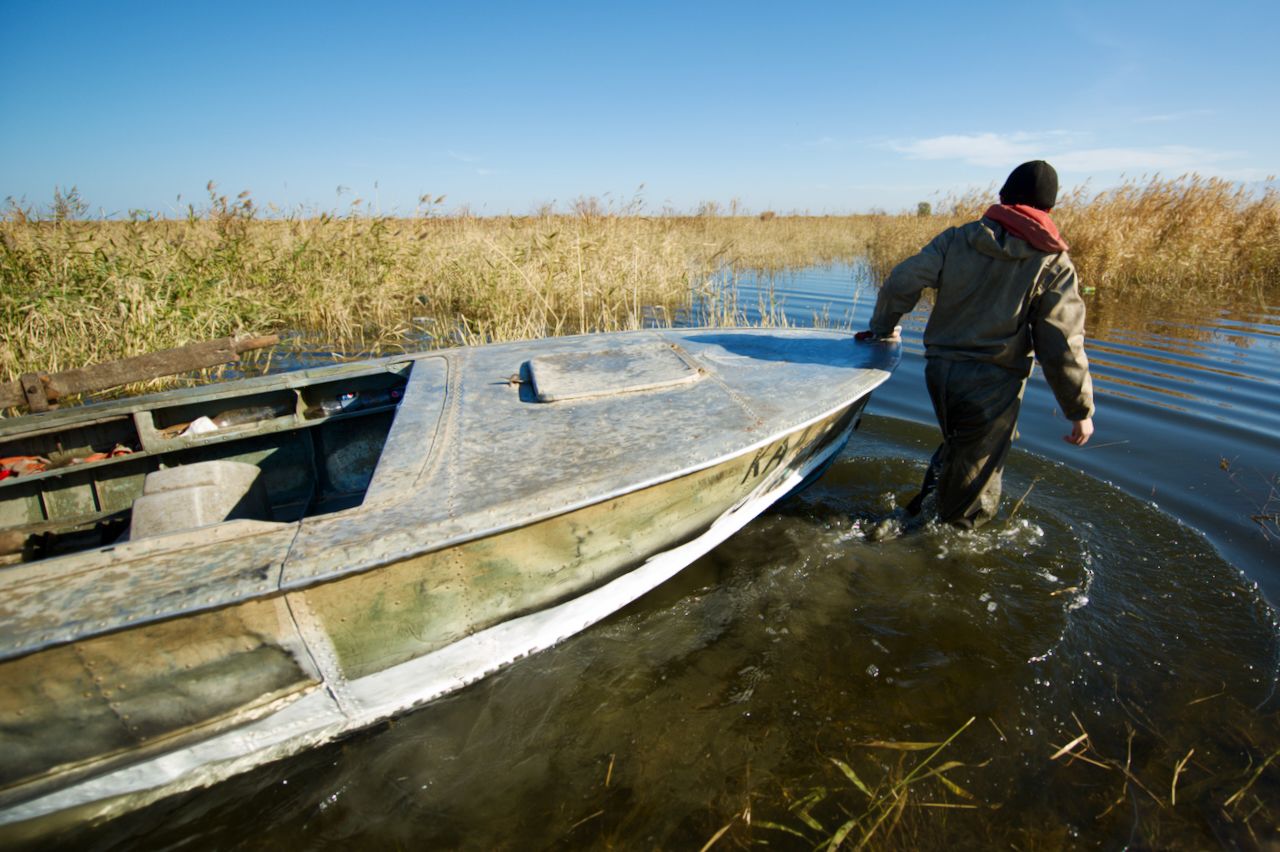
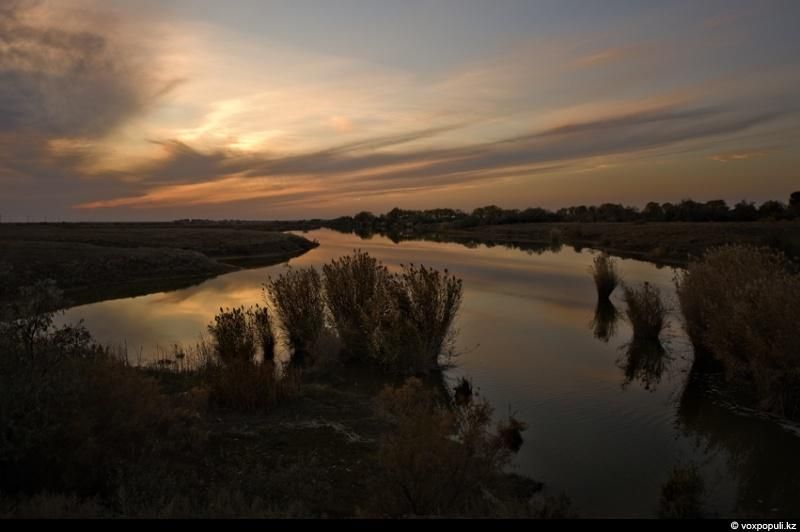
In the small village of Koldy, located in the Enbekshikazakh district, most residents are hereditary fishermen — the second and third generations of settlers from Aralsk, Astrakhan, and Semipalatinsk. Locals call Kapchagay a «sea,» treat storms with respect, and tell legends about great captains slowly and with reverence.
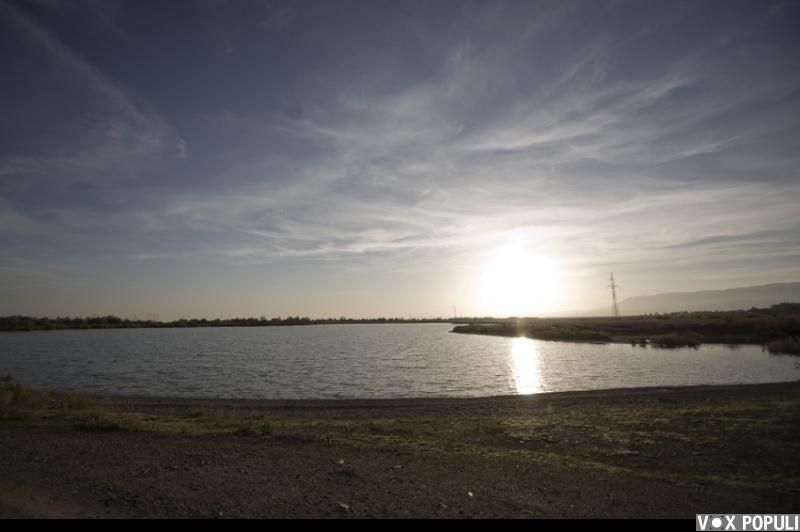
Every morning the fishermen go out to the sea. This is the only source of income in Koldy. The small settlement, home to fewer than a thousand people, survives solely through fishing.
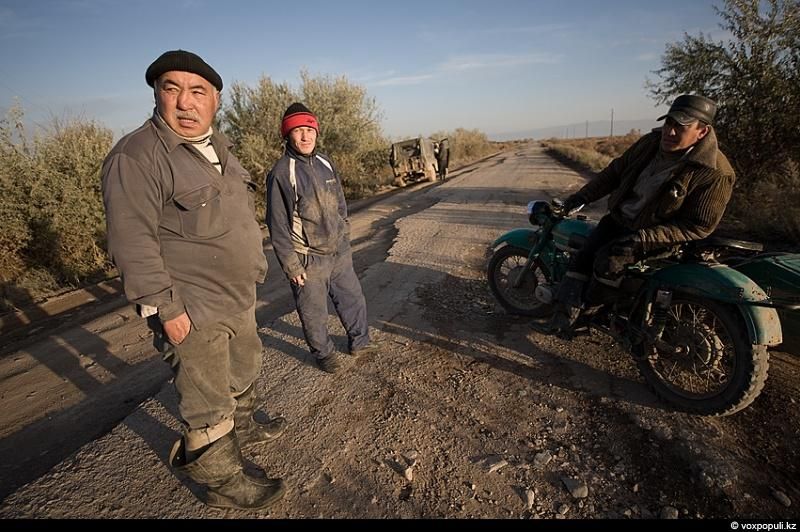
Saifulla Nurzhanov (left) is a hereditary fisherman who has lived in Koldy since 1980. This morning, as usual, he left at 7 a.m. with his partners, but on the way the wind picked up, and they had to postpone going to sea until later.
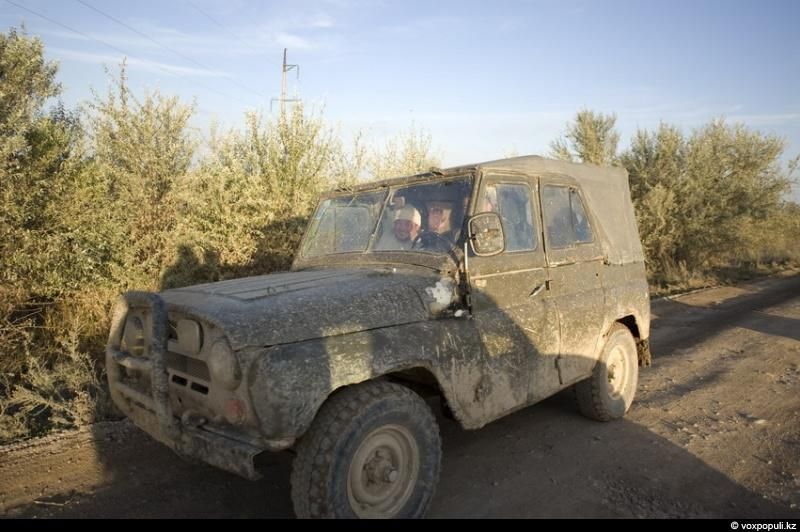
In spring, fishing begins at 5 a.m.; in autumn — two hours later.
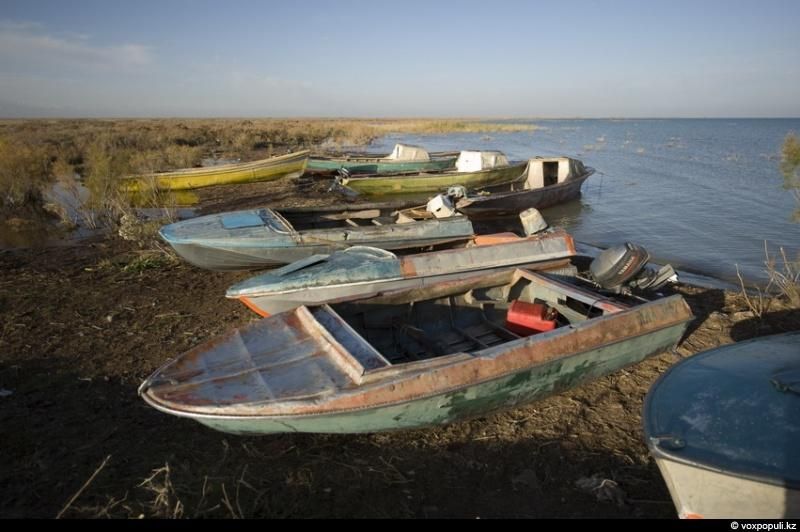
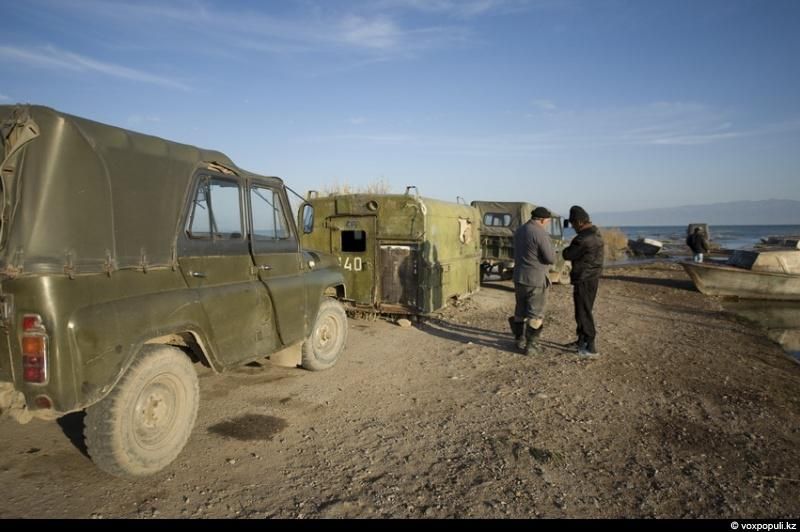
At the boat dock, fishermen take turns guarding their vessels
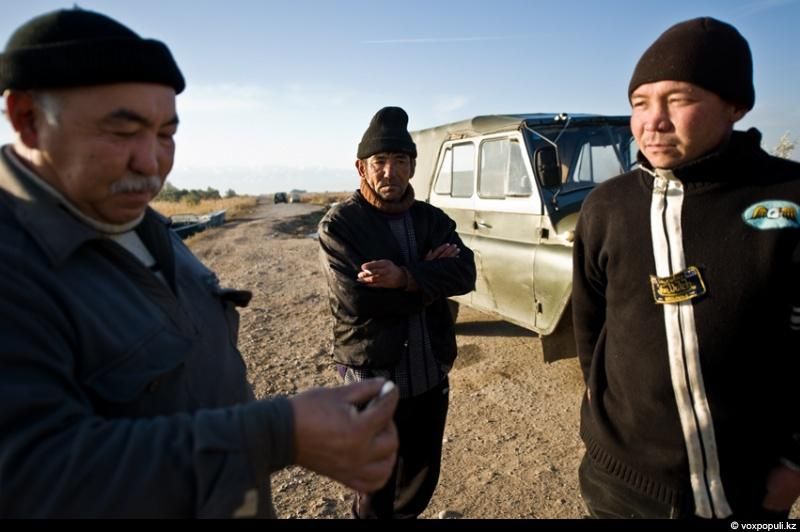
Saifulla, as well as his colleagues Noyabr and Panabek, share their stories. «When the fish disappeared, Noyabr’s father Karasai used to fish at one special spot that no one knew about. He brought tons of fish from there. Since then, whenever the fish become scarce, we say: Let’s go to Karasai’s spot — something is always there!» Saifulla recalls.
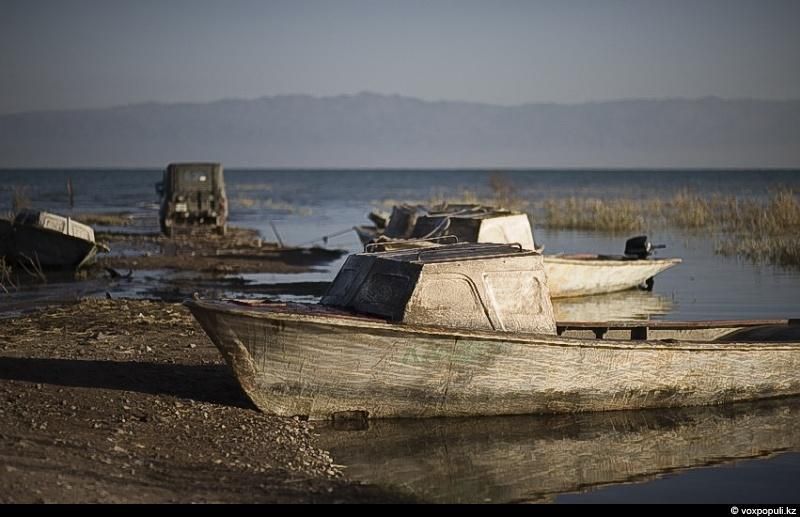
Fishermen pay an annual state tax for each boat — starting from 2000 tenge and increasing depending on the type of vessel.
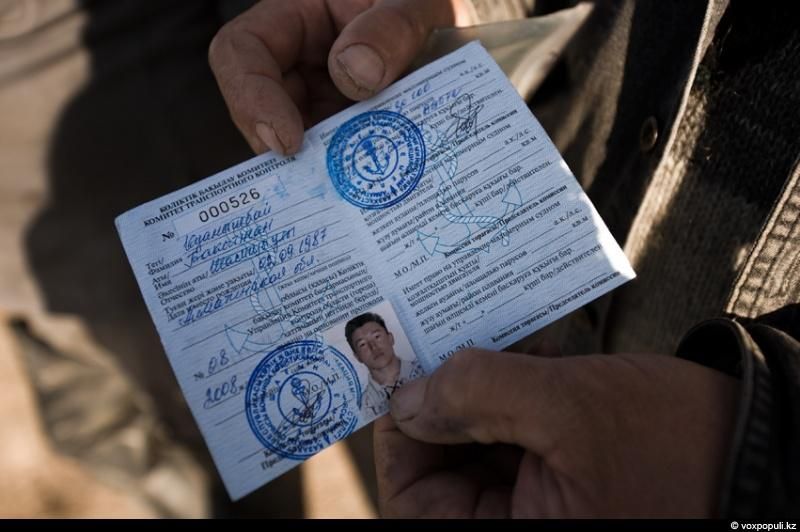
A certificate granting the right to operate a small vessel.
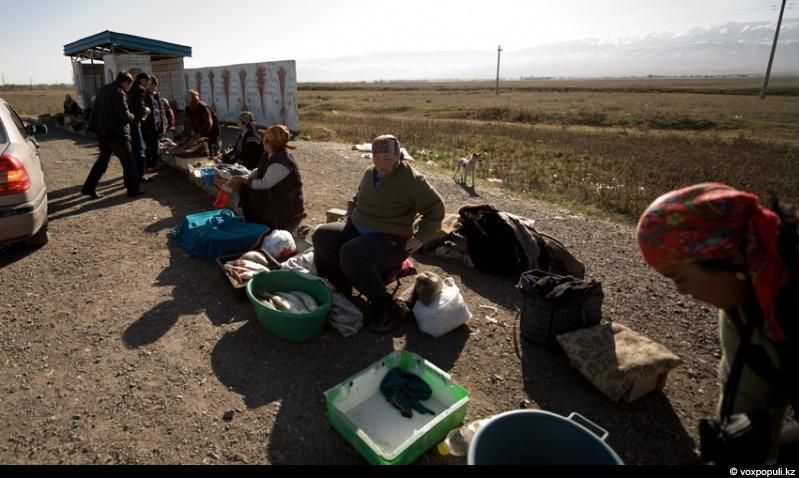
While the fishermen rest, their wives stay busy — selling fresh and smoked fish along the Narynkol highway, right at the entrance to the village.
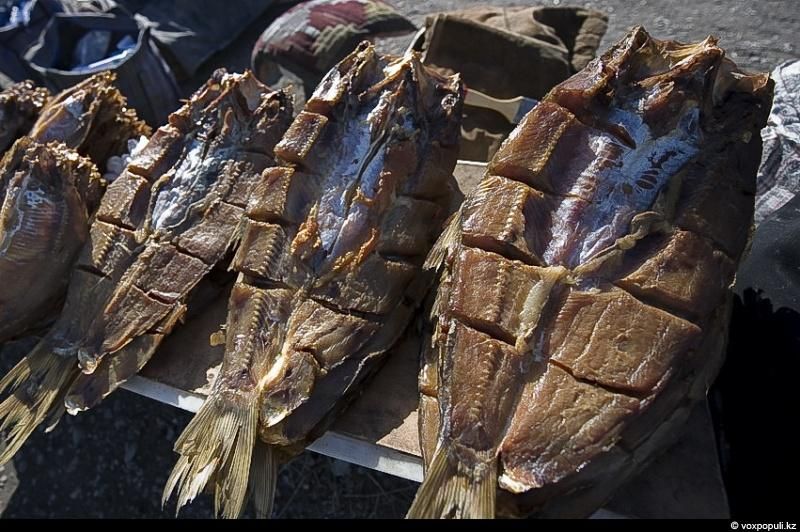
Smoked asp (zherekh) costs 500–700 tenge.
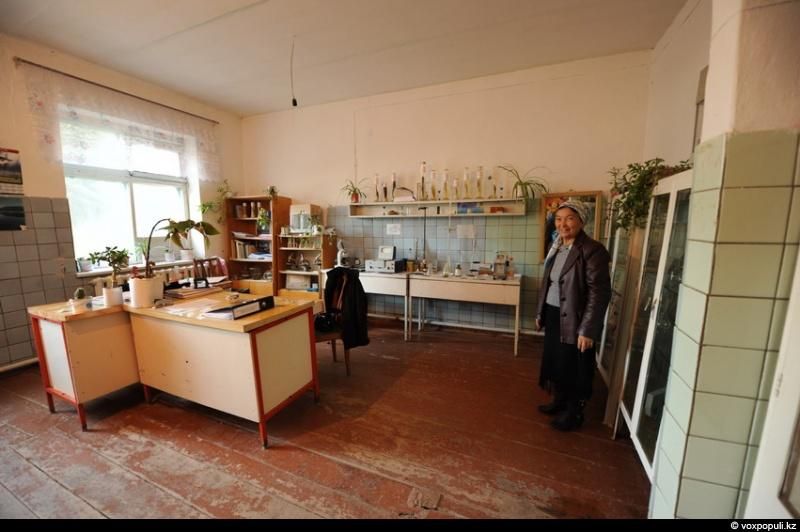
The local laboratory in Koldy. In the photo: laboratory head and ichthyologist Dariga Tasbolat in her workspace.
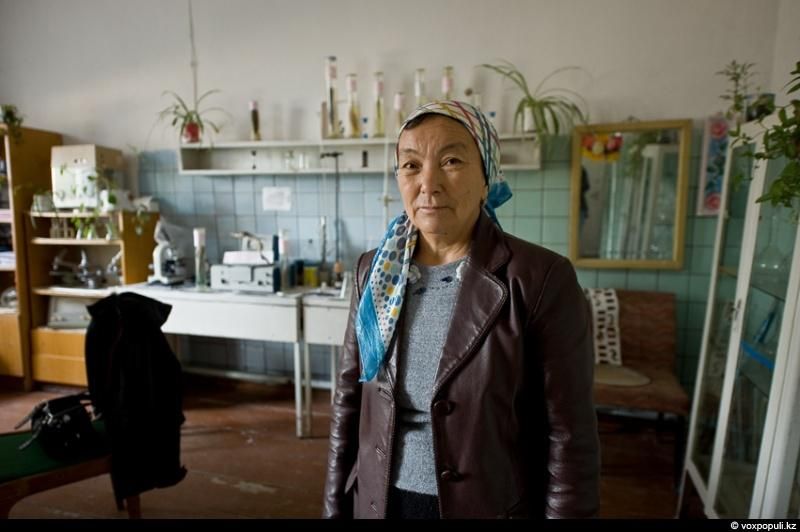
Dariga was born in Astrakhan, but has lived and worked in this village for thirty years.
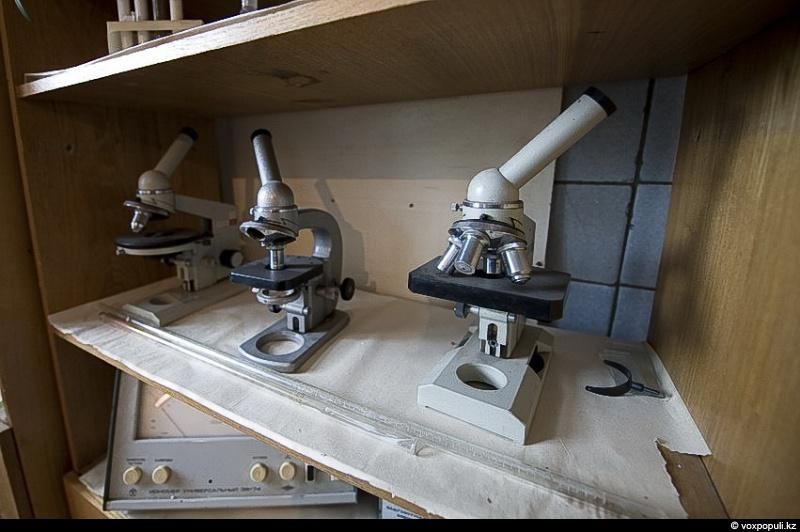
«The main task of the laboratory is to test pond water and its chemical composition. We also monitor the ichthyopathological state of fish diseases,» says Dariga.
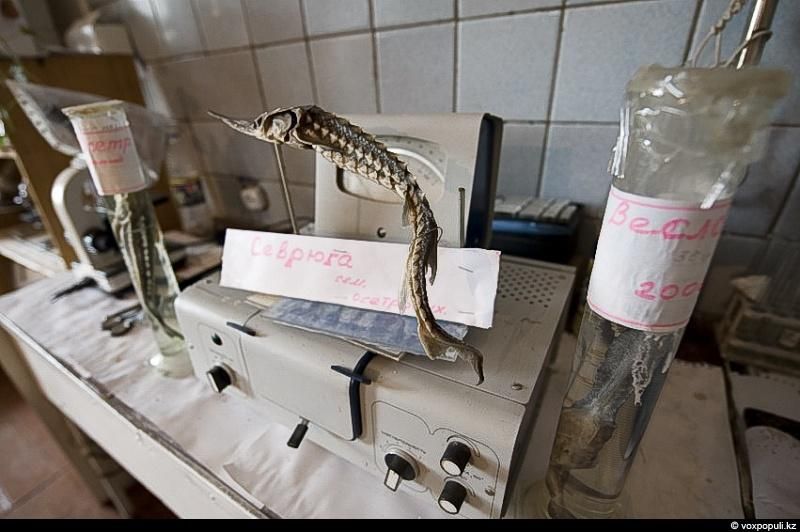
«The Chilik pond farm was established in 1964 and has always cultivated pond fish — bighead carp, common carp, grass carp. But in the last two years, we have been trying to breed new species from the sturgeon family — Siberian sturgeon, paddlefish — and we are also experimenting with raising trout.»
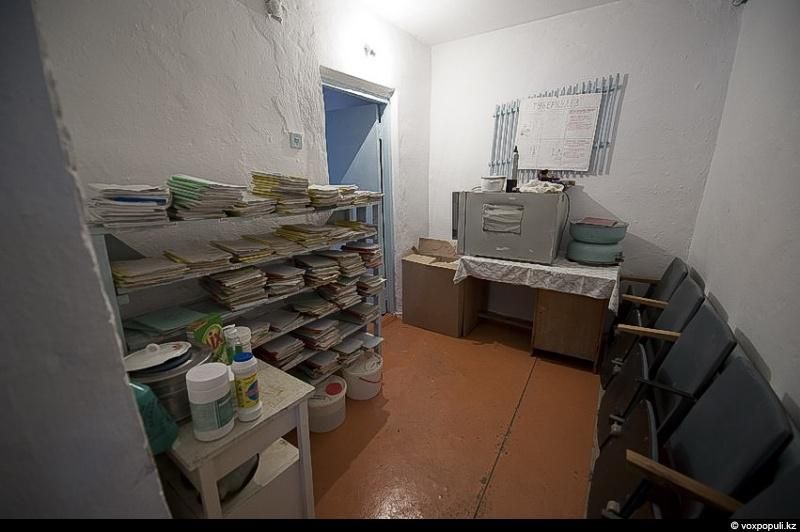
Despite its small population, Koldy has developed infrastructure. There is a local clinic.
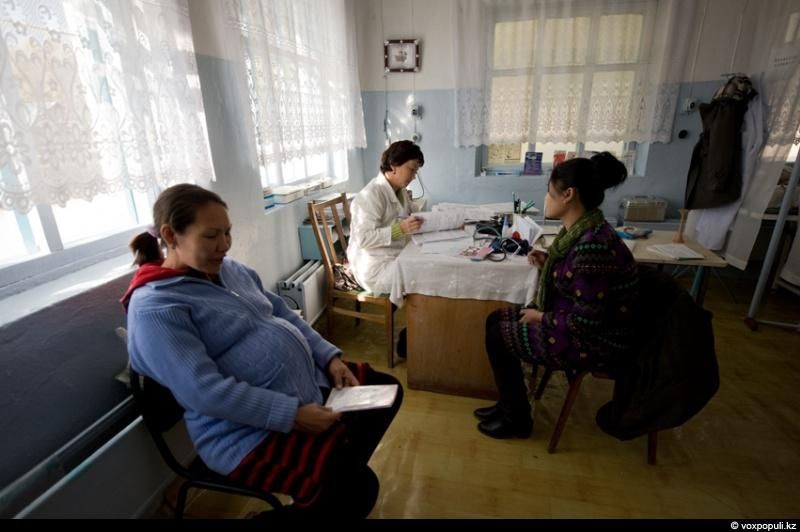
Fishermen’s wives visiting a gynecologist. Zhanar (left): «Of course, I worry when my husband goes out to fish. But what can you do? You have to live somehow. Now we are expecting our third child.»
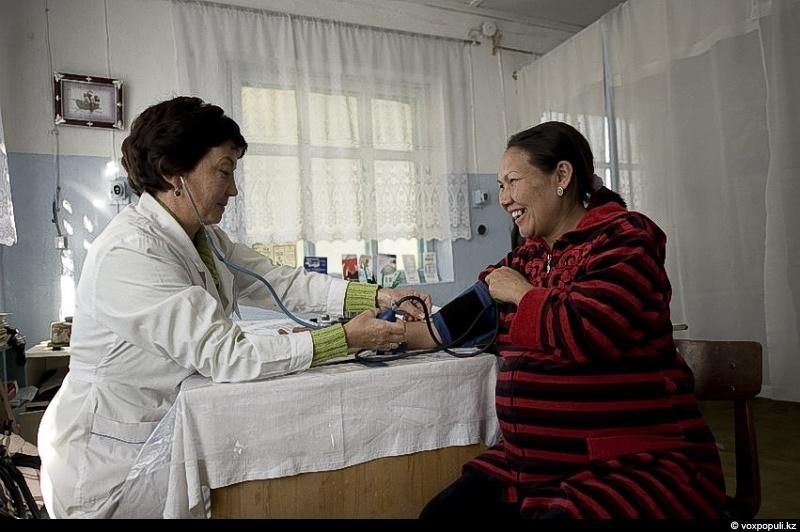
Abdrakhmanova Nagima has worked as a gynecologist at this clinic for 15 years.
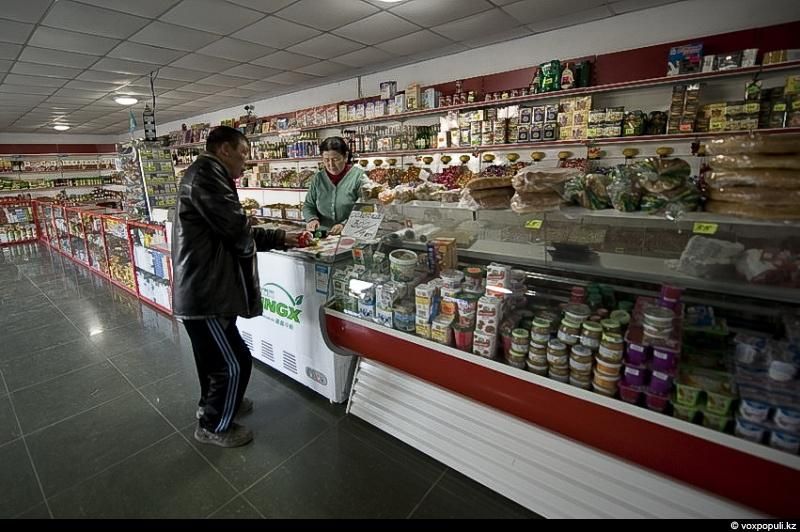
Recently, a new privately owned store named «Alakol» opened in the village.
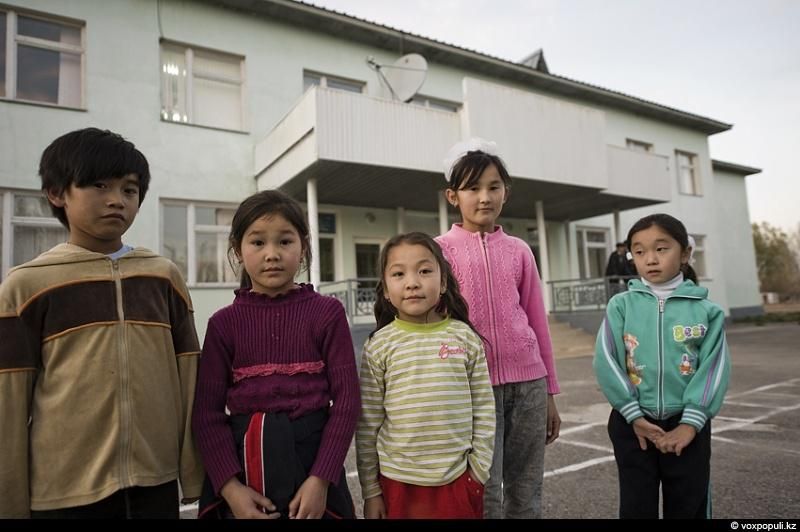
In 2004, the first local school opened. Currently, 136 children study there.
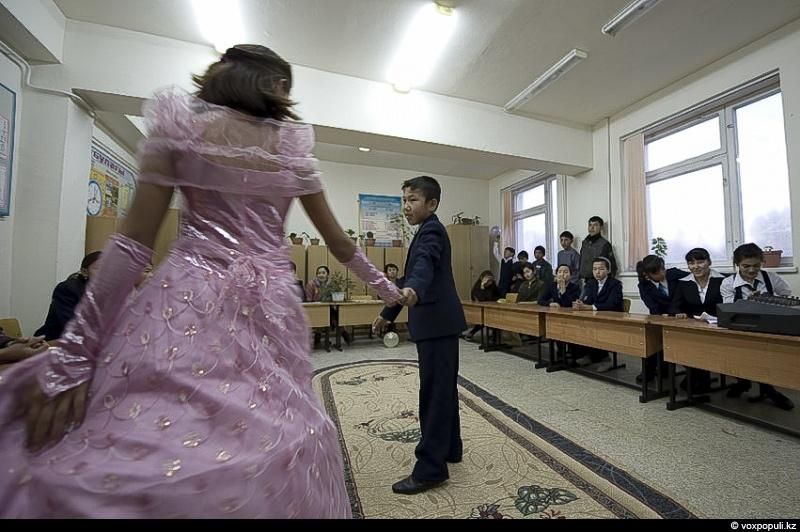
Autumn ball at school.
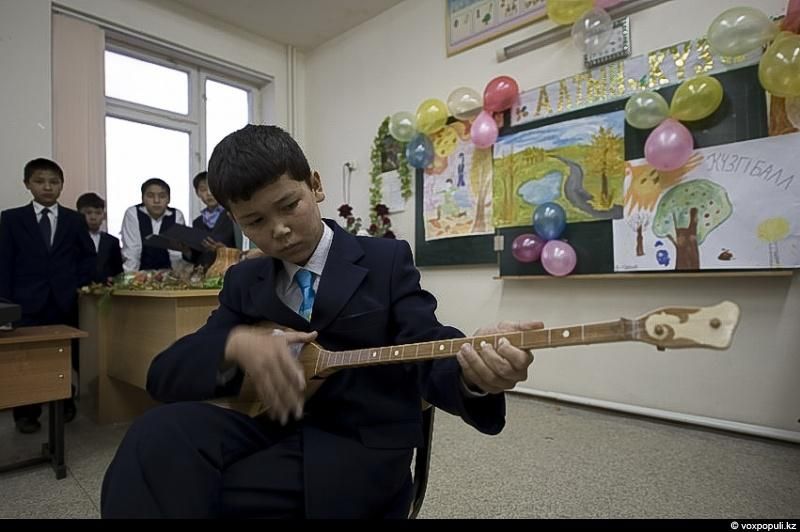
Seventh-grader Birzhan demonstrates his dombra skills.
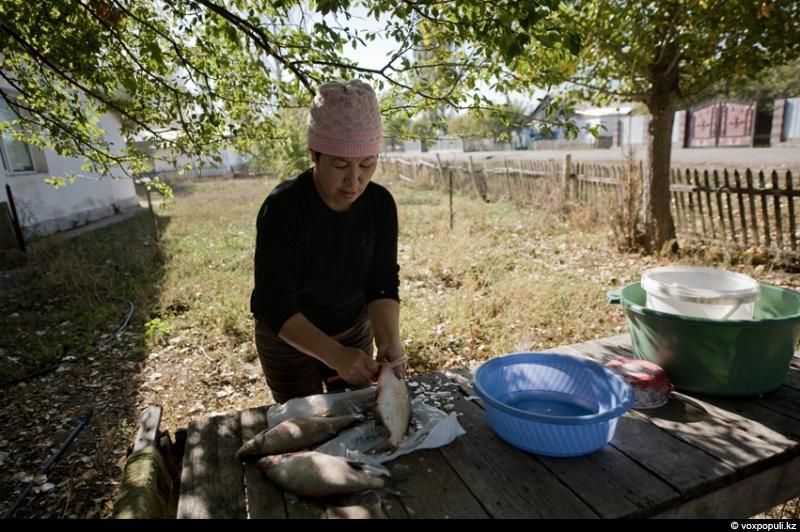
Meanwhile, at the Nurzhanov household, lunch is being prepared. Saifulla’s wife Mariyash fries bream with potatoes for lunch.
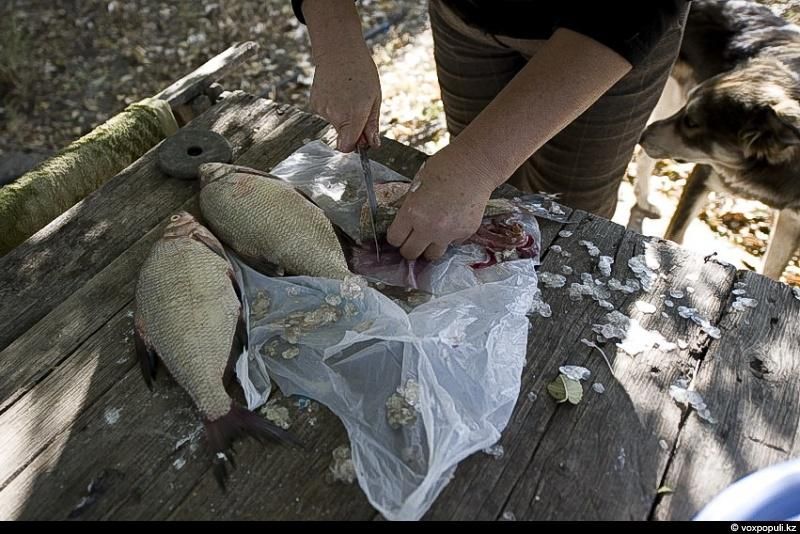
«We have four children — three daughters and a son. All our children now study and work in Almaty. I have to manage everything at home myself,» Mariyash says.
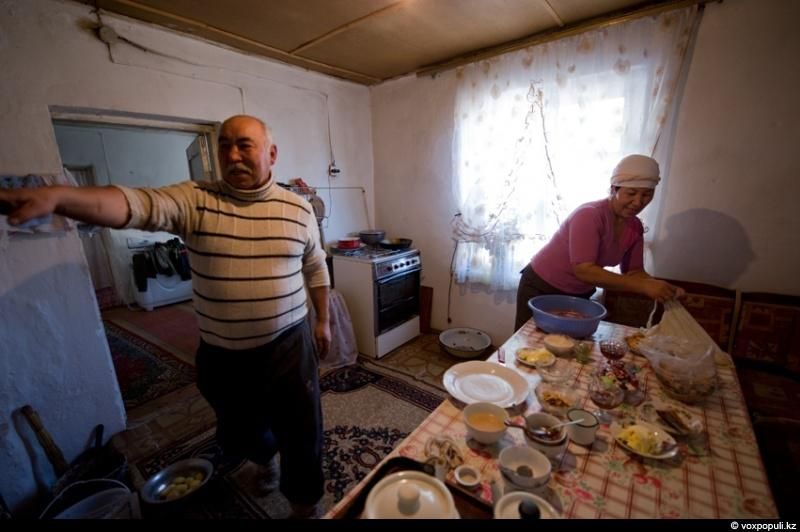
While lunch is being cooked, Saifulla decides to share his family history. «My grandfather Sultan owned factories and several fishing boats on the Volga River. In 1937, he voluntarily handed over all his property to the Soviet authorities, but refused to give the mosque to be converted into a school. He and his brothers tried to defend the mosque from the Bolsheviks. But they were quickly defeated, and my grandfather was exiled to Siberia with his wife and children, where he later died. His family eventually returned to Astrakhan.»
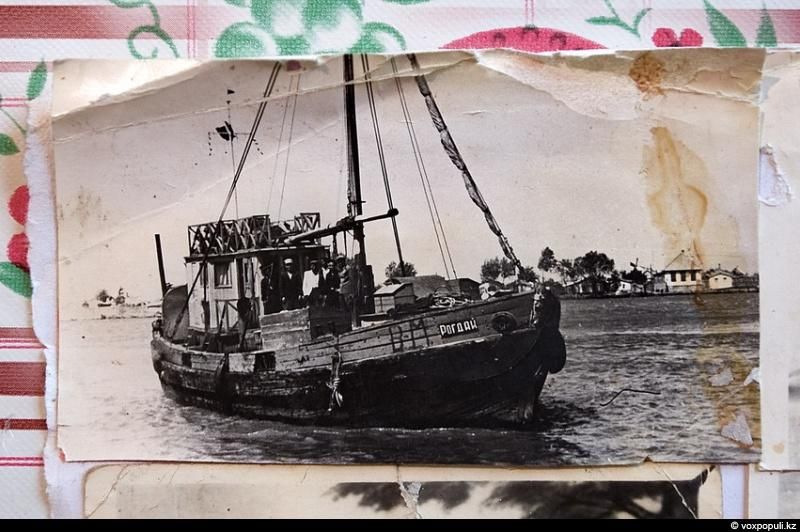
Among his children was my father, Zhumazhan. In 1942, he worked as a young sailor (yunga) on the labor front, transporting food to Volgograd. As an adult, he became a captain on state-owned vessels in Astrakhan. My father told no one about his repression story until the late 1970s — and he warned us to remain silent as well, fearing it could affect our future.
Photo: Captain Zhumazhan with his crew on the fishing vessel «Rogday» (from the Nurzhanov family archive).
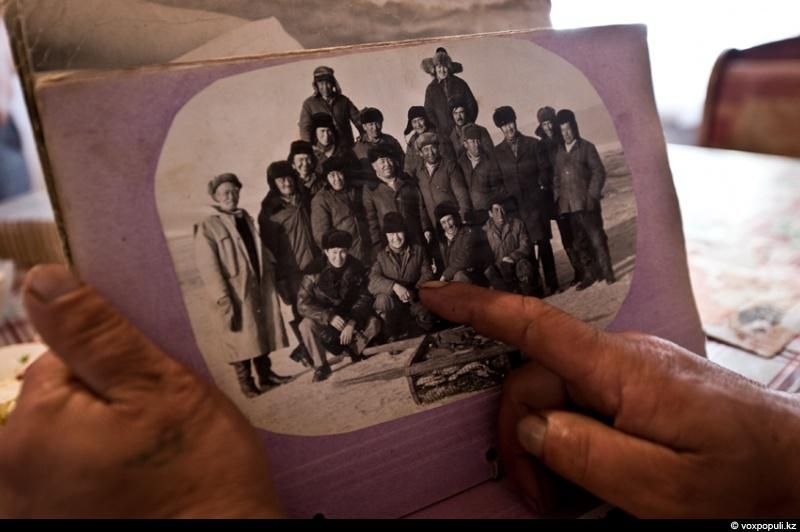
In 1980, my father moved with his family to Kazakhstan, to the village of Koldy (formerly called Prudkhoz). Here he worked as an ordinary fisherman. At that time, fishermen gave each other nicknames — my father’s nickname was «Captain Jack.» He was fair but strict, and everyone respected him for that.
Photo: The fathers of today’s fishermen in Koldy (from the Nurzhanov family archive).
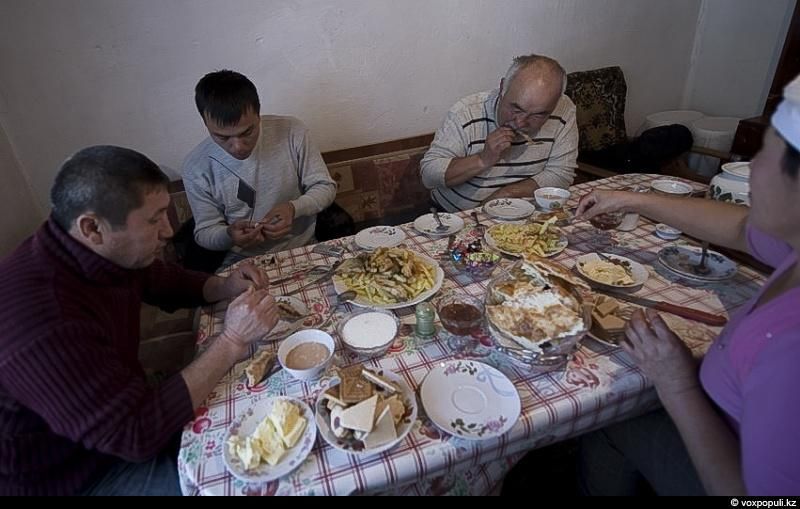
Of nine children, three of us continued our father’s legacy. I became a fisherman, my sister Dariga works as an ichthyologist in our village, and my older brother Yer-Targyn worked in Kazakhstan’s Ministry of Fisheries.
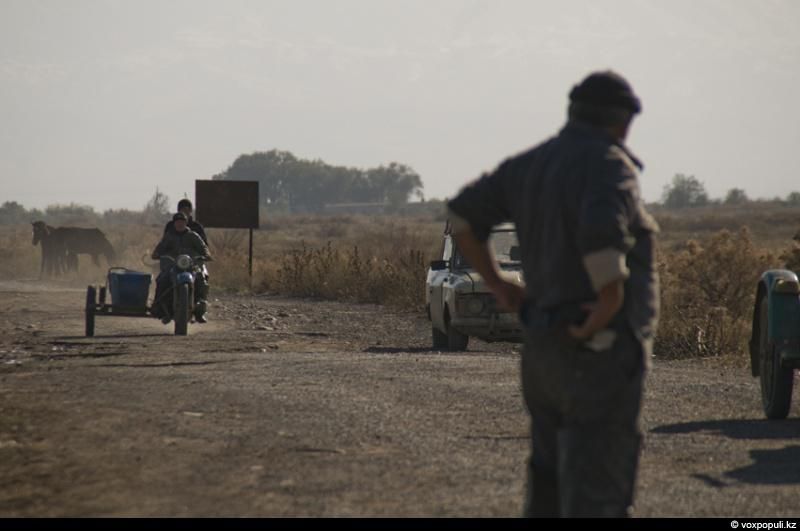
After lunch, it turned out that the engine of Saifulla’s boat had broken down, so he couldn’t go to sea today. But work on the shore can always be found — even simply helping other fishermen unload their catch. Especially since the motorcycle of Karasai’s grandchildren appeared in the distance.
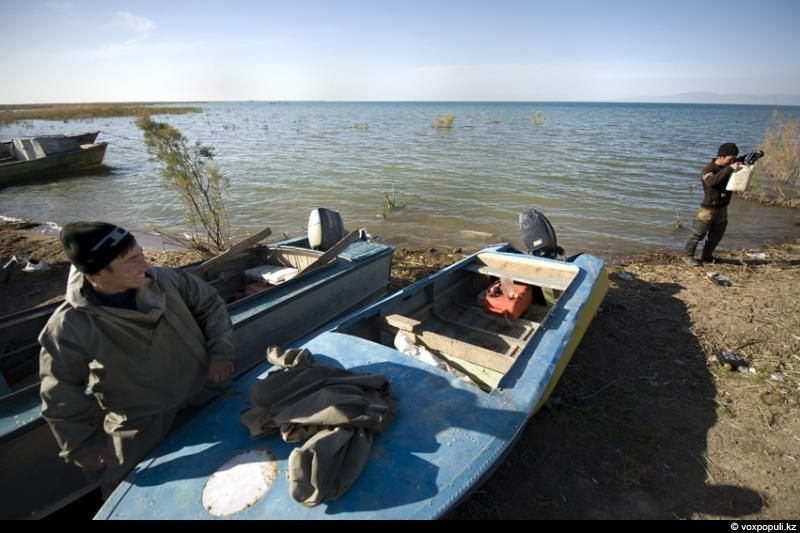
Azamat and Farkhat preparing to go out to sea.
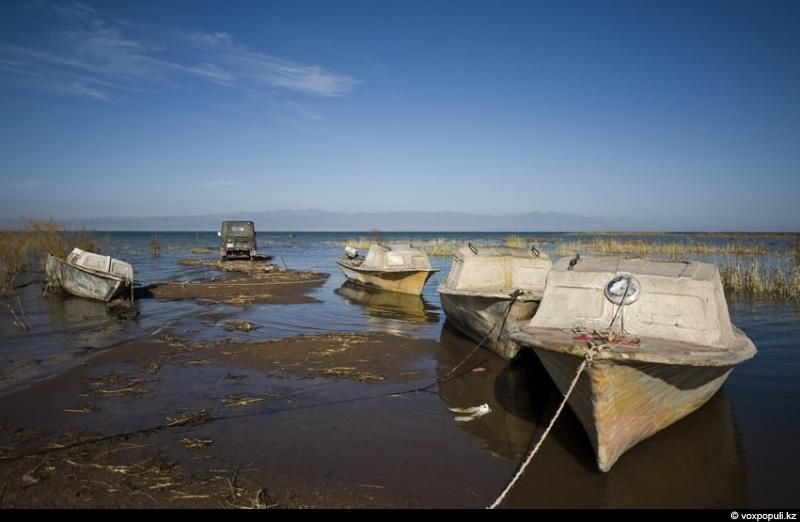
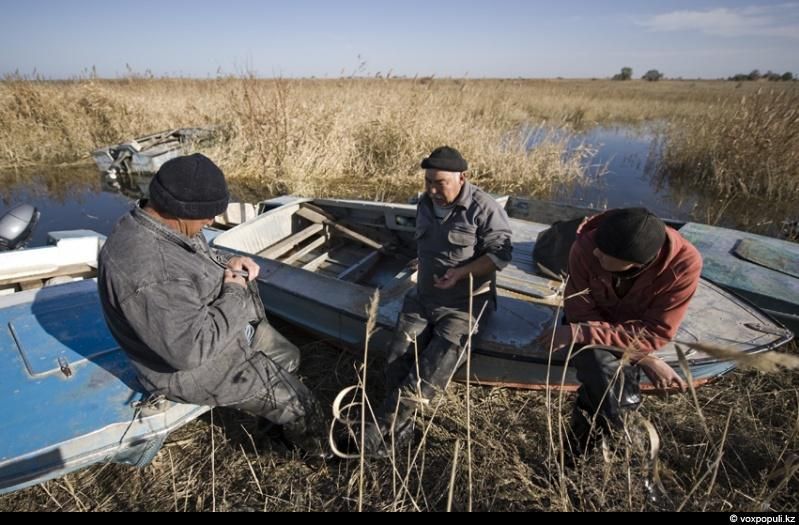
On the shore, Saifulla tells his companions how he once almost drowned after falling overboard during a storm. He had to swim 12 kilometers before other fishermen rescued him.
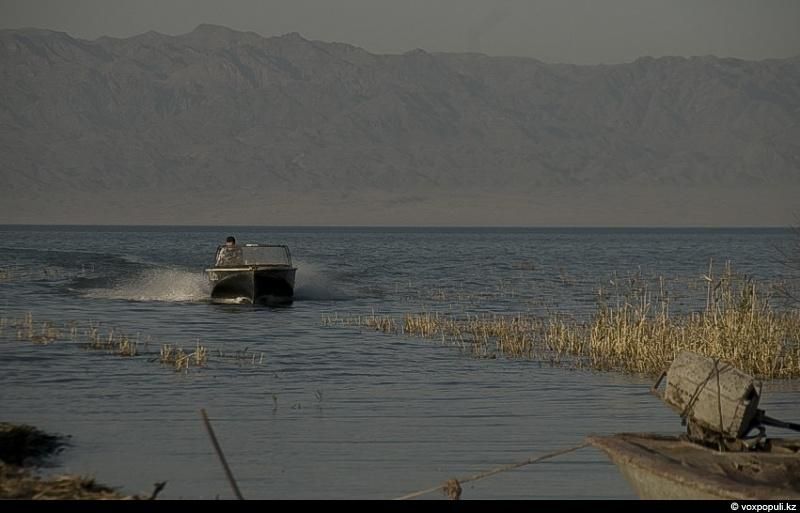
A boat loaded with fish approaches the shore.
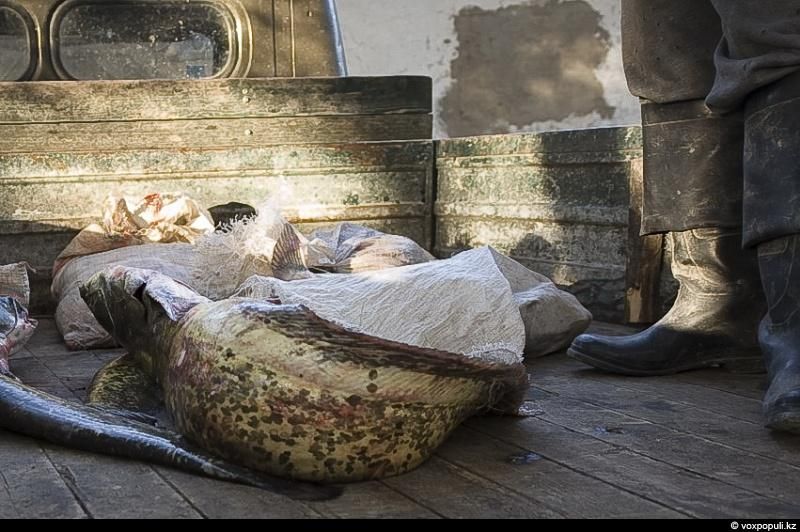
The fish were loaded into a vehicle and delivered to the processing facility.
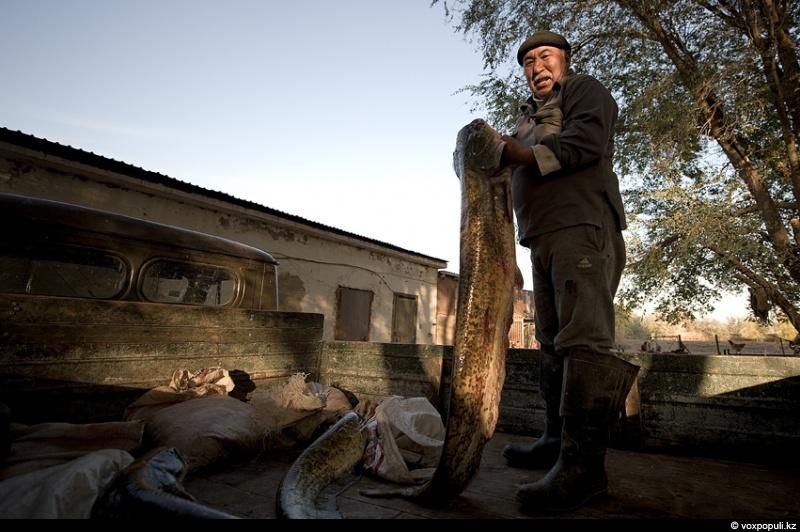
Saifulla holds a medium-sized catfish: «On Kapchagay, catfish can reach from 10 to 120 kg and grow up to 2.5 meters long.»
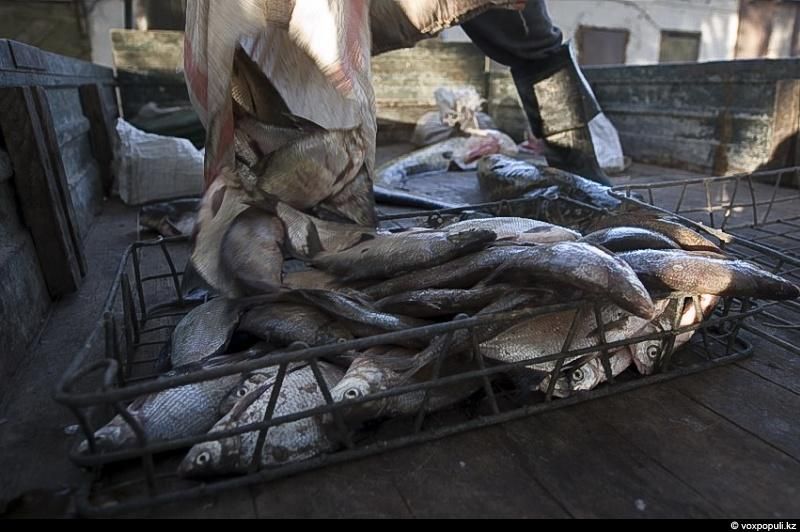
This time the catch included bream, zander, asp, and catfish.
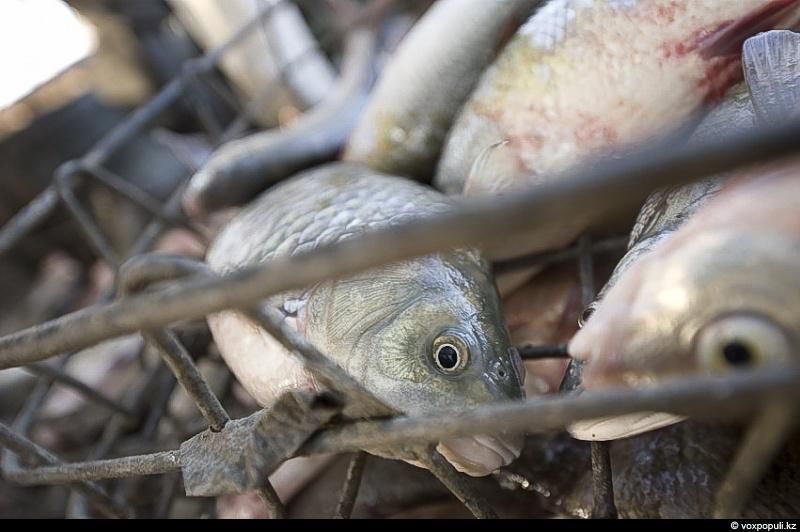
In spring, the best catch is bream, zander, and carp. In summer — catfish. In winter — only bottom-dwelling species.
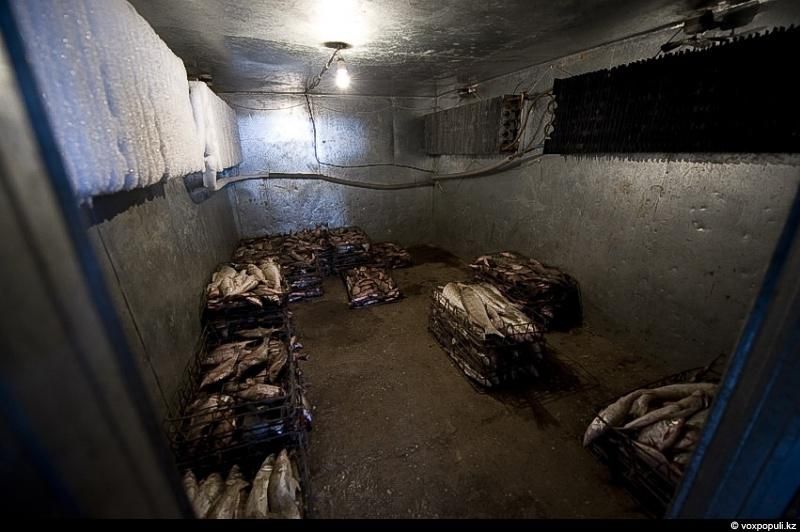
«Fresh fish is first placed in a cooling chamber, covered with ice, and chilled for four hours,» Saifulla explains.
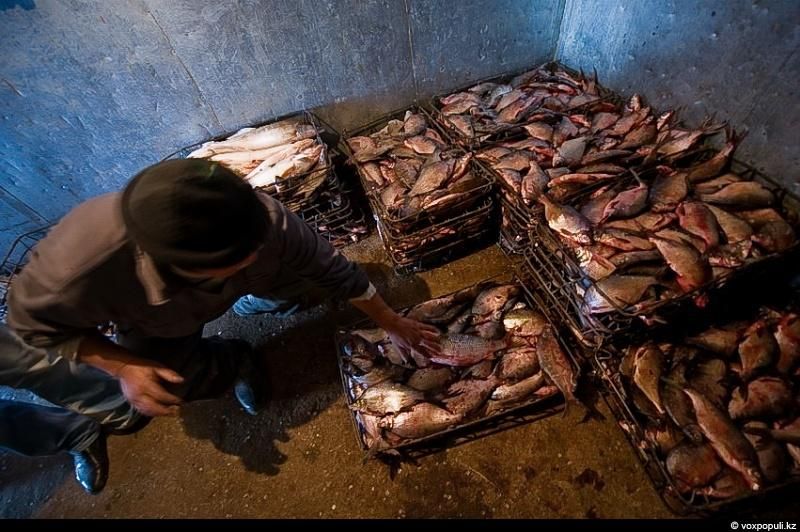
«Then the fish is washed thoroughly, the ice and slime are removed — after that it is ready for salting. A solution of water and salt is prepared. About 120 liters of water and one sack of salt are required per ton of fish. About 100 kg of fish is submerged in brine, topped with 30 kg of salt, then another layer of fish, then salt again — in total ten layers. Then weights — special grids — are placed on top to press it down, and the fish is left to cure for 15 days. In the end, the fish is washed for ten hours, with the water changed every two hours.»
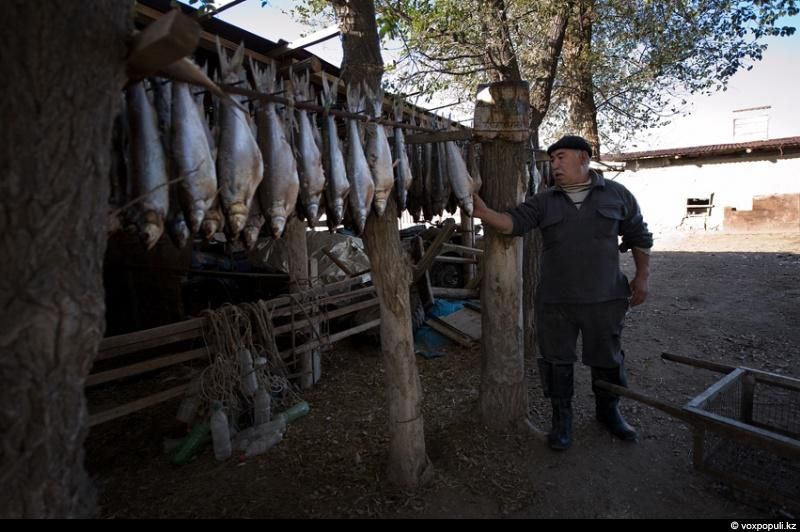
After ten hours of rinsing, the fish are hung on skewers, seven pieces per skewer, and dried for two days.
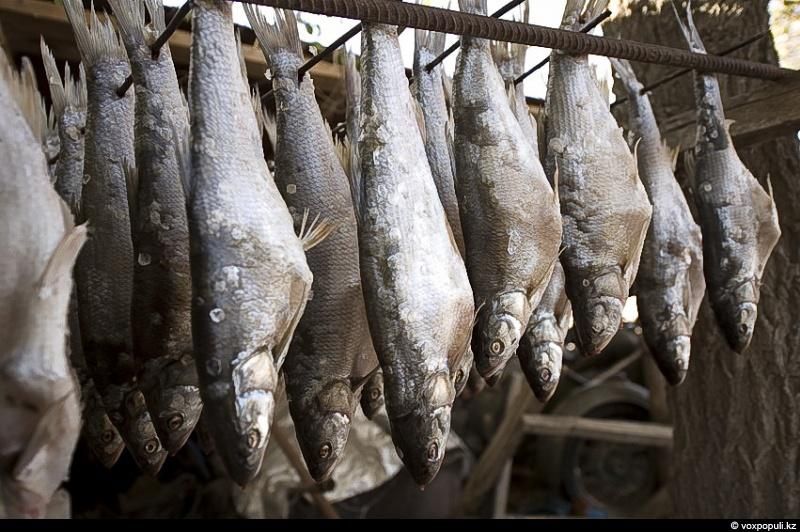
Once the asp is fully dried, it is placed into a cold-smoking chamber at the fish factory for two days.
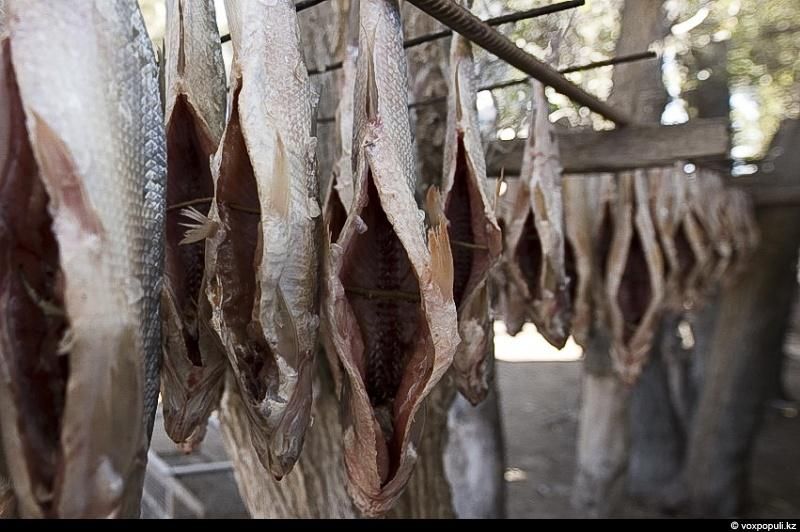
After that, it is transported to the wholesale market in Almaty, where it is sold for 300–350 tenge per kilogram.
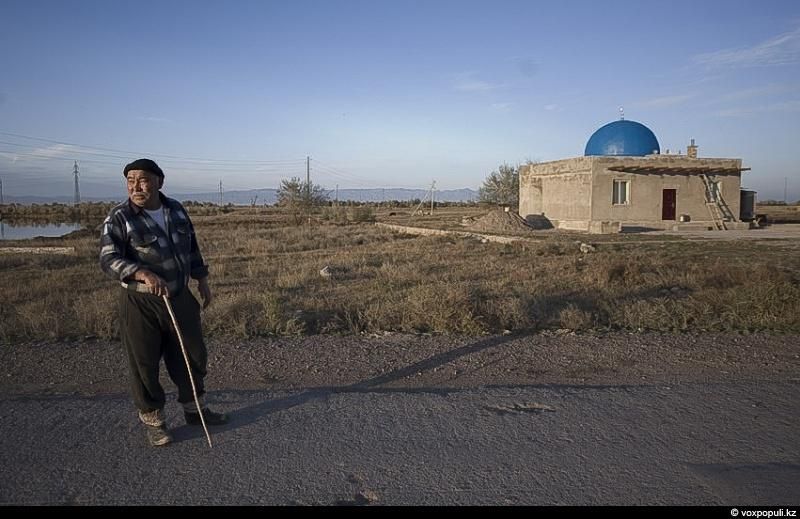
«It’s time to go home to repair the engine,» says Saifulla. «Tomorrow we need to go out to sea…»
The original version of this material was published on Voxpopuli.kz (before its closure in 2023). The author restored the text and photos from a personal archive to preserve these documentary and historical materials.
Джонатан, волонтёре из США, который преподаёт английский в селе Шаульдер и изучает казахский язык. Фоторепортаж Карлыгаш Нуржан для Shanger.kz
How the terminal launch and “Otpan” project transform Beineu…Photo report by Karlygash Nurzhan for Shanger.kz
Проект «Ангел-хранитель» фонда «Кус Жолы» и Казкоммерцбанка, подарившем надежду новорождённым детям. Фоторепортаж Карлыгаш Нуржан для Shanger.kz
How Auyl Sport opens the path to global victory for rural youth…Photo report by Karlygash Nurzhan for Shanger.kz
Comments
Хорошая работа
Фотографии хорошо получились!
Очень классный пост!