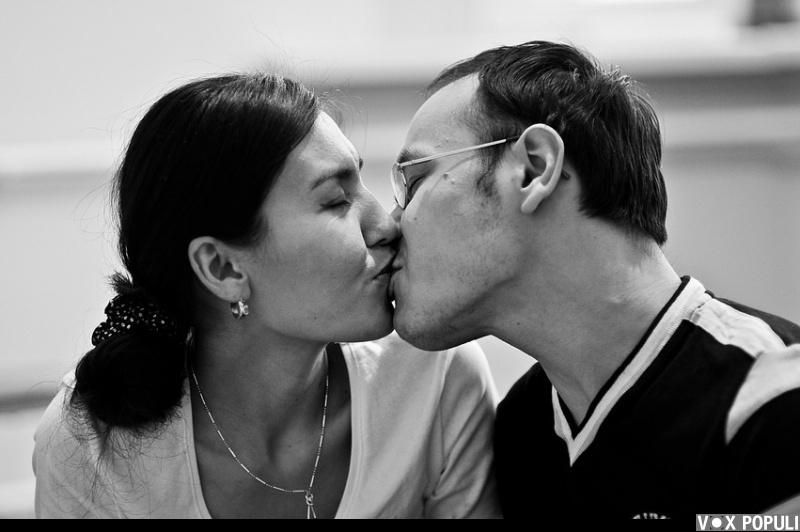
This story has a him and a her. There is also a son and a daughter, but they will appear much later, when all the major events are already behind them. It could have been an ordinary romance, if not for the fact that he had been in a wheelchair since childhood, and she was his first love.
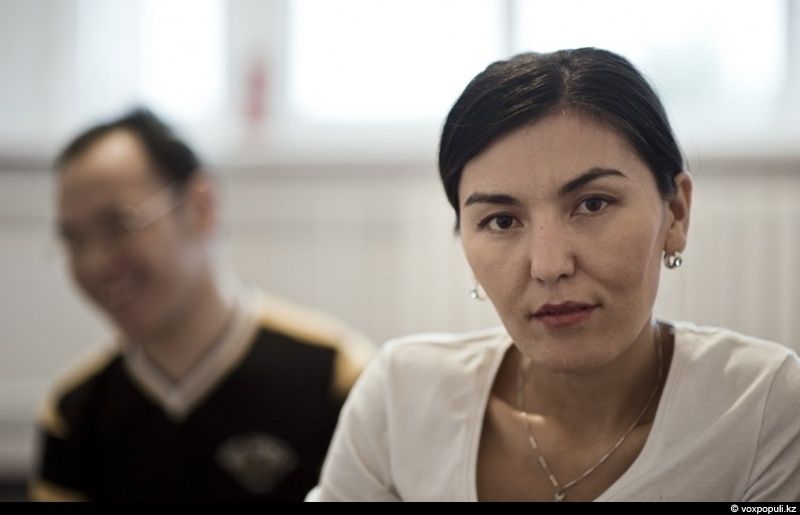
It was love at the third sight. Eighteen-year-old Amanat Musin needed three meetings to realize that the rehabilitation therapist, Meruert, would be his wife. Meruert herself needed a little more time to understand that this was serious and forever. When they met, the modest and quiet young man suddenly began writing poems and telling funny stories for the first time in his life. During such moments, Meruert silently listened and smiled. At the Almaty Center for Creative and Physical Development of Children with Disabilities, many had confessed their love to her before — another patient was interesting, but nothing more. It took several months for her feelings to change.

Their story had a classic rejected rival and shocked parents. “We had been secretly dating for almost a year when one day Meruert called and said, ‘Matchmakers from Atyrau came to take me! What should I do?’ That day was my brother’s birthday, but I asked him for help, and we abducted Meruert. Four months later, we got married. I was 19 years old. My family thought it was too early, and I said, ‘Who decides when one should love?’”
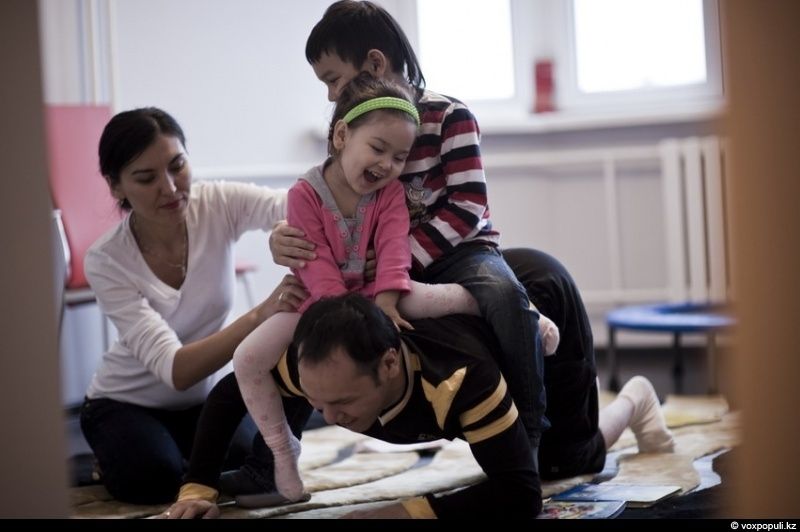
A year later, Altair was born — a small happiness that turned Amanat’s life upside down. Then came Dameli…
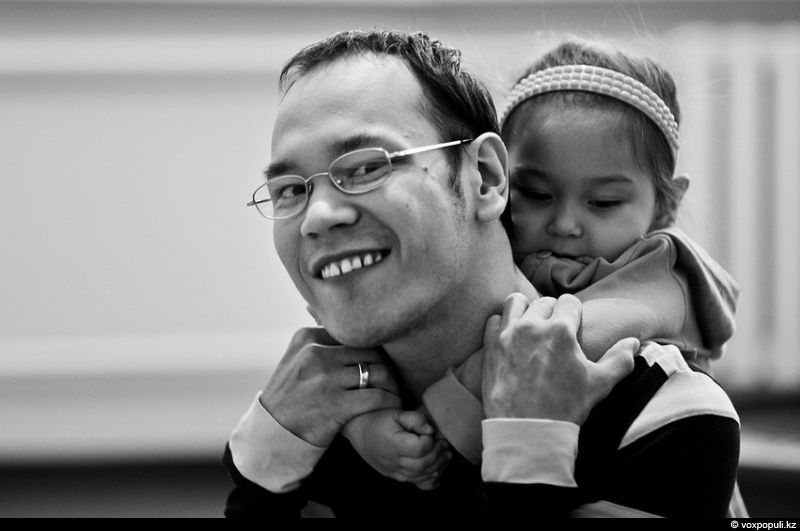
Meruert’s parents were, of course, against it at first. For them, I was a dark horse. Relatives believed she was dooming herself to some kind of bondage — to stay by my side around the clock and never have a normal family life. There were constant arguments at home. Until one day, Meruert’s younger brother said: “Imagine if I were in a wheelchair and suddenly met a girl I fell in love with. Would you stand in the way of my happiness? Would you not want everything to be good for me? Why can’t we give this guy a chance if Meruert loves him?” Even not knowing me, he took my side, and that was the first step from her family. Now I am like a son to them.
We planned to have a second child but did not set any specific timing. The fears and doubts we had with Altair were no longer there. Back then it was almost a psychological crisis: would the baby be born healthy, would everything be fine? I worried a lot, though I tried not to show it. Meruert had to stay calm, and I didn’t want to expose her to unnecessary stress. But with our daughter, everything was completely different. And when Dameli was born, I experienced the joy of fatherhood fully for the first time. When Altair was born, the joy felt shared by everyone — he immediately became a “common child,” and I rarely had moments alone with him. With our daughter’s birth, everything was calmer, and that’s when I truly unfolded as a father. I love her deeply. Especially because girls require a special tenderness.
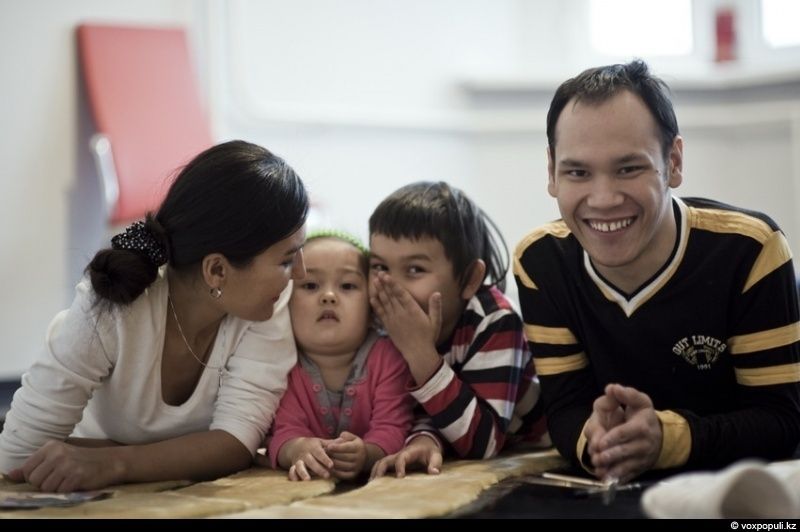
Amanat: “When Altair was small, he sometimes asked why I was in a wheelchair. I honestly told him that I got sick as a child and have been unable to walk ever since. Sometimes, for educational purposes, I warn him that if he walks barefoot or forgets his socks, he might also catch a cold and be unable to walk. It works best! Besides, he spends a lot of time with me at our center, where many people use wheelchairs or have speech difficulties. He sees that his father is not unique — there are many different people in the world. This is important for him as a future citizen.”
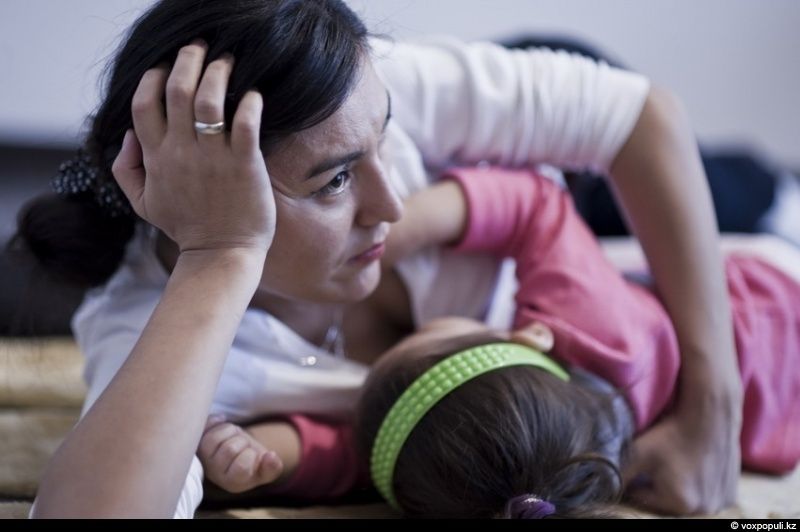
Fate decided that Amanat would become my husband. And this is the greatest happiness I could have received. My friends used to ask: “Aren’t you embarrassed that he’s in a wheelchair?” I always answered: “I don’t see the wheelchair. I see Him!”

In August 2010, the Musin family received a three-room apartment. Before that, they lived six people together with parents in a two-room flat.

Their daughter Dameli is talking on the phone.

I used to love assembling and installing computers. I never took orders — I did it just for myself. I was also deeply into video editing and photography. In 2003, I was a delegate from Kazakhstan in the United Kingdom at a convention on the rights of persons with disabilities. One weekend, while walking through a central square, I saw more people in wheelchairs than I had seen in an entire year in Almaty! And I thought: “Do we really have so few people with disabilities, or are they all just staying at home?” I returned home with the idea of integrating them into society, creating equal conditions for them. At first, it felt like we could move mountains, but eventually our small boat of enthusiasm hit the wall of bureaucracy. But we’re not losing hope — we will succeed.

Meruert and I are workaholics: she is at work, while I spend the entire day studying. I enrolled at KIMEP precisely so I could one day professionally represent the interests of our organization.

I am now a first-year student. All classes are conducted exclusively in English. Before enrolling, I studied English for a year, but even after admission I had to work extremely hard. Sometimes I stay awake until seven in the morning preparing for classes. And during exam periods, there was a time when I didn’t sleep for a day and a half — but when I passed the subject, it felt like climbing Mount Everest.
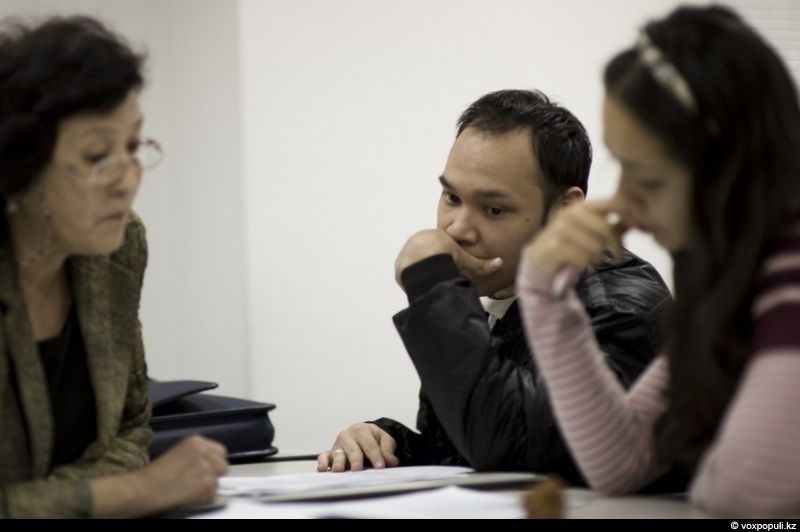
Before meeting Meruert, I wanted to become a psychologist. I was sure my life would be connected with psychoanalysis. But after starting a family, I had to completely rethink my life. I take everything too close to heart, and that would have interfered with the profession. I believe a person should never stop. Once he stops — he breaks. That’s why my motto is: achieve one goal — then set another.
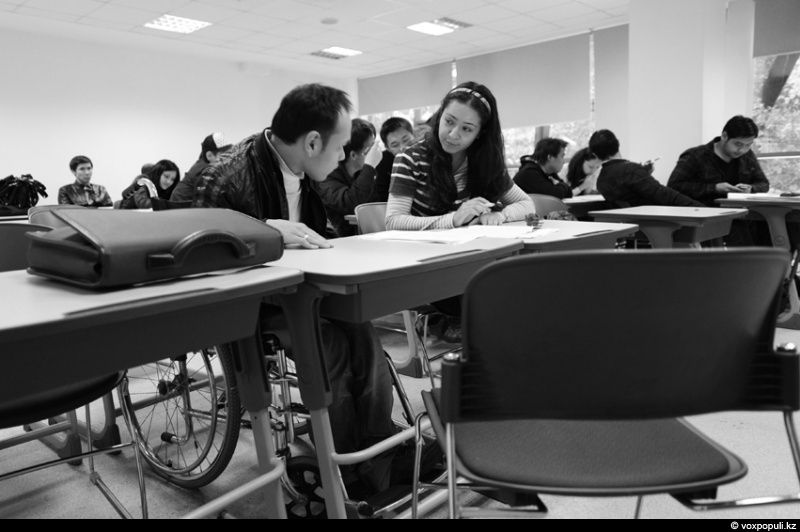

Another criterion for choosing this university was that its buildings are constructed according to international standards — from wheelchair ramps to wide, high-speed elevators.
After classes, if I have free time, I go to train in the gym of “Ardi,” the association of parents of children with disabilities.
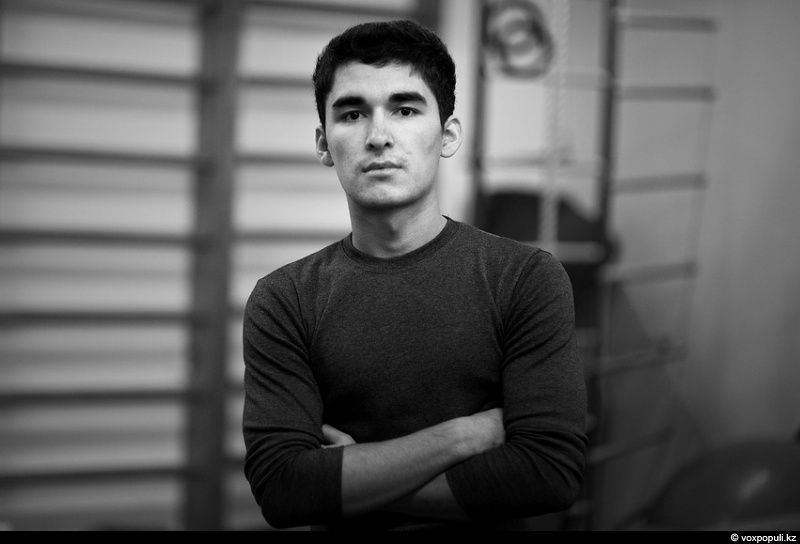
Rakhman is 19 years old. He works as a therapeutic exercise instructor at “Ardi.” “Amanat used to come 3–4 times a week, but because of his studies he has been missing workouts more often,” he says.

Amanat asks Rakhman to set the weight to five kilograms. “I’ve been doing sports since I was 15. Physical activity allows me to relax and stay in shape.”

“This exercise strengthens the back and abdominal muscles, and trains the arms,” Rakhman explains.
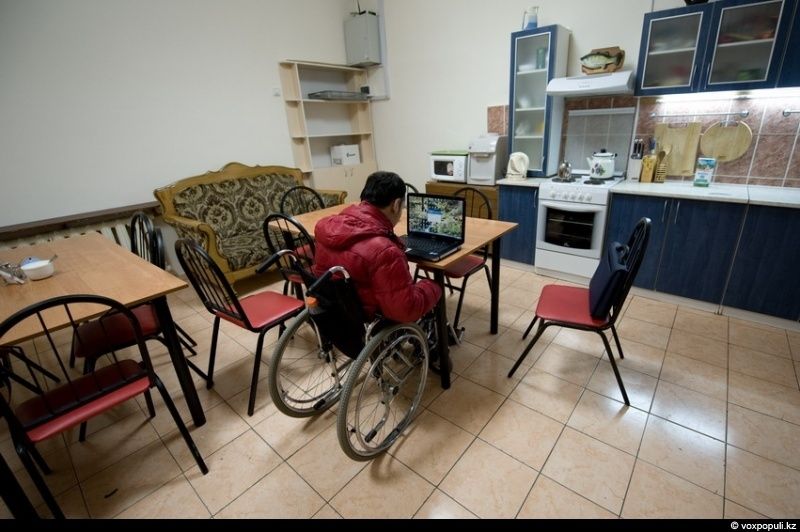
After training, Amanat sits in the cafeteria at “Ardi.” “Until someone picks me up, I can work here in peace. Right now, I’m putting all my energy into my studies and have set the goal of finishing university. Once I get my diploma, I will be able to gain recognition as a public figure — but most importantly, I will be able to provide for my family. Because my love and my children are the greatest sources of strength I have…”
The original version of this material was published on Voxpopuli.kz (before its closure in 2023). The author restored the text and photographs from a personal archive to preserve historical and documentary material.

A photo essay about Almaty’s only accessible housing for people with disabilities and the lives of its residents. By Karlygash Nurzhan for Shanger.kz

История Кристины Романовой из ВКО, которая пересилила болезнь и работает в Call-центре 1414, помогая людям и вдохновляя верить в себя.

A photo story about blind people and their loyal guide dogs — a portrait of trust and dignity. By Karlygash Nurzhan for Shanger.kz
Comments
No comments yet. Be the first to comment!