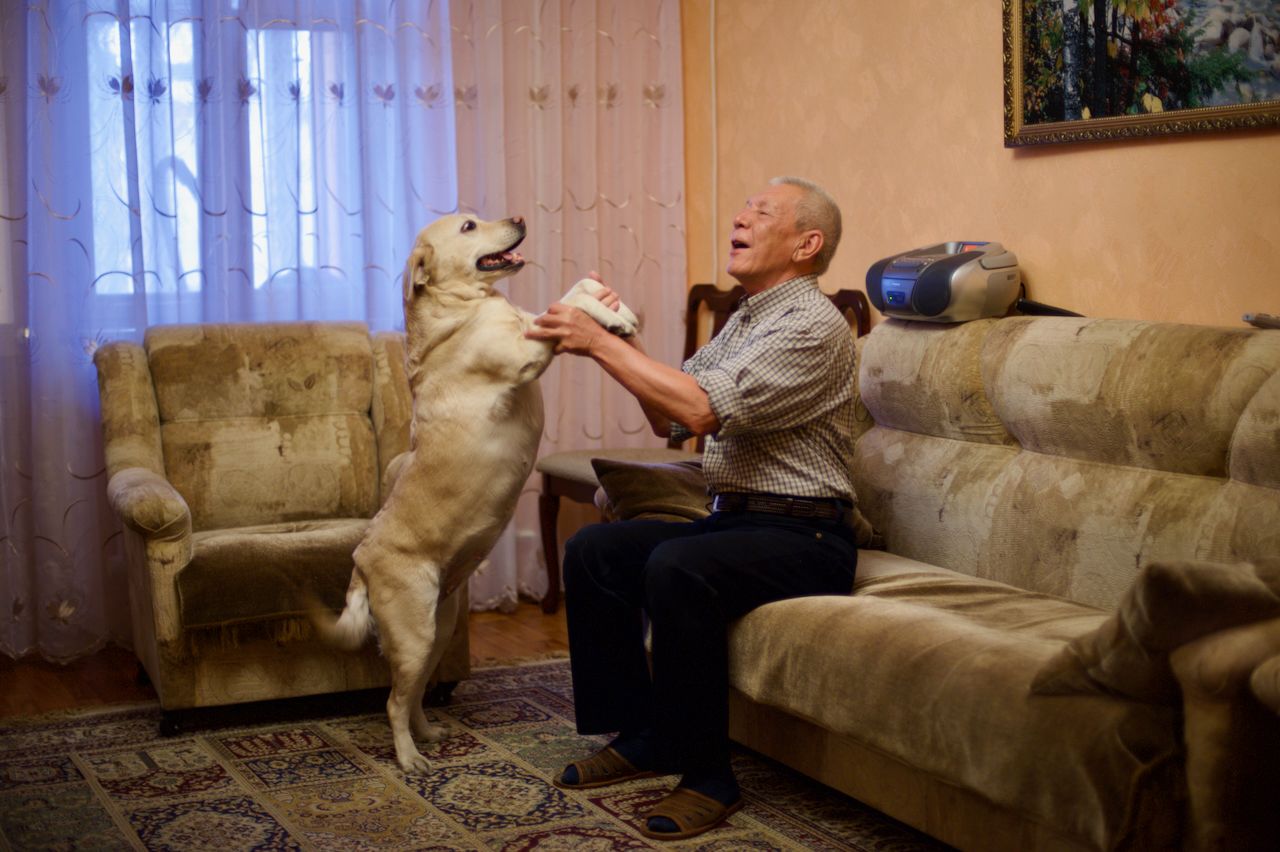
More than 20,000 blind people live in Kazakhstan. People who, by fate, must live in complete darkness are mostly defenseless. Only a few of them have eyes that see for them — eyes that shine with special loyalty and love...
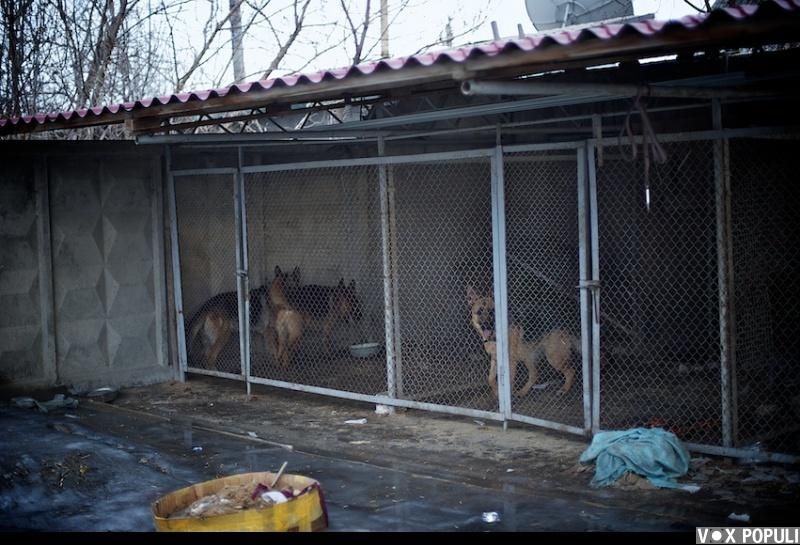
The Taldykorgan club "KNORK" is the only organization in Kazakhstan that trained guide dogs as part of a pilot social project. Now the club has only one such dog left — a German shepherd named Heidi, used occasionally for urgent requests.
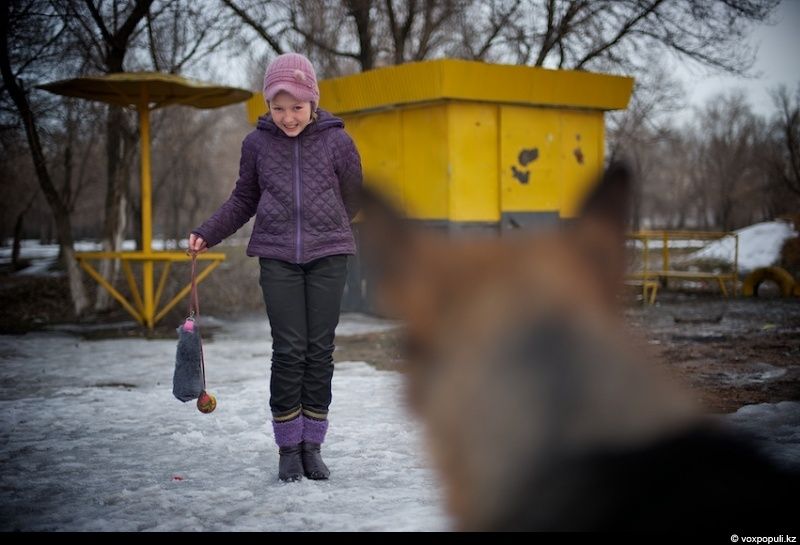
Dasha is 11 years old. The daughter of the club's director, she has spent almost her entire life among animals.
— After seven years with dogs, I learned to train them myself. You shouldn’t fear dogs; they sense it and feel uncomfortable too.
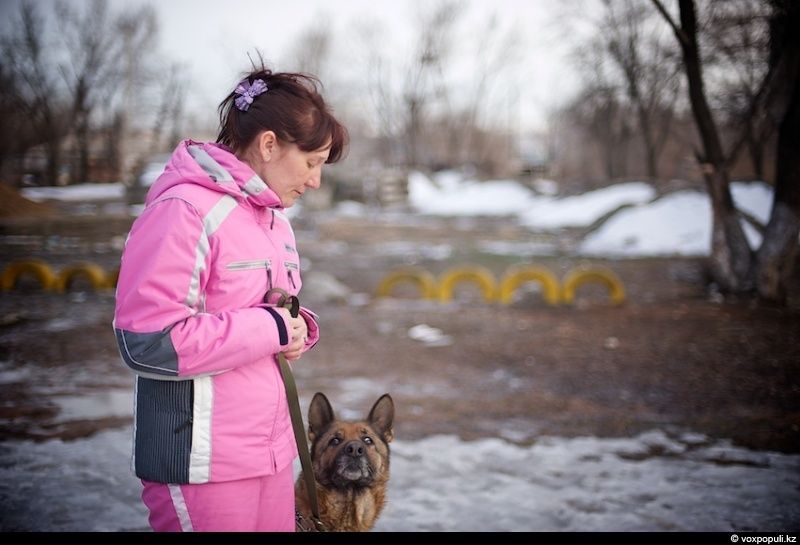
Olga Yushkova — head of "KNORK".
— Training a guide dog requires time and funding. They begin training at three months old. A guide dog must stop when a person stands still, follow basic commands, walk up and down stairs, and avoid obstacles.
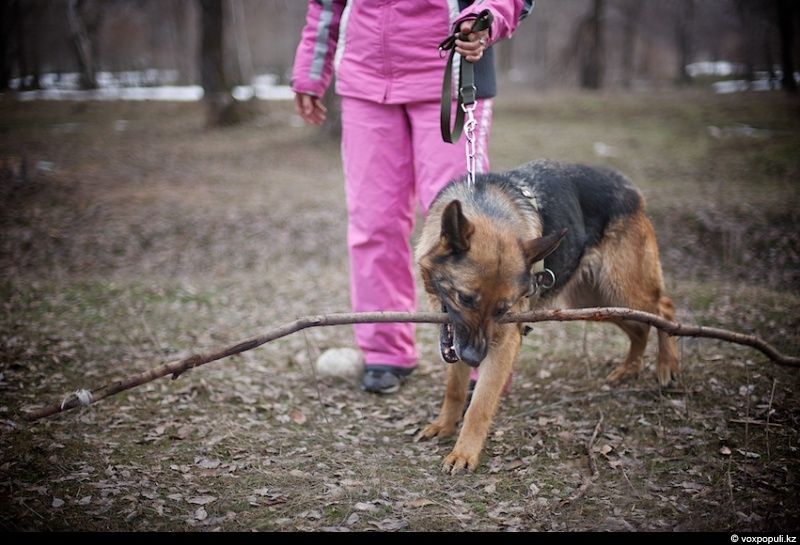
— If a person drops something, the dog must pick it up and return it.
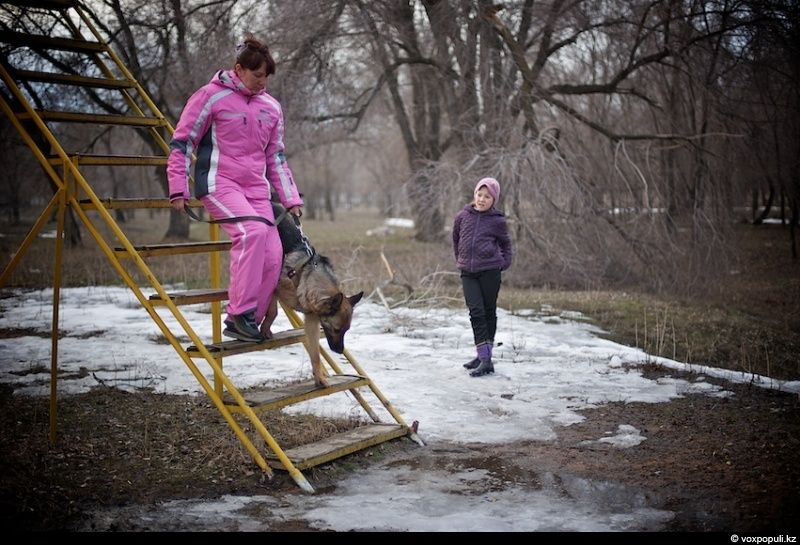
— In Western countries, a guide dog costs from 5,000 to 12,000 euros; here — much cheaper. The state hardly finances animal-related social projects. And our work becomes pointless due to society’s attitude. These dogs are needed by blind people, but not by everyone else. Until public opinion changes and legal amendments are made, we cannot fully work in our field.
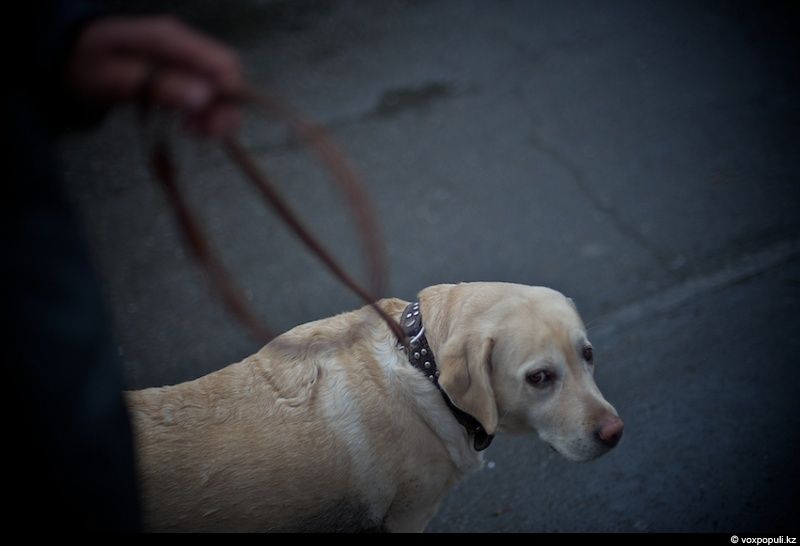
The state allocated 600,000 tenge for one year of training 10 Labrador dogs. This amount barely covered their maintenance. After training, the dogs were given to those in need for free.
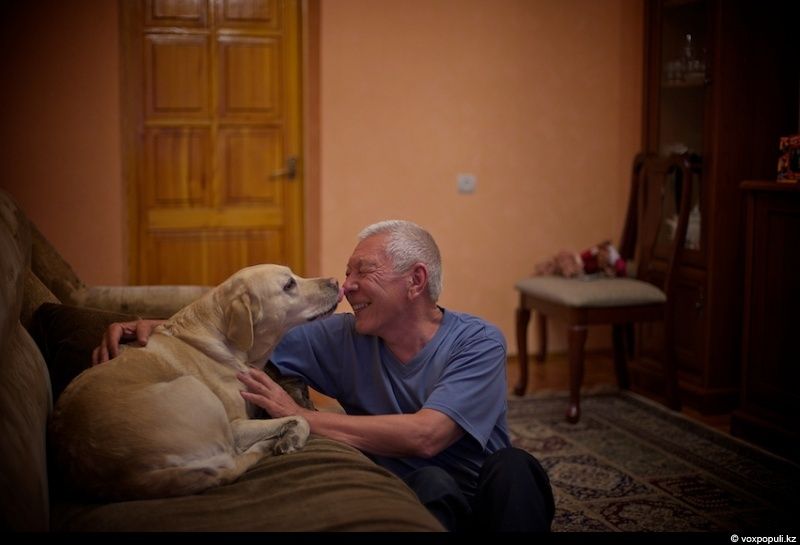
One of those Labradors went to Khanat Rakhimovich.
— My dog’s name is Lari. This is my second guide dog — my first one passed away, so Lari is like a granddaughter to me.
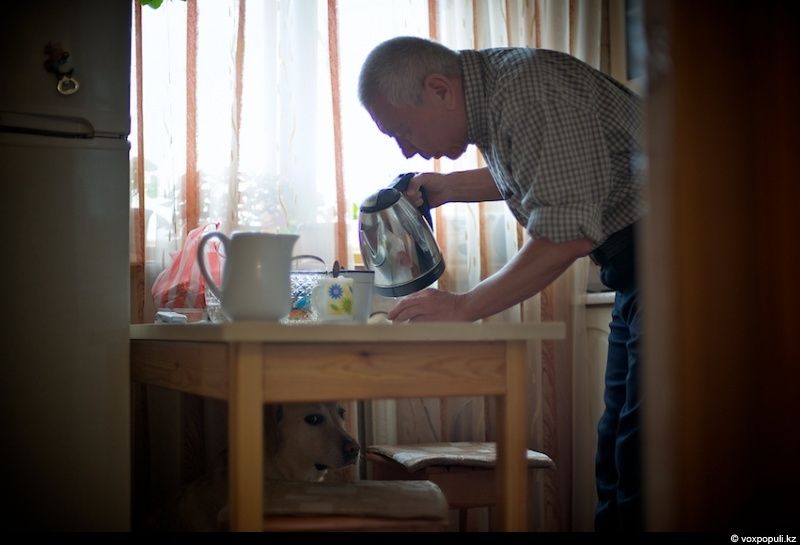
Khanat lost his vision 23 years ago due to a gunshot wound suffered on duty. He does not want to remember that day: “What happened cannot be undone. I’m not completely blind — I still see silhouettes, flashes, bright spots.”
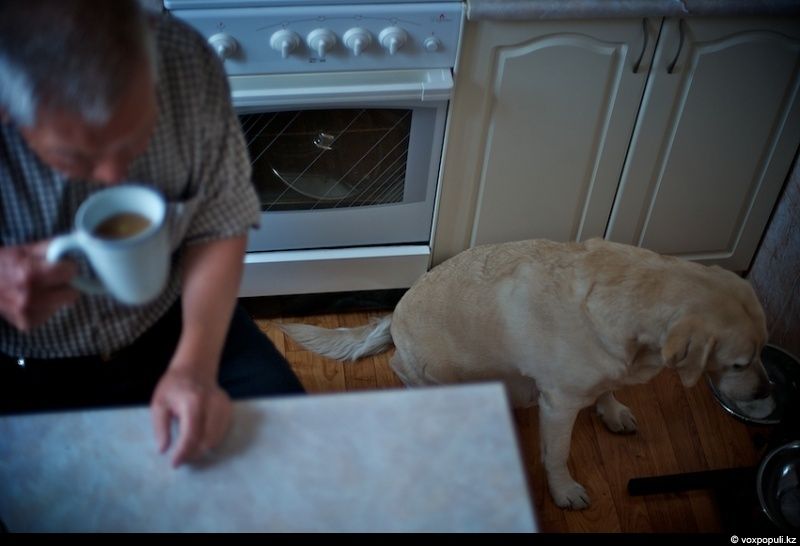
Khanat is retired. His children live and work in Russia, his wife is at work, so he and Lari spend the entire day together: they eat breakfast, walk, and listen to audiobooks.

Lari loves to eat, but will never take food from the table.
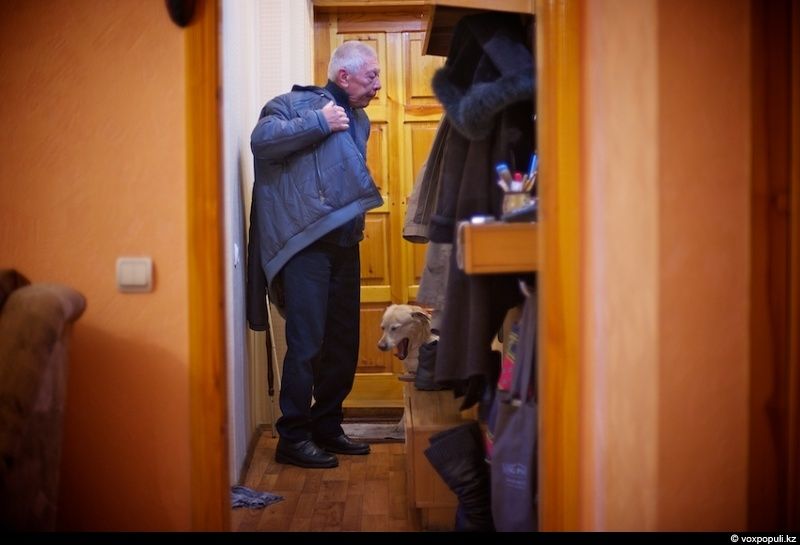
After breakfast, they can go for a walk and visit the library.
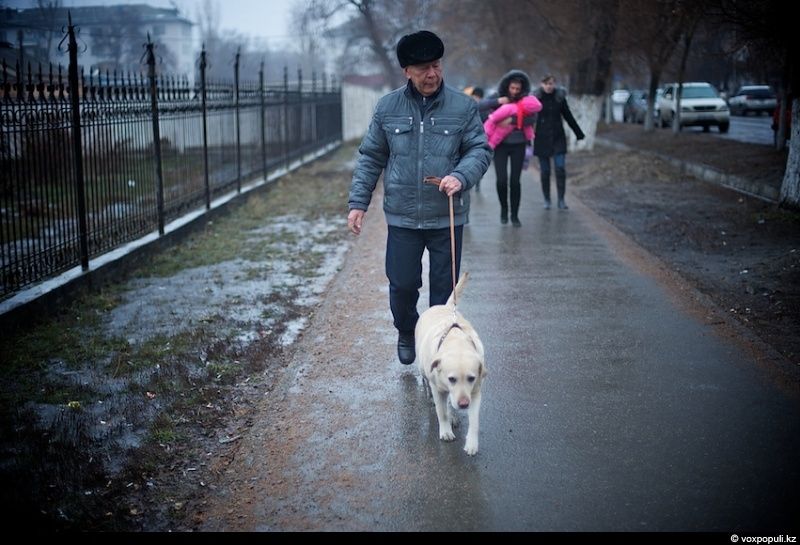
Khanat follows Lari precisely. The dog avoids people, pits, and puddles, and knows the way to the library. Labrador dogs are naturally non-aggressive, and during social adaptation training they are taught obedience, not to react to cats, not to fear vehicles or strangers, and to behave appropriately in public.
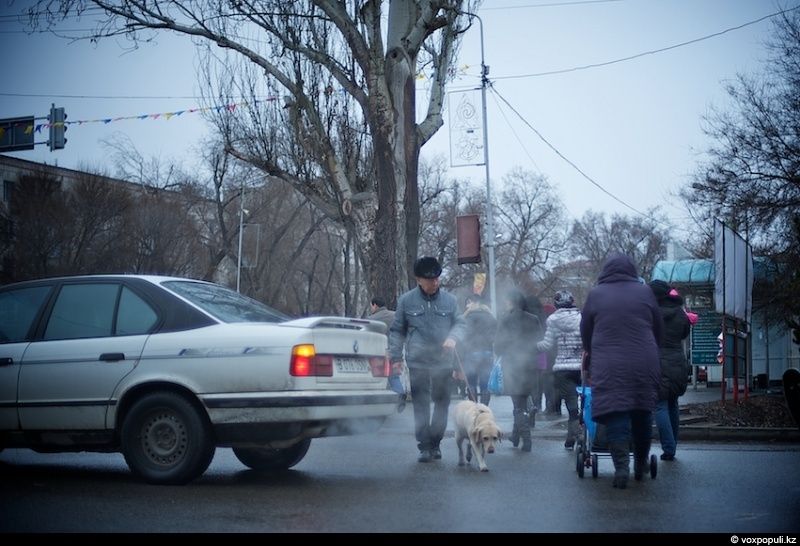
— People react differently to dogs, — says Khanat. — Some say “beautiful,” others ask: “Why is the dog without a muzzle?” But guide dogs are completely non-aggressive and cannot wear a muzzle because of their work. The problem is that we cannot use public transport or enter stores. Abroad, special conditions exist: where ordinary dogs are forbidden, guide dogs are welcome.

— Children adore Lari and love playing with her.
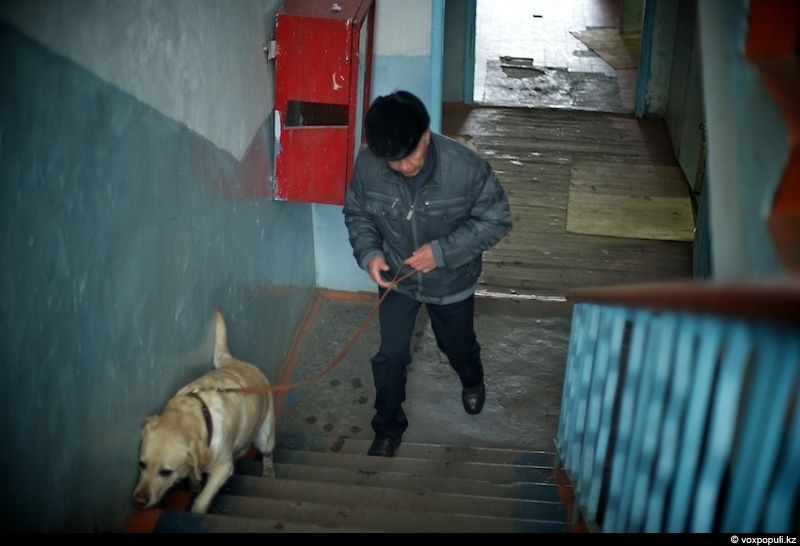
Lari presses against the wall — she was specially trained to do that.
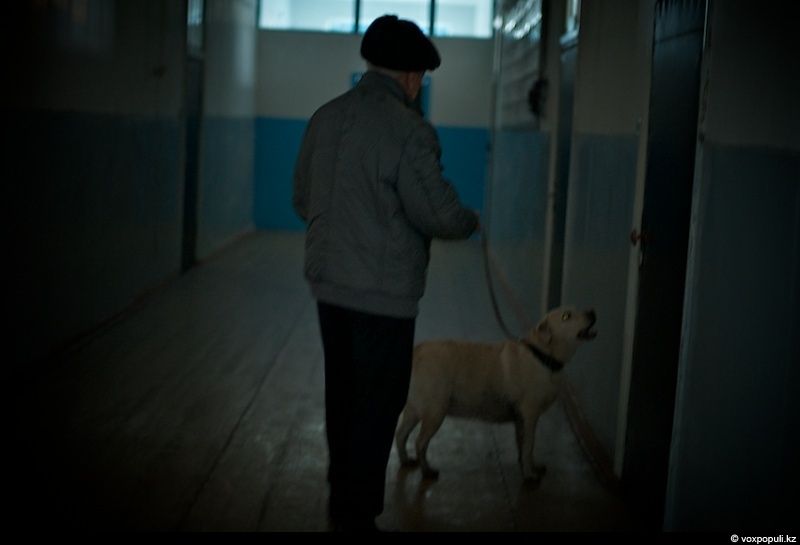
And she leads Khanat exactly to the needed door.
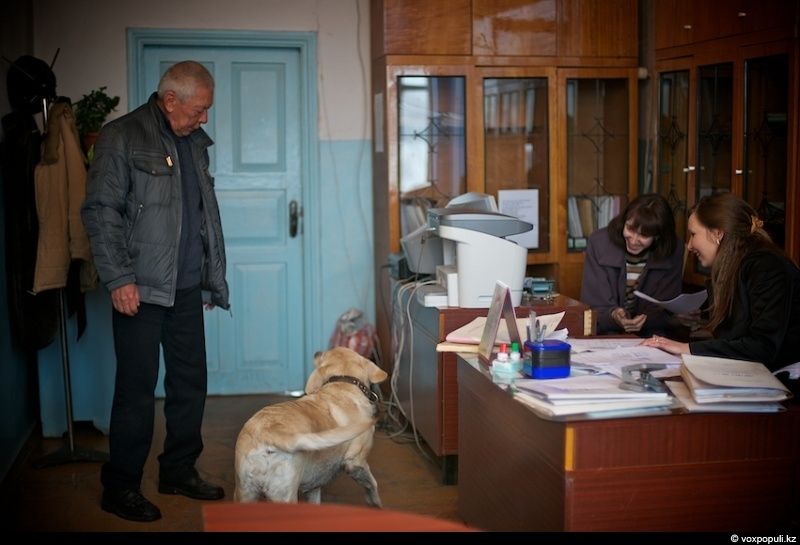
Here, everyone loves Lari and treats her with special attention.
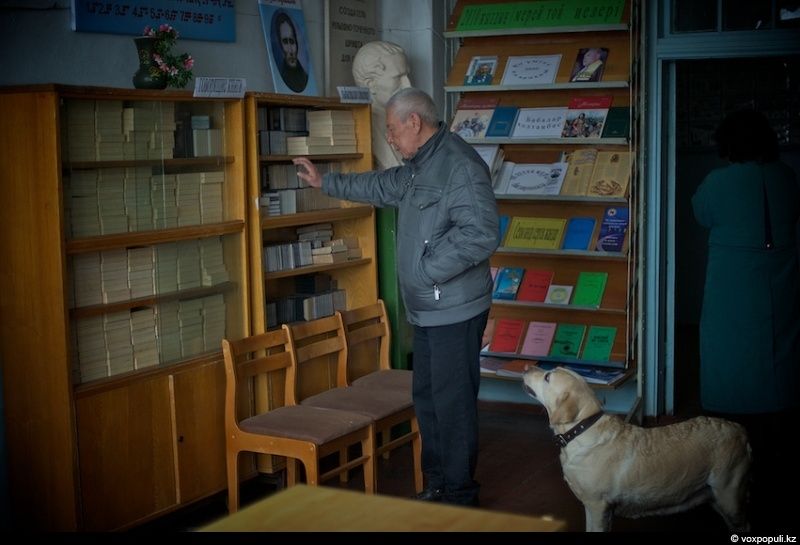
— Audiobooks in the library are few and expensive, — says Khanat. — For example, “The Path of Abai” on three cassettes costs 11,000 tenge.

Shelves of Braille books for the blind.
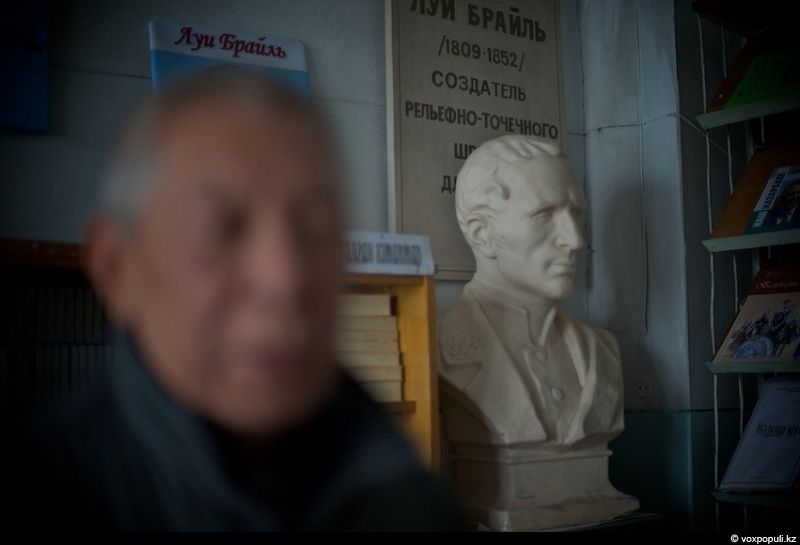
— I never learned to read Braille; it's very difficult for adults, — sighs Khanat.
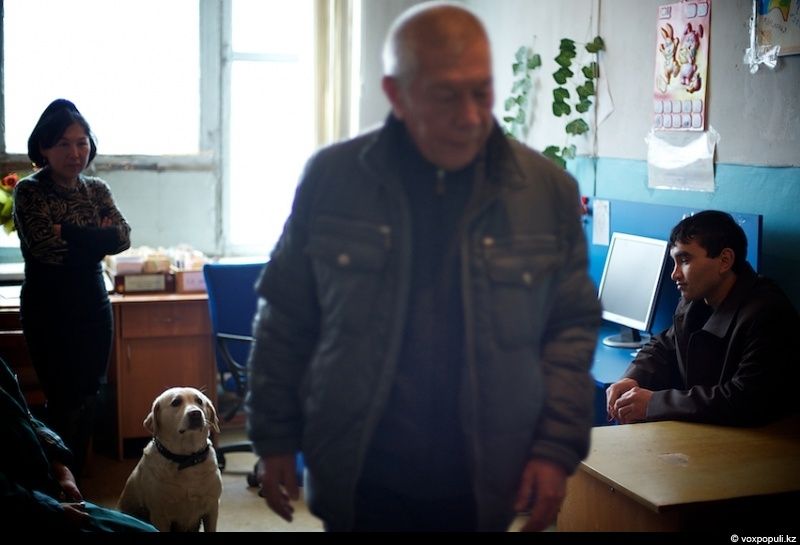
Khanat leaves Lari for a while, and the dog waits without moving until her owner returns.
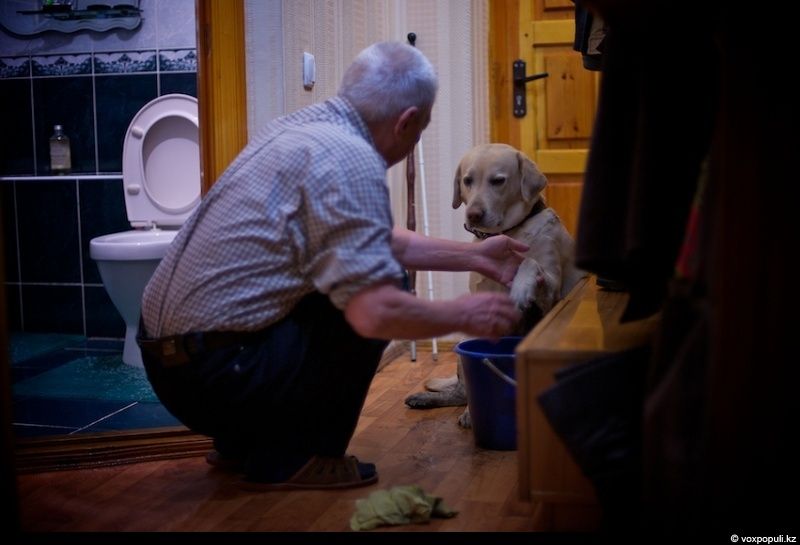
After the walk — routine care: wiping her paws clean.

Taking care of a dog is like taking care of a person.
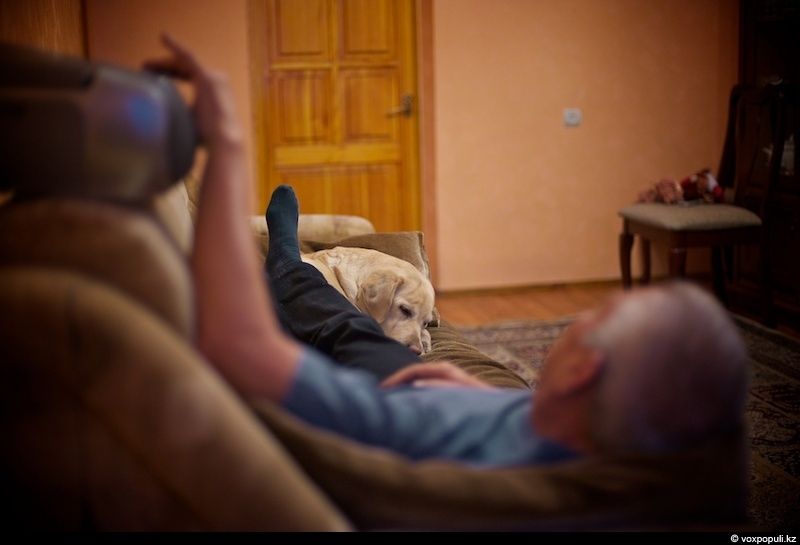
Now they listen to an audiobook and rest.
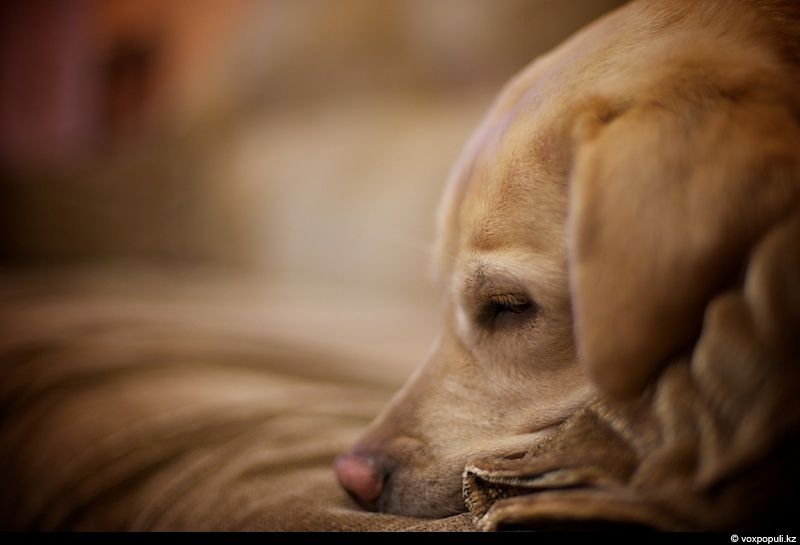
Khanat heard that one of the donated dogs was stolen. These dogs do not guard territory, so they are easy to take — and thieves took advantage of that. For a blind person, such a dog is more than a friend — it is family...
The original material was published on Voxpopuli.kz (before its closure in 2023). The author restored the text and photos from a personal archive to preserve documentary and historical materials.

История Кристины Романовой из ВКО, которая пересилила болезнь и работает в Call-центре 1414, помогая людям и вдохновляя верить в себя.

How Auyl Sport opens the path to global victory for rural youth…Photo report by Karlygash Nurzhan for Shanger.kz

Медицинские поезда Казахстана, которые доставляют врачей и обследования в самые отдалённые сёла страны. Фоторепортаж Карлыгаш Нуржан для Shanger.kz.

Джонатан, волонтёре из США, который преподаёт английский в селе Шаульдер и изучает казахский язык. Фоторепортаж Карлыгаш Нуржан для Shanger.kz
Comments
No comments yet. Be the first to comment!