Lost in 1986: The Story of the December Protest in Almaty
VoxPopuli, Karla Nur and Зарина Ахматова
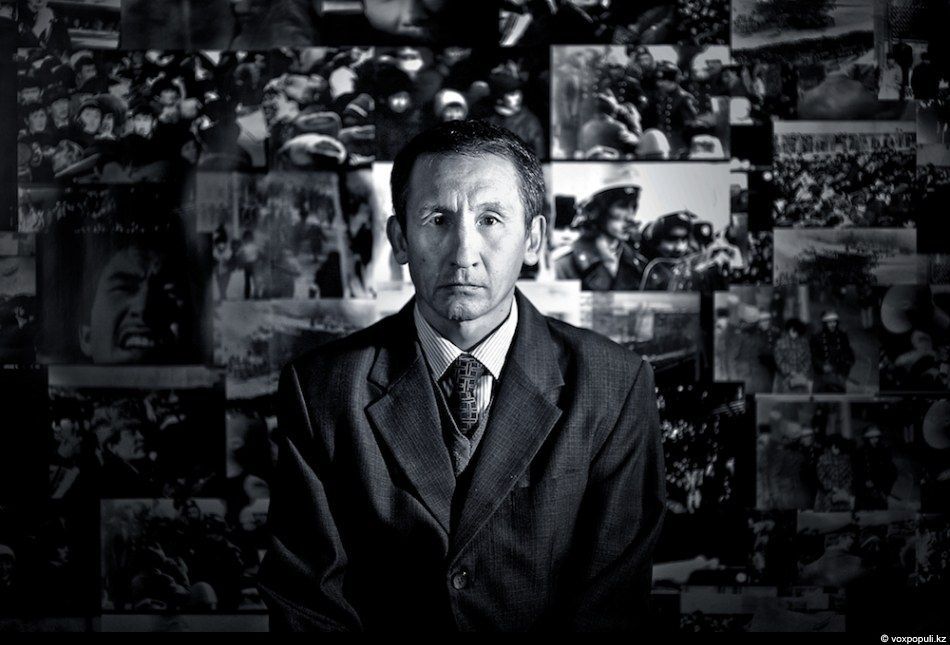
On December 16, it marked 39 years since the December events in Almaty on Brezhnev Square (Republic Square). At that time, students took to the streets of the capital demanding the reversal of the decision to remove Dinmukhamed Kunaev from his post as First Secretary of the Communist Party of Kazakhstan and to replace him with Gennady Kolbin, the First Secretary of the Ulyanovsk Regional Party Committee. For three days, the city witnessed brutal clashes between students and the police. As a result, 99 people were prosecuted, and 2 of them were sentenced to the highest measure of punishment

Бахыткали ТАУБАЕВ
The resentment remained. You know, I keep thinking now: if they hadn’t crushed me so brutally back then, perhaps I might have regretted going to the square. But they turned me into a rebel and an enemy of the people. In ’86, I worked as a carpenter on a construction site, after having served in the army, in the aviation troops in Orenburg. On the 17th, the guys from the construction site gathered and headed somewhere. I stepped outside. In the Park of the Panfilov’s 28 Guardsmen, a speaker was addressing the crowd—he spoke well, convincingly. About the language, about rights, about our homeland, about peaceful protest. He managed to lead us, and we headed to the square.
On the way, near the Border Guard Administration, up Dzerzhinsky Street, a clash broke out between us and the militia volunteers; the military soon arrived. Two guys were next to me. One of them, a student, had his skull smashed—I still remember his name: Beisembekov Yerlan. I was beaten too, struck with a sapper shovel. They brought me to the district police department, interrogated me, and released me.
After New Year’s, they arrested me. They said: if you point to someone in the photo album, we’ll let you go; if not—you’ll go to prison. I didn’t know anyone. How could I say something that my eyes had never seen? But my accusers could. These so-called witnesses did not even describe the clothes I wore on the day of my arrest. They claimed that I had stormed into the Border Guard Administration building and ripped out the metal bars. Am I Rambo? I’m a carpenter. You couldn’t break those bars even with a crowbar.
The prosecutor asked for 10 years. They barely reduced the sentence to four years; at that time I had two small children. I served my time in Karaganda. They kept pressing me. I refused to work for the administration. For any minor thing, they threw me into the punishment cell: “This December rebel is causing trouble again.” They added two more years for “insulting Soviet authorities,” allegedly claiming I tore epaulettes off a guard in the prison yard.
I went on a hunger strike and lost weight down to 49 kilograms. They locked me in a basement for three months, then transferred me to Pavlodar. There, in the prison cafeteria, I got into a fight with a cook—I saw him carrying away a can of sour cream, the one they never gave us. Again, solitary confinement, and another sentence hanging over me.
In ’88 they began reviewing our cases; I was released in ’90. But even after my release, they harassed me for years. If someone got into a fight on a nearby street, they dragged me to the police station and beat me. For a long time I couldn’t find work. One man helped me—he hired me as a driver of a duty bus.
But overall, I try not to remember any of this. I only think of one person—Colonel Vorobyev. He was the only one who listened to my story and spoke to me like a human being.
Now I don’t work. I no longer have the health—prison took its toll, and age and illness followed. I have four children; they are studying. My daughter will soon leave for an internship in America. They push forward on their own—I can’t afford to pay for their education. I raise my grandchildren.
Am I happy? My children are my happiness. During the four years I served, I saw my children and wife only three times. Otherwise, it was only letters and photographs—we would read them and tear them up immediately, so nothing could be used against us. So many years have passed since my release, and I am still trying to make up for what I wasn’t able to give my family.

Анар СЕРКЕНОВА
I was 18 years old, and I had a pronounced youthful maximalism. And why did all of this happen? No one can answer that question today. Even my friends who went through the same ordeal probably still do not tell the whole truth. In all these years, I have not read a single worthwhile publication on this topic—nothing that truly explains what happened.
I do not like recalling it, because at 18 I suffered severe psychological trauma. And I still believe that I had the right to say what I said. I was not a nationalist at all; I grew up in the Russian village of Medvedka. In 1986, I was in Taldy-Korgan, studying to become a lawyer. Word of mouth spread the news about what was happening in Almaty. My friends and I gathered and went out to the city square. We were quickly dispersed.
I was summoned, questioned, and told that the only thing that could “correct” me was prison. I was sentenced on December 30, and I spent New Year’s already behind bars. They gave me 1.5 years. I served it, as they say, from bell to bell.
My parents suffered terribly; my mother became paralyzed. My father passed away two years ago—the consequences of those years… It was not easy. I was studying at a law college, which was hard to get into. I dreamed of becoming either a prosecutor or a judge, but instead I became an inmate.
Gathering all my strength, after my release I moved to Almaty. I lived at the train station for a couple of weeks, then found work at a hat factory. Later I managed to get reinstated in college, got married, and had two daughters. In the end, I did become a lawyer. Today I work at a transport company.
I remember my father’s words that he told me back then: “Someday everything will fall into place.” And you know, recently I learned that the judge who sentenced me—an 18-year-old girl—just for standing on the square, was himself involved in a high-profile case of Supreme Court judges. He was removed from his post. Back then, 26 years ago, I was not yet 20. I found the strength to start my life anew. Today he is well over 50, and starting life over at that age is much harder.

Нурлыбек КУАНБАЕВ
Noise. Shouting. The square was packed. We left the first class and headed to the square. We sang “Menin Qazaqstanym”. Snowballs began to fly, then stones. Batons were used. When it got dark, fire trucks appeared on the square and sprayed water. I remember how cold it was, very cold. One guy in our column was holding a banner, and that made our situation worse. The investigative group began interrogating everyone. A banner meant participation, even organization. We were handled by the Prosecutor’s Office of the Kazakh SSR, and maybe because of that, we were not beaten the way others were, not mocked. I was not imprisoned, but I was expelled, excluded from the Komsomol, and forced to sign a statement saying that by March 1, 1987, we would leave the city. They did everything to close the path to our future. I left for my home in Kyzyl-Orda. Only later did I learn that the local authorities had received a secret directive about me—to keep close surveillance. At the time I didn’t understand what it meant.
Soon the Shakhanov Commission began its work, and in 1992 Nazarbayev issued a decree on the rehabilitation of the Zheltoksan participants. I returned to Almaty and was reinstated at the university. But by then I was 25, and physics—especially at KazGU—was difficult. I got married, and now I have three children. Later I worked. My last job was as a school geography teacher, for a miserable salary. For several years we were promised a 100% salary increase. I went to the cashier and they added just over three thousand tenge. They told me that in previous years they had given only 15% raises. I resigned that same day. Now I am involved in public work—as the chairman of the NGO “People's Patriotic Movement ‘Zheltoksan’”.
You know, I have never regretted anything—not a single gram. Every nation has a historical moment when it must go through its trial. If it fell on our generation, then so it had to be. But the hardest part began afterward—when the repressive machine started turning. You understand, back then no one could protect us. Even our fathers who had fought in the war. My father was a communist. He was summoned, reprimanded, but he never scolded me. Never. To this day they still cannot grant us official status. That is probably the only thing I lack for happiness.

Журсин ТАСТЕКЕЕВ
In 1986 I was a second-year student at the physics faculty of KazGU, 21 years old. We could not believe that in just eighteen minutes they removed the First Secretary of the Central Committee and appointed a person who had never once been to Kazakhstan. On the 17th we set a table with the guys in the dormitory—one of our classmates had cooked pilaf. Then we heard noise from the street. A crowd of people. The table remained untouched. Already on the square we demanded Kunaev, we believed he would come out and explain something to us. But instead, the prosecutor and other representatives of the authorities stepped onto the stage—they warned us that we had better disperse. By evening a command was given to break up the demonstration. They did not look at who stood before them—a girl or a boy. Everyone was beaten.
I was hit with a baton, ran away from the square, returned to the dormitory. Our guys had gathered around the cold table. And the girls from our group were crying—thinking I had been killed. I was the last one to come back. The next day we went to the square again. The feeling was as if you were in a dream. And there was no particular fear. Someone from the guys said that if we stood for three days, the UN would intervene and the world community would pay attention to us.
I remember one moment. We were walking and saw DND men—the voluntary people's militia—lined up at the approaches to the square. Back then Russians were frightened, told that we, Kazakhs, were smashing kindergartens, killing and maiming Russians… They were given rebar, they had stones. I, a boy, was scared. I looked at them and saw: they were scared too. One of the men said: “Guys, you won’t break through there anymore, go home.” Of course, we did not listen. Approaching the square we saw a bus. They tried to detain us. We started running, many were caught. Then everyone began to be summoned one by one for questioning in the prosecutor’s office. For some reason, I was the only one in our group who wasn’t summoned for a long time. I felt as if I were a traitor. Finally two men in suits entered a lecture. The dean was outraged. They apologized, said it would be the last time. Then I raised my hand and asked permission to step outside. By myself.
And with us—at the physics faculty, where physics was taught in English—studied my fellow countryman Kurmangazy Rakhmetov. We all still respect him. He betrayed no one; he himself was sentenced to seven years. It was a famous trial. And then they started asking me whether I had been on the square and where I was from. I said—Semipalatinsk. They latched onto that: “So, you know Rakhmetov? Ah, so you organized all of this together!” Then the guys in the dormitory told me: “Why did you say you were there?! Tomorrow, go and deny it.” The next day they led me into a different office. The senior officer asked: “Why did you bring him in? Were you on the square?” I said: “No.” Then he ordered them to release me: “Don’t we have enough work?” I walked down the corridors and saw Kurmangazy, they were leading him somewhere. Next to him—some huge man. I approached to greet him. And then they seized me again: “Your fellow countryman? And you say you weren’t on the square? Wait, we’ll look for your photo now.” He stepped out of the room. Kurmangazy told me: “Run from here, your face is on every page.” I left, and then—as with everyone—was expelled and ordered to leave the city by March 1, 1987. I worked at a construction site. And yet I had dreams. You understand, at that time getting into KazGU, into such a faculty for a boy from the provinces, was very difficult. I studied well at school, not a single grade of ‘3’. I enrolled, I wanted to do science. And it all collapsed…
Today I am raising my children. I am an entrepreneur. And still—I regret nothing. We, the ones lost in 1986, gained independence—that is the bold final point in this story. The most important point.

Абайдулла РУЗИЕВ
People asked: “Why did you go out if you’re not Kazakh?” Yes, I am not Kazakh, but I lived in Kazakhstan and still live here. In 1986, our entire dormitory went out into the street. At that time, I worked at the Kirov Factory as an apprentice molder. Our dormitory was multinational: Kazakhs, Uyghurs, Azerbaijanis, Turks and Tatars. All of us went out to a peaceful demonstration in an organized way. We were not involved in politics then. We were fighting injustice. Around 500 people gathered against the dictate of the central authorities. Out of those 500, only two were sentenced. One of them was me.
At the square, officials from the Government House came onto the tribune and told us to disperse, but no one left. Then they let several people inside the building, as if for negotiations. We never saw those guys again. After that, as you know, they started dispersing the students. The cadets beat us. I resisted. In response, we set fire to the fire truck that had been spraying us with water in the freezing cold. Sounds like a funny anecdote, right? A fire truck — burned down...
We were taken to the Kalinin District Police Department, and I spent 15 days there. They fined me 15 rubles and released me. I did not admit guilt, and a month later they came to the dormitory for me. I was sentenced to five years. I still remember the surnames of the “victims” — Bril and Manakhaev. At first I served time in Guryev, then they sent me to Mangyshlak, and after that to Kemerovo region to work in logging. Altogether I served 3.5 years.
I am from the Chilik district, Almaty region, the village of Karaturyk. You know, I had planned my life differently — I thought I would learn a trade at the factory, become a turner or a milling-machine operator, then maybe later receive an apartment from the factory and live in the city. It didn’t work out. When I was released, I did not return to the factory, even though they asked me to. It didn’t feel right — to return. Because of me, they also had problems. I left for my village Karaturyk, worked in construction, then in tobacco growing. Now I work the land — vegetables, fruits, we live quietly. And I raise my children. I do not regret it. My health, though, was badly damaged — in every sense.
If I were to go out onto the square now, it would probably be only to defend some status. For us, the Zheltoksan participants. But back then — we were young and believed in justice. Our dormitory had one rule: if one brother was hurt, we all stood up for him. There was no such thing as “I will go — I won’t go, Kazakh — not Kazakh.” We saw injustice, and we all fought it together.

Алимжан ОМАРОВ
My birthday is on December 17. That helped me in court. I still remember the wording in Russian: “at the time of the criminal act, he was a minor.” I came from Shymkent to Almaty as such a minor, in the 8th grade; our family had seven children, and I was the second. I studied in a physics–mathematics boarding school, graduated, and entered KazGU. On that day, the youth were walking through the streets shouting “Zhasa, Kazakhstan!” A classmate turned me in. Why say who it was? He lives with that, not me. I was interrogated by an investigator from Dzhambul. Back then we spoke poor Russian. He asked me in Kazakh, but wrote everything in Russian. I signed. Everything they wanted — they wrote. Later I found out that I was listed as a witness in the case of Kurmangazy Rakhmetov, supposedly having signed a paper accusing him. The translator at the trial read this to me, and I refused those words right there in the courtroom. They told me they would now charge me with giving false testimony. I agreed; I could not slander a person. I looked him in the eyes in court. All the newspapers wrote about Kurmangazy’s case, and I was mentioned there as well. I was expelled from the university, and I didn’t tell my father anything. I thought: even if they give me 2 years, I will write a letter saying I was drafted into the army. How would I look them in the eye? But my father read everything in one of those articles. “Son, is that really you?” I had to tell him. He did not scold me — he believed me.
I began looking for a lawyer. Nobody agreed to defend a “public enemy.” Only one young woman, a law school graduate, agreed. It was her first case, and she prepared well. She collected materials, found documents proving that I studied well, had worked since school, had certificates. The prosecutor asked for 4 years in a colony. When I heard that, it felt like a blow to the stomach. In the end, they gave me a six-month suspended sentence and sent me to “khimiya.”
I went home to work. Only one thing tormented me — I had let my parents down. They made us out to be drug addicts, parasites, “enemies of the people,” people pointed fingers at us. I worked in a brigade tying grapevines, thinking I would lose my mind. I heard people discussing me. And I could not say a single word in my defense. You don’t know what that is like. I asked my father to find a job where there would be no people around. I was hired as a shepherd’s assistant. And then I finally breathed freely. The steppe, the sheep, and you are alone. You can think about everything. That lasted half a year. At that time, I thought I would never return to Almaty; I hated the city. I used to study well, and when I left, everyone knew my parents were proud of me. After my sentence ended, I went to the army and served in Mongolia. In ’91 I was reinstated in the university, graduated, entered graduate school. But later I had to abandon academic work — it was difficult, I had to feed my family: I sold things at the market, worked as a loader, took any work I could. We survived.
And you know, from all these lessons I learned one main thing: no matter what happens, you must not lose face; you must remain a human being. I want to believe that I succeeded.

Эльмира
I was 17 years old, a girl from the countryside. I finished vocational school and was assigned to work. Everyone was talking about the protest on the square, so we left our dormitory and went there. There were many people on the street; we walked along Abai Avenue, and more and more people kept joining. Three policemen came toward us and set dogs on us. The boys, of course, got angry, and eventually the whole crowd trampled the dogs. Then, without any warning shots, they began firing into the crowd. I don’t know what kind of ammunition it was. But to do that — at night, at living people, without a warning… In my opinion, no one was wounded. At that moment we became enraged… The policeman, that young man, was beaten. As we walked to the square, I kept thinking: is he alive or not? For many years I wondered: were we right? Was it acceptable to shoot at us as if we weren’t human?
There was no place to put even a spoon on the square — it was so crowded. Maybe that was the answer to my question. They drove us away, we came back from another side. They drenched us with cold water. I had long hair, and by morning it was frozen. I still remember that feeling — the rustling, prickly ice in my hair. We lit fires to warm ourselves. After these events, another girl and I were dragged to the police station until March. The two of us were tortured badly; many people were tortured back then… One girl was thought to be dead — she regained consciousness in the morgue. All of us went through something. Many people don’t want to remember it. My father supported me then. My mother… Now that I have three children, I understand her. If I were a mother then, I wouldn’t let my children go anywhere, I would go myself. That is the maternal instinct.
With years, this date may become a holiday for me, but for now it is simply an important date. Every December, on these days, some kind of anxiety settles in the heart. Perhaps 26 years is still too little time for it to disappear.

Нурман ШЫНЫБАЕВ
I am from Chundzha, and in 1986 I was studying at a technical college. No one understood how students from Kazakh-language schools were expected to study in Russian. We all felt somewhat lost. Where a Russian student would receive a grade of five, we received fours simply because the language was difficult. We closed every exam session last. That is why we went to the square. We were not against Russians; we were against appointing someone who was not from Kazakhstan. We would have accepted a person who was from here, who knew our country.
At first everything was peaceful. Everything that boiled inside — boiled silently. But to stop the demonstration, provocations and fights were needed, something that would give an excuse to disperse us. We sang what is now the national anthem. When they began dispersing people from the square, they locked me in a UAZ vehicle and held me there for half an hour. Some colonel came, scolded me, and released me. Eventually they detained me again, and suddenly a “victim” was found who claimed I resembled the person who had hit him. Cases back then were fabricated quickly; a month later I was sentenced to 8 years. That is the kind of sentence given for murder — and I had killed no one. My mother cried in the courtroom. Then came the transfers — Mangyshlak, Kyzylorda, Ekibastuz, Dzhambul. In 1987 my parents came to visit me in Kyzylorda. I never saw my father again; he died a year later.
After two and a half years, one of the charges was dropped. Altogether I served three years. I had been one of the best students. And suddenly, in an instant, I became the worst criminal, deprived of my future and of my loved ones. Is that justice? It is — injustice.

Аскар БЕКБОСЫНОВ
In school I was good at drafting, so after the army I entered an architectural technical college. I wanted to build houses; it seemed like meaningful work. Instead, I ended up in a state prison. I am from Aralsk; in Almaty I lived in the college dormitory, only five minutes from the square. Naturally, when I learned what was happening, I went there. I was, by the way, the head of the dormitory. I wouldn’t let the young ones go — the 15-year-olds who had enrolled after the 8th grade. I didn’t let the girls leave the dorm either. But the older boys I gathered myself. We had a portrait of Lenin. We took lipstick from the girls and wrote the words of the world proletariat’s leader that every nation should have its own leader. That was the portrait in which I was photographed.
I remember when the vehicle was driven into the crowd — people began falling. On top of each other. It was like… like leaves falling from trees, that’s how people fell, you understand? When a baton hits you, it's frightening, but not as frightening as seeing everyone beaten — even the girls were beaten. They made drunks and addicts out of us. And back then I didn’t even smoke, I smoke only now. For New Year’s I managed to go home to Kyzylorda. Then I returned to Almaty. Everyone avoided me at the college, but no one said anything. I found my friend; he told me they had been looking for me for weeks. I stayed in my room for two days. Then I put on my formal suit, even tied a tie, and went to class. That same day two men in ties came to the lecture. They took me away; I spent a month in the basement of the detention center. There was nothing there: no bed, no mattress, no cot. Interrogations, beatings, back to the basement — day and night. There were not even windows; I lost track of time. Sometimes they brought other people into the cell — also beaten. They were being interrogated too. One man whispered to me: “Ask to be transferred to the Seifullin isolation ward, they’re holding you here illegally.” I asked. And imagine — there they even allowed one hour of outdoor walk per day! In the end, I was sentenced to two years. I breathed such a sigh of relief. Why? Because during all that time I had been sure they would either imprison me for life or execute me.
Eventually they sent me to Balkhash — I had served in the army near there. My mother later said: “We shouldn’t let you go to Almaty; you disappear for two years every time — either to the army or to prison.” I served my sentence normally. There are people there too. But in ’87 I was run over by a forklift — broke my leg. They transferred me to Karlag, and I thought they would amputate it. As a “traitor of the people.” But they didn’t — they left it.
Now I have children — three daughters and a son. You ask whether I’ll go to heaven? I’d go to hell — just not to Balkhash. Am I happy? That question I cannot answer. It’s difficult. I dreamed of many things, but not everything came true. Back then on the square we fought for independence — and we got it. But to be honest, this is not the kind of country we dreamed of. I wanted everyone to live well, not like today — where some live in gold and others starve.

Кенжебай ОТАРБАЕВ
By 1986, I had already completed my military service in Tolyatti, returned to my native Jambyl region, and later worked for a while in Bishkek — back then there were no such borders, everything was simpler and closer. Then a classmate of mine returned from the army; I waited for him, and in ’85 we came together to apply to the Polytechnic Institute in Almaty. That year we couldn’t get in. During the day we worked at the construction department (SMU), and in the evenings we attended preparatory courses. I wanted very much to become an engineer: I didn’t even go to dances, I only studied for exams and worked. But, as it turns out, it wasn’t meant to be.
On the 17th, we were handing over a construction site, and from the window we could see the square filling with people. There were six or seven of us; we left the site. We sang, demanded Kunaev, held placards. Several people were let into the Government House; later we learned they were beaten and arrested there. The next day we came again. I remember the moment when the clash began. I was standing in the middle — near the Ocean store. Suddenly everyone started running, my head was injured, and my finger was broken. I went to the trauma center, and that was where they detained me and took me to the pre-trial detention center near Alma-Ata I railway station. There were four cells for men, two for women. They beat us severely, didn’t feed us. Only in the evenings — half a cup of tea and a piece of bread. Everyone in the cell had been beaten — someone’s eye was swollen, someone’s leg broken — there were no healthy people there.
They kept me until New Year’s. I went home, returned, and they detained me again. They put me in a “glass” cell — do you know what that is? You can’t stand there, you can’t lie down — only sit half-bent. The trial was on February 7. The City Court building has four floors. That day, on every floor, trials of Zheltoksan protesters were taking place. I was sentenced to six years. Mangyshlak — Taraz — Kostanay, high-security regime. I served 2 years and 3 months; in March 1989 I was released. On April 1. My family didn’t believe it — they thought I was joking. I wanted to return to Almaty and resume my studies, but my mother fell seriously ill.
In ’91 I nevertheless returned to Almaty. I worked, helped build the metro. Now I work as a school facilities manager. My children have grown up. By the way, my eldest son — Kairat — was named by our fellow activists after Kairat Ryskulbekov. I want him to be just as patriotic, only with one difference: I want his dreams, unlike ours, to come true.

Улжалгас ИСАБАЕВА
Do you know Lake Kolsai? I grew up there — beauty all around. I came to Almaty in 1974. I worked as a sewing-machine operator and studied at a technical college. Then I got married, and in 1979 my daughter was born. Life was not easy for me then. And when my parents came from the village to the city, they felt like foreigners. It must be like when we travel abroad without knowing the language.
In 1986, I was studying part-time at Narhoz and working as a mason-installer. Without Russian, I couldn’t find any other job. Of course I went to the square, all of us from the Aina-Bulak district went there on foot. I was detained at the police department for 18 days. All the women said that I had agitated them. For five days my child wandered outside until the family learned where I was. At that time, my daughter and I lived alone. Until my sister came, nobody looked after my child.
I was not convicted, but the case wasn’t closed either. Someone was always following me. Watching, provoking, creating situations. At work I was beaten several times. Fortunately, I was physically strong and could defend myself. Later my boss called me and said, “Ask Kolbin for forgiveness, then they will leave you alone.” I didn’t go — I hadn’t done anything wrong, I just stood at the square. Later I learned that my mother had gone to plead for me, so the case was closed.
I am not a nationalist, please understand. My close friend is Marya Dmitrievna, and her second husband is Jewish. How could I be a nationalist? I simply wanted us to have rights as well. Now I raise my grandchildren the same way. I sing lullabies in Kazakh — they like it.

Алибек МУЗАФФАР
I don’t know how to bend or bow. By 1986, I was already 28 years old, with army service behind me and an unfinished degree in biology. In my final year, I had a conflict with the teacher of CPSU history. I left for military service, came back, enrolled in another institute, worked. Children were being born; at that time I had two daughters. Now there are three. On December 18, I gathered the guys from work, put them on a bus, and we went there. Right into the thick of it. What happened on the square — everyone remembers. No need to retell it again. A woman at work informed on me. She was afraid I would take her position.
They packed me up quickly, and on January 28 the trial took place. The prosecutor asked for 9 years, the judge gave 4. They sent me to Mangyshlak — as far away from Almaty as possible. Then to Tatarstan, to Chelyabinsk, then back to Kazakhstan — Petropavl. I wasn’t accepted anywhere. In prison there is such a term — “refuser”. Civilians think that if everyone wears black uniforms, they are all prisoners and all the same. But there are many castes there. “Red”, “black”, “blue”. A “refuser” is “black”, someone who does not accept prison rules and does not live by them. How could I accept them? I was sentenced for nothing. The “reds”, of course, didn’t like me; the “blacks” didn’t care — live by the code and that’s it. Prison is a small photocopy of the state, one cell of the whole organism.
My case was reviewed in 1989, yet I was released only in 1990. Why? They probably did not want to let me go. (Smiles) Do you know the saying? For some, prison is home; for others, home is prison. For me — it was prison. I am not a prison man; it’s not my world. Some people live by it. For me prison was unbearable. Not frightening — unbearable. Waking up was unbearable. I often dreamed of my children. They were 1.5 and 4 years old then, and they loved me very much; I spent a lot of time with them when I was free. I close my eyes — I see my children. I open them — I see the prison. It’s good that in those moments I didn’t have a gun in my hands.
I love justice. Back then too, I went to the square to fight injustice. It was a time when everything was unjust. You asked whether my father condemned me. My maternal grandfather was executed in 1937. My paternal grandfather spent 3 years under investigation — he was the son of a bai. He narrowly escaped execution, but came out ill with tuberculosis and died at 54. My father remembered all of this, and I never forgot either. That is why my attitude toward certain things simply cannot be different. And, to be honest, even today there are many things that do not satisfy me. The only thing that has changed is the sign on the building.

Касым АБИЛКАИРОВ
1986 found me as a second-year student of architecture. I never finished my studies. On the 17th, I went to the square, and that’s where I was detained. Yes, they beat us — they beat everyone back then. In court, they accused me of attacking someone, but I did not even know those people. My mother was present at the trial. In front of her, I asked the “victims” only one question: with which hand did I supposedly strike them? They said — with my right hand. But I have been left-handed since birth. I was sentenced to five years. Mangyshlak, then Siberia. Later the sentence was reduced to two years. In ’89, I was released, and I was fully rehabilitated only ten years later, in 1996, unlike most of the December protesters. That’s it. The most frightening moment was when my mother came to the prison and said: “How will I live without YOU?” She always said “you” in the plural. I didn’t understand — I thought I was alone. It turned out my older sister had also been detained. She had been at the square too, and she was convicted as well. I learned this only in prison — I was shocked. I thought: I have broth and a state roof over my head — but what about my parents? Perhaps that was a double blow. I don’t remember these events now. Not because I dislike them — I just don’t recall them, that’s all. I don’t know whether I managed to achieve anything, but I have never regretted anything. The boys from the auls had it especially hard. They studied, and the only barrier was the language. At some point, I think we began to forget who we were. What happened — could not have failed to happen.

Мархаба ИБРАИМОВА
I dreamed of becoming a lawyer or a journalist. I came to Almaty with that dream from the Semipalatinsk region, from the village of Makanchi. There were five daughters and a younger brother in our family. I was afraid to apply to KazGU, so I submitted my documents to ZhenPI. In 1986 I was already in my final year. Most of the girls studying with us were from rural areas. A crowd was passing by our dormitory, mostly young men. They shouted to us: “Come with us, we are going to the square to express our discontent, we came here, our Kazakh girls are here.” We barely had time to get dressed and ran outside. We walked there singing. We sang “Atameken” and the current national anthem. We reached the square. My friend and I ended up right next to the tribune. We didn’t notice what was going on in the middle of the crowd. Someone was speaking from the tribune; I think even Baglanova was there. But Kunaev never came out. Then people started freezing, getting angry, snowballs began to fly, people started pushing each other. My friend was grabbed by three men. She screamed so loudly, I could not leave. I couldn’t jump to help her — they would have twisted my arms instantly. She was lying on the ground in a brown coat that cost 300 rubles. She was the eldest in her family, they dressed her well. I started begging them to let her go. One policeman released her and grabbed me instead. They dragged us behind the tribune. There were police cars and ambulances parked there. I felt a strong kick from behind. I know for certain it was a doctor — the edge of his white coat was sticking out from under his jacket. My hat fell off, and in that situation, for some reason, I was thinking only about the hat. We knew how hard life was for our parents, how they gave everything to support the one child who studied. I kept begging: “My hat, my hat!” That doctor picked it up and put it back on my head with a blow. They shoved us into a car that was already full. We were brought to the district police department, where I found my friend Zauresh — I was so relieved. The cells were overcrowded; people were beaten. It was the Frunze District Department. Zauresh and I were taken to an investigator’s office — a Korean woman. She couldn't talk to us. We didn’t understand her, so a young Kazakh investigator took over. Zauresh couldn’t take it and started crying. She was supposed to get married on January 2, and her fiancé was looking for her. She showed his photo. I don’t know the name of that investigator — maybe he had just gotten married himself, maybe he was in love. He helped us leave; he released us. I don’t remember his name, but sometimes, even after 26 years, I wish I could find him.
After that, I was expelled from ZhenPI for “immoral conduct,” and expelled from the Komsomol. I learned about this “immoral conduct” label only when they were restoring me with great difficulty. I have a rehabilitation certificate with me. I do not regret anything; now I work at a university. Even in those times, I met people who treated others humanely. And that is what matters most.

Тынышбек ЕСЖАНОВ
Do you know why I pray to Allah today? Back then, I somehow found strength—I believe He helped me. I came from the village of Zhuzimdik. There were ten of us siblings, and I was the second. I returned from the army and enrolled in the agricultural institute. That day, I understood perfectly well: “I shouldn’t go there — I’ll get caught.” But I still went out. We stood for half an hour, and then the dispersal began — armored vehicles, batons. I had a briefcase in my hands, with documents and library books. I never returned them. I wanted to leave the square, and then I saw a woman lying on the ground. I couldn’t step over her; I lifted her and tried to lead her away. Three men surrounded us and started beating us. I covered my head with the briefcase and screamed. I had never fought anyone in my life, yet I had to fight that day. At that moment, a captain — his name was Serik, I remember it forever — saved me from death. He told me not to resist; they took us to a bus. They drove up along Al-Farabi Avenue. We broke a window and escaped. It was a war, and now they call it “events.” I remember how we fled into the mountains, and for the first time I saw Almaty from above. We were supposed to run, but I just stood there looking. But I had no choice — I returned to the dormitory.
But my briefcase remained on the square. It had my documents, and they found me through them. I had never harmed even a fly, and suddenly prison, investigation — it all felt absurd. They made outcasts of us, called us drug addicts. I spent five months in pre-trial detention, and during that time I did not wash even once. Not once! They sentenced me to five years and sent me to Petropavl. It was a “red zone”—they break everyone there. If you break, in the army you’re called “trash,” and in prison — “shnyr,” someone who obeys everything. If you break, you become that. I fought there. Some Kazakhs sicced a big Kazakh man on me — practically a brother. I endured. God gave me strength — do you hear me? I endured. I was 160 cm tall and weighed barely over 40 kilograms. There was a Russian brigade chief who said, “Let this guy work separately,” and they left me alone. I started studying there. Why waste time? I trained as a welder and a turner. I asked for books; I still dreamed of finishing my education.
While I was imprisoned, one barrack burned down: not a single person was saved — 27 people burned alive. Then I told the unit chief: “Before my barrack burns down, grant me early release.” He listened. I was released, managed to restore my studies, and graduated. I was recommended for postgraduate studies, and later I became a Candidate of Sciences. The “drug addict” became a scholar. That’s how it was. Now I work as a senior researcher, and every day I thank God for not abandoning me back then.
The original version of this material was published on Voxpopuli.kz (before its closure in 2023). Author Karligash N. restored the text and photos from a personal archive to preserve historical and documentary materials.
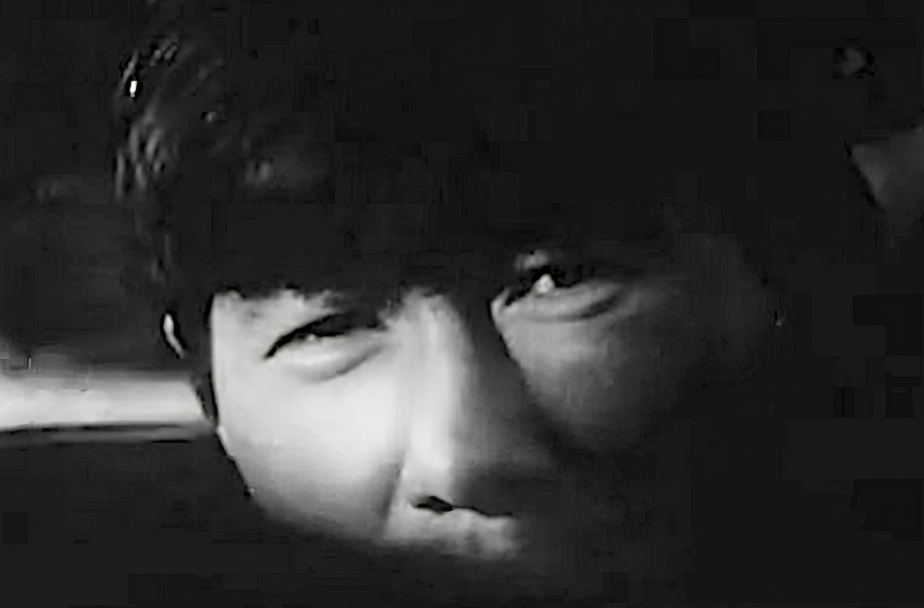
Witness accounts and hidden history of Kazakhstan’s 1986 December protests...Фоторепортаж Карлыгаш Нуржан для Shanger.kz ....
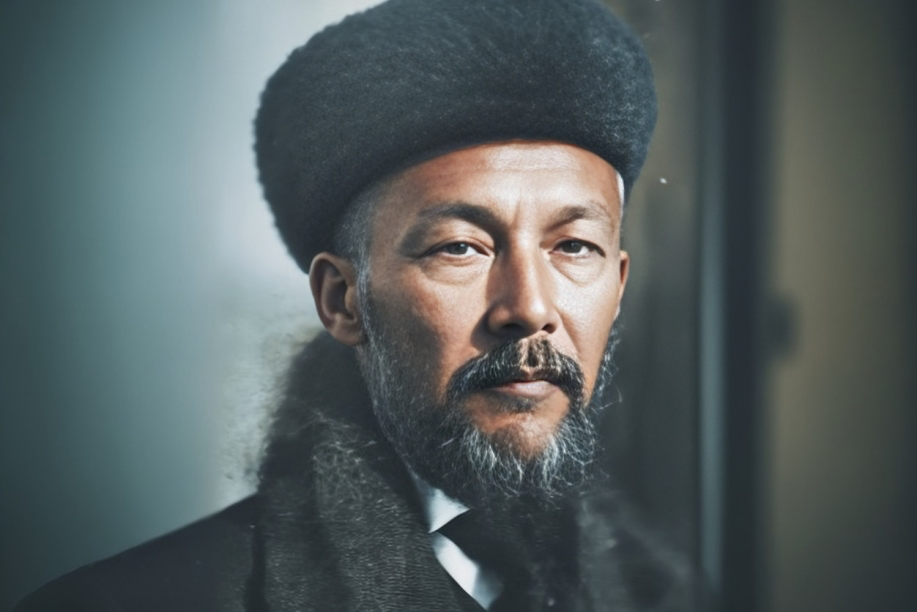
Shangerei Bokey shaped early Kazakh visual culture as the first photographer and educator. Story by Karlygash Nurzhan for Shanger.kz
Comments
No comments yet. Be the first to comment!